
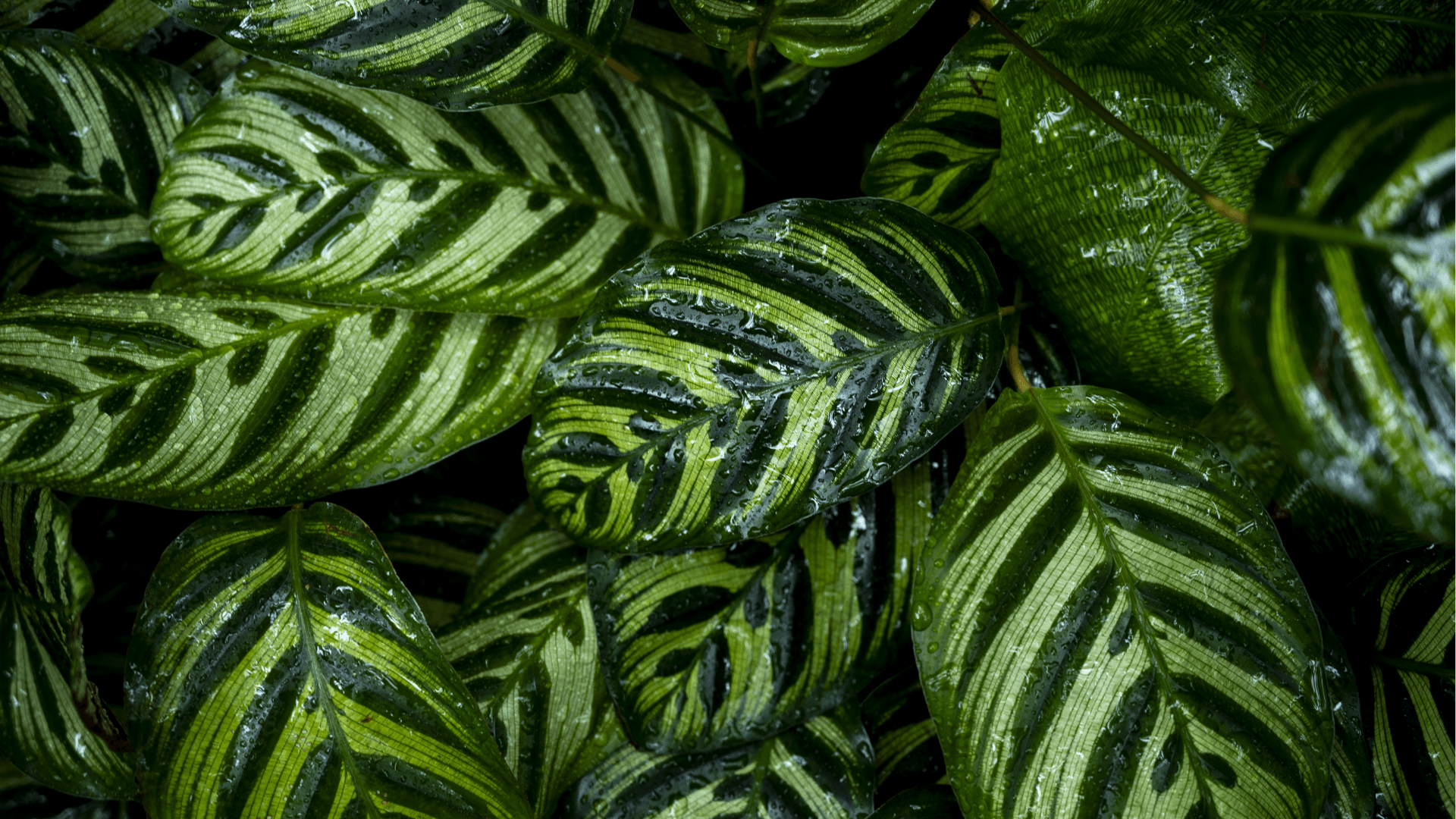
Calathea have some of the most strikingly patterned leaves around, with foliage that ranges from deep velvety greens to bold graphic patterns in silver, pink, and burgundy. Calathea care has a reputation for being tricky, but with the right knowledge and a little consistency, these beautiful tropical plants are well within reach of most home growers.
Native to the tropical rainforests of South and Central America, calatheas are used to warm, humid conditions with light filtered through the forest canopy above. In the home, the goal is simply to replicate those conditions as closely as you can. That means finding the right spot away from direct sun, keeping humidity levels up, and being thoughtful about watering.
One thing worth knowing before we start is that officially the genus “Calathea” has been reclassified as “Goeppertia”. Its possible you’ll see this used instead on labels and care guides but in practice, it’s much more likely you’ll see them called calathea.
Read on to find out everything you need to know about proper calathea care, including positioning, watering, compost, common problems, and more.
In this guide
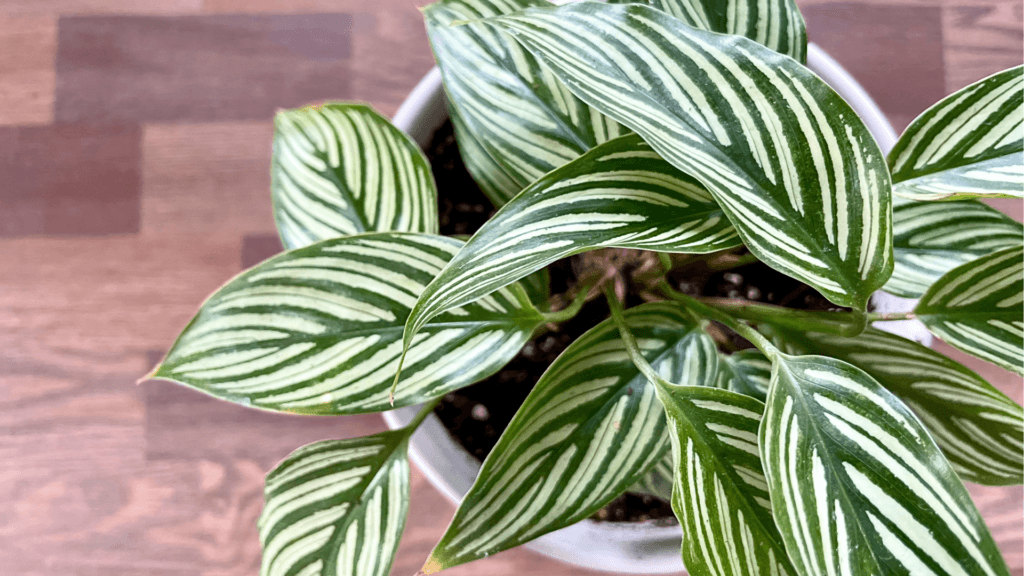
Quick calathea care guide
| ☀️ Light | Bright but indirect |
| 💧 Water | Keep moist but never waterlogged |
| ♨️ Humidity | Medium – high |
| 🪴 Compost | Free-draining potting compost with perlite |
| 🌺 Flowering | Rarely indoors, apart from C. crocata |
Best location for your calathea
Calatheas are tropical plants that naturally grow beneath the forest canopy, so they’re happiest away from bright, direct sunlight. In the home, they do best in a spot with bright indirect light (somewhere that gets plenty of natural light but where the sun’s rays never actually land on the leaves). A bright bathroom or kitchen would work brilliantly as they have naturally higher humidity. Avoid south or west-facing windowsills where the sun is at its strongest, as the intense light will quickly cause damage. They also do well under artificial grow lights if your home is on the darker side.
Signs your calathea is getting too much light
- Leaves are fading or looking washed out.
- Brown, crispy patches on the surface of the leaves.
- Leaves curling inward or cupping.
- Soil drying out unusually fast.
- Leaf edges turning yellow or looking scorched.
Signs your calathea is getting too little light
- Growth has slowed right down or stopped altogether, even during the warmer months.
- New leaves are coming through smaller than usual or looking pale and under-developed.
- The distinctive markings on the leaves are fading and losing their contrast.
- Leaves drooping or appearing limp despite the soil being adequately moist.
- The plant is leaning heavily towards the nearest light source.
How to display your calathea
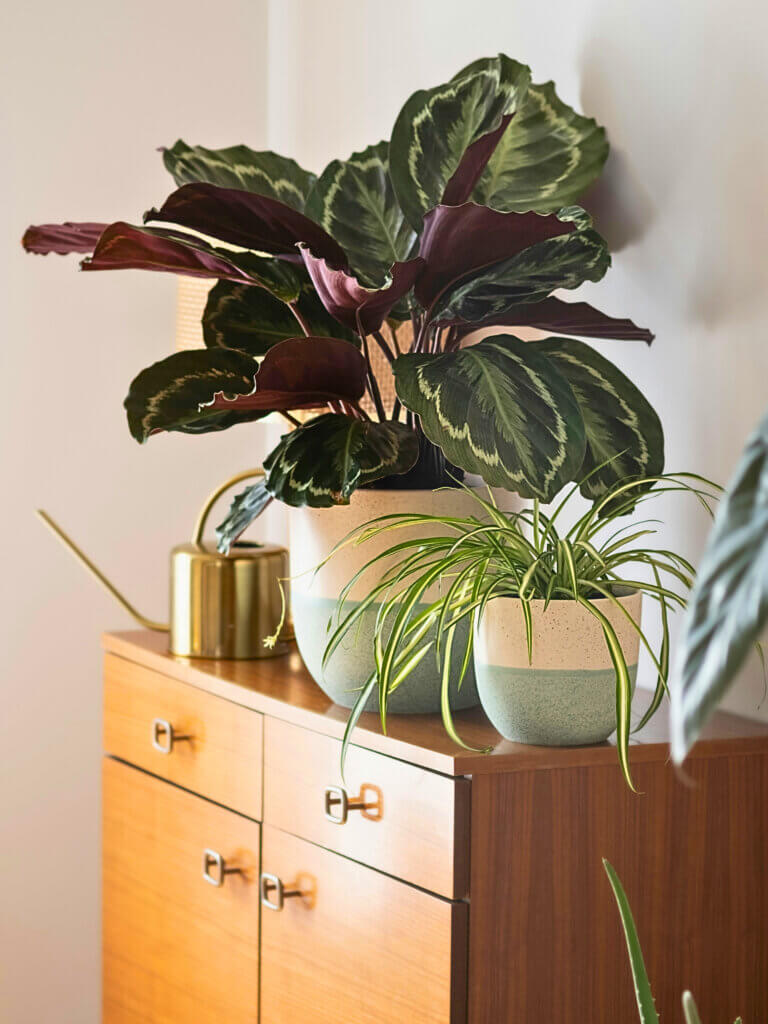
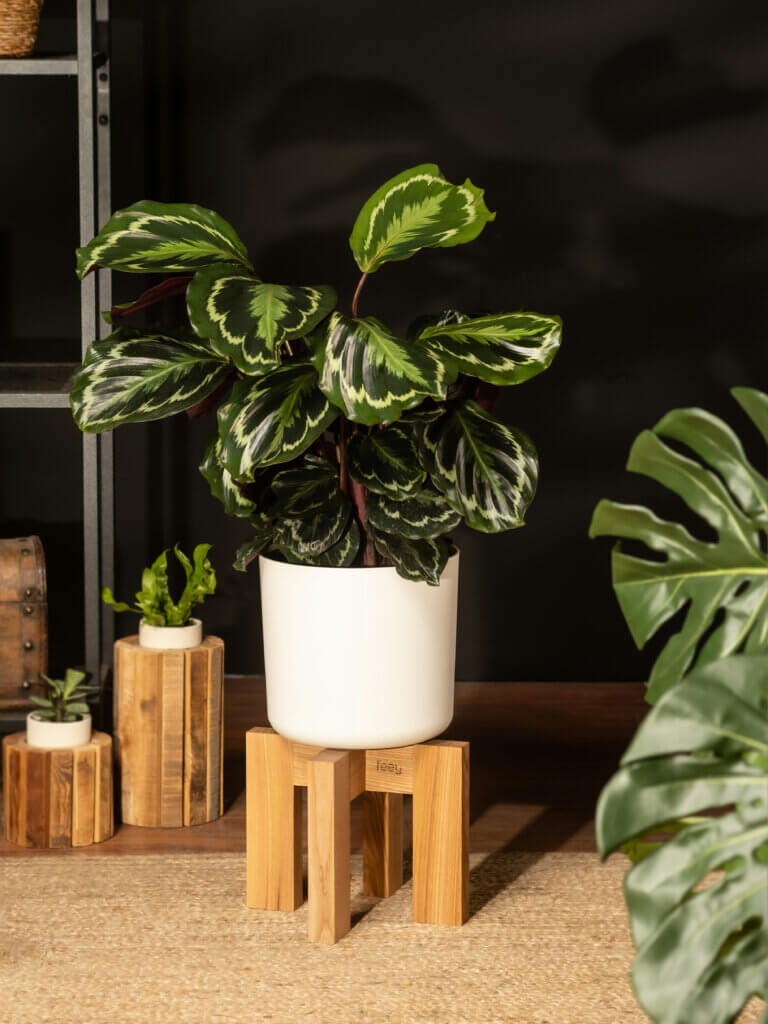
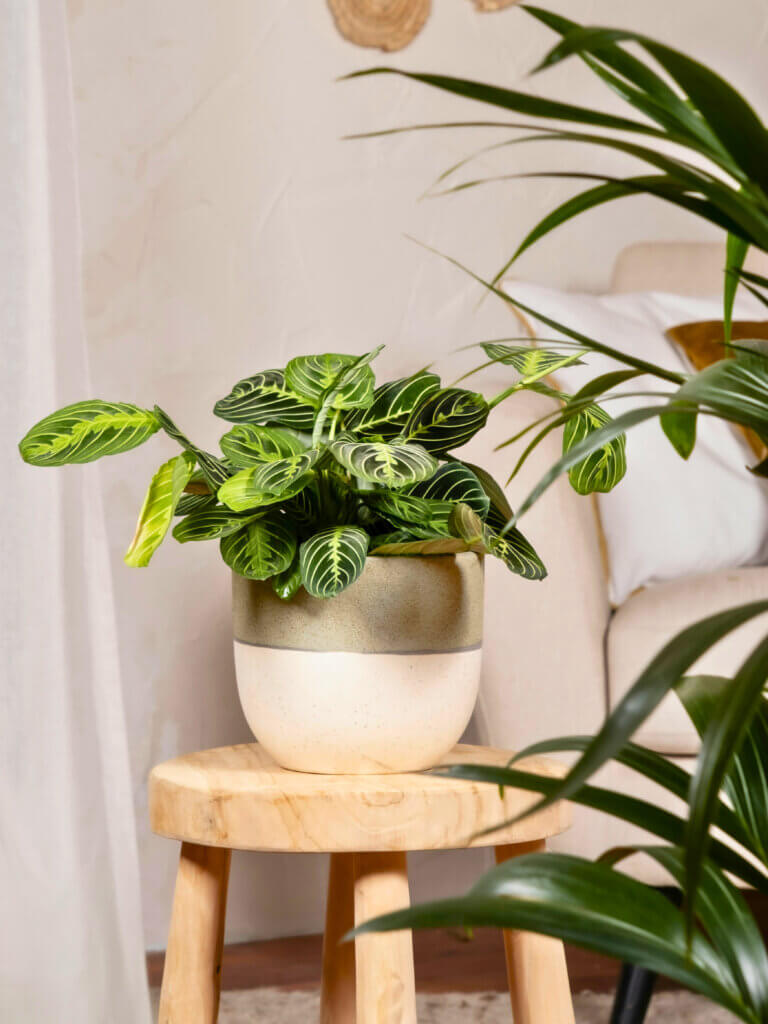
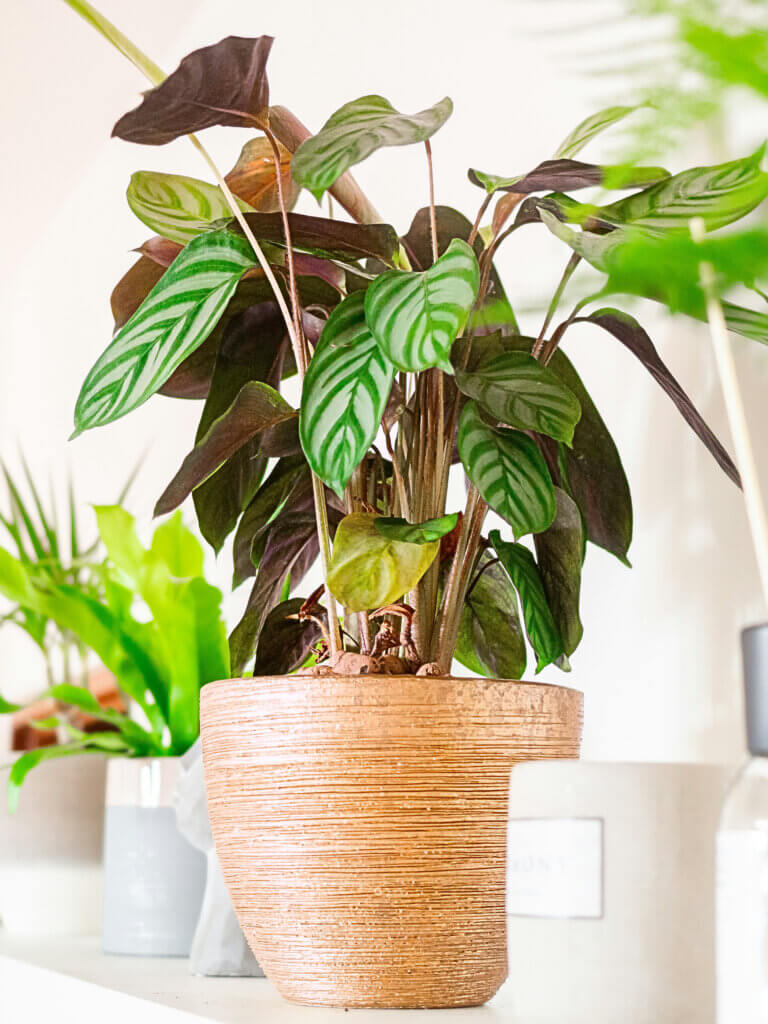
Calatheas are real showstoppers, so they deserve a spot where they can be properly appreciated. They look fantastic as a standalone statement plant on a table or stand, where their patterned leaves can be admired. Grouping them together with other tropical plants looks great, and clustering plants together will also helps raise the humidity levels. Avoid spots near radiators, draughty windowsills or air conditioning units.
How often to water your calathea
Calatheas like to be kept consistently moist but never waterlogged, so getting the watering balance right is key. Rather than sticking to a rigid schedule, it’s best to check the soil regularly. Water only when the top inch or so feels dry to the touch. These plants are sensitive to both overwatering and underwatering, so little and often is generally the way to go. Always use lukewarm water if you can, as cold water can shock the roots.
A rough watering schedule should look like:
- Spring/Summer: Every 5 to 7 days
- Autumn: Every 7 to 10 days as growth begins to slow
- Winter: Every 10 to 14 days
When to increase watering:
- The top inch of soil is drying out faster than usual between waterings.
- Temperatures in your home have risen.
- The plant is putting out lots of new growth and is in an active growing phase.
- The pot feels very light when you pick it up, suggesting the compost is quite dry.
- Leaves are beginning to curl or droop slightly despite the plant being in a good spot.
When to reduce watering:
- Growth has slowed or paused.
- The soil is still feeling damp when you come to water, meaning it hasn’t dried out enough.
- The weather has turned cooler.
- You’ve recently repotted into fresh compost, which tends to retain moisture more readily.
- Leaves are yellowing at the base, which can be an early sign of too much water.
When to water most infrequently:
- During the depths of winter when the plant is at its least active.
- If the plant is in a cooler room where evaporation is slower.
- Following a period of illness or root damage, where the roots need time to recover before taking on more water.
Top Tip
Calatheas can be sensitive to the fluoride and chlorine found in tap water, which can cause brown leaf tips over time. If you notice this happening, try switching to rainwater or leaving tap water to sit overnight before using it, which allows some of the chemicals to dissipate.
Best compost for a calathea
Getting the compost right for your calathea is important but also fairly straightforward. These plants need a mix that holds enough moisture, while still draining freely enough that water doesn’t sit around and cause problems. A standard multipurpose compost straight from the bag is probably fine, but they can be a little dense. If your plant is regularly becoming waterlogged then it’s a good idea to mix in something like perlite to improve drainage and aeration.
Calatheas prefer a slightly acidic to neutral soil pH, somewhere between 6.0 and 7.0, so avoid anything that might push the pH too far in either direction. Most standard peat-free composts fall within this range naturally, so it’s not something you’ll need to overthink.
It’s a good idea to refresh the compost every year or two, as older compost breaks down over time. This means it can lose its structure, and become waterlogging.
Common calathea problems
Here are some of the common problems your calathea plant may encounter, and how to fix them.
Brown leaf tips
Brown, crispy tips are one of the most common complaints with calatheas and are usually nothing to panic about. They most often point to low humidity, inconsistent watering, or sensitivity to chemicals in tap water. While the damaged tips won’t recover, the rest of the plant can continue to grow perfectly happily once the underlying cause is addressed.
To tackle brown tips, start by switching to rainwater or filtered water if you’ve been using tap water. Boost humidity by grouping plants together, placing the pot on a pebble tray filled with water, or running a humidifier nearby. Check your watering habits too, both underwatering and overwatering can cause this, so make sure you’re letting the top inch of soil dry out before watering again.
Yellowing leaves
Yellow leaves on a calathea are a sign that something isn’t quite right. Overwatering is the most common culprit, but too little light, natural ageing of lower leaves, or draughts can also be responsible.
Check the soil first. If it feels soggy or has been consistently wet, ease off the watering and make sure the pot has adequate drainage. If the compost seems fine, consider whether the plant is in a bright enough spot or close to a cold window or draught. Removing yellow leaves tidily with clean scissors will keep the plant looking its best while it recovers.
Curling leaves
Calathea leaves that are curling or rolling inward are usually telling you that the plant is stressed and trying to conserve moisture. This is most commonly caused by underwatering, low humidity, or exposure to too much heat, such as being positioned near a radiator or in direct sun. Give the plant a thorough watering if the soil has dried out and move it away from any heat sources or bright direct light. Increasing the humidity around the plant will also help, as dry air is a frequent trigger for curling.
Root rot
Root rot is one of the more serious problems a calathea can develop, and it’s almost always caused by overwatering or poorly draining compost. Affected plants will often look wilted and sad despite the soil being wet, and if you check the roots you may find they are brown, mushy, and have an unpleasant smell.
To treat root rot, remove the plant from its pot and gently shake away as much of the old compost as possible. Trim away any rotten roots with clean, sharp scissors and allow the remaining roots to air dry briefly. Repot into fresh, well-draining compost and hold off watering for a few days to give the plant a chance to settle. Keep a close eye on watering going forward and make sure the pot always has drainage holes.
Drooping leaves
Both underwatering and overwatering can produce drooping, limp leaves, which can make it a little tricky to diagnose. The soil is your best clue, if it’s bone dry the plant is thirsty, and if it’s soggy there may be a watering or drainage issue at play. Water thoroughly if the soil is dry and the leaves should begin to perk up within a few hours. If the soil is wet, hold off watering and check the roots for any signs of rot. It’s also worth checking that the pot isn’t too large for the plant, as oversized pots hold more moisture than the roots can absorb, which can lead to ongoing drooping and general unhappiness.
Faded markings
This is most commonly caused by too much direct light bleaching the leaves, though consistently low light can also reduce the vibrancy of the patterning over time. Move the plant to a spot with bright but indirect light and see if new growth comes through with more definition. If the plant has been in a very dark corner, gradually introduce it to a brighter position rather than moving it all at once, as a sudden change in conditions can cause additional stress. Keeping on top of humidity and watering will also help the plant produce its best-looking foliage.
Mealy bugs, spider mites, and fungus gnats
Calatheas are generally fairly resilient plants, but like most houseplants they can occasionally attract unwanted visitors. The good news is that catching a pest problem early makes it much easier to deal with, so it’s worth getting into the habit of checking the undersides of leaves and the base of stems when you water. Here are the three most common culprits to look out for.
Mealy Bugs
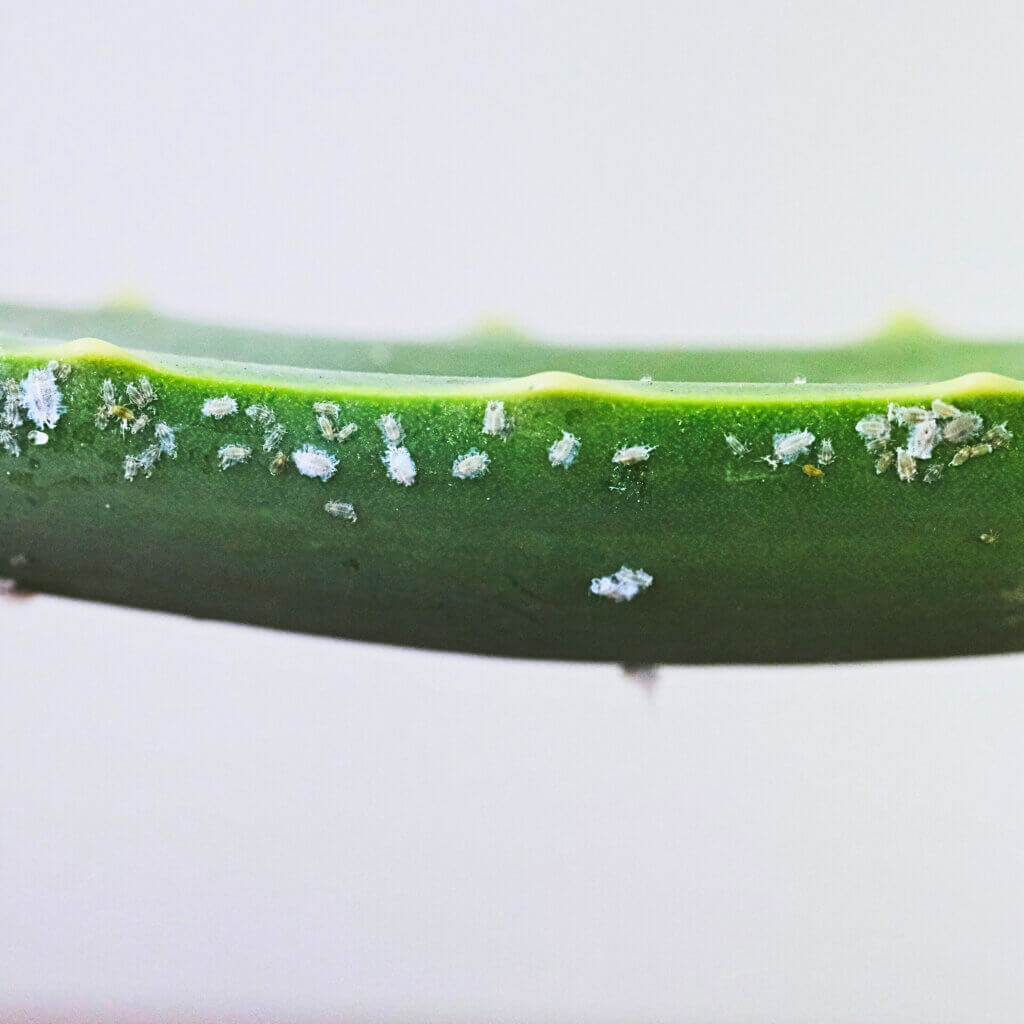
Mealy bugs are small, soft-bodied insects that cluster together and protect themselves with a distinctive white, waxy coating that can look a little like cotton wool. They tend to hide in the joints between leaves and stems, making them easy to miss. They feed by sucking sap from the plant, which can cause leaves to yellow, distort, or drop if left unchecked.
If you spot mealybugs, remove as many as you can by wiping them off with a damp cloth. Repeat every few days for two to three weeks to catch any newly hatched eggs. Keep the affected plant away from your other houseplants while you treat it to prevent the bugs from spreading.
Spider mites
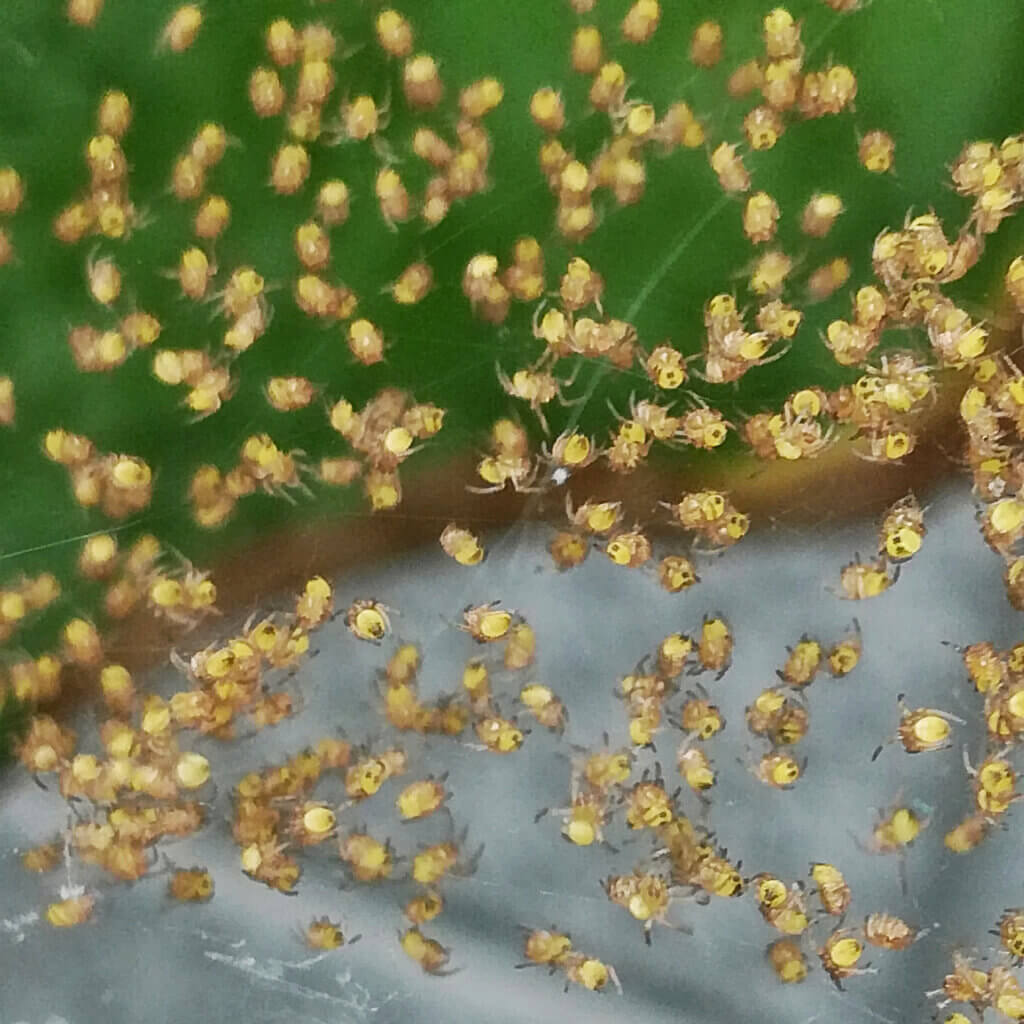
Spider mites are tiny and difficult to spot, but they leave some fairly telltale signs. Look out for fine, dusty webbing on the undersides of leaves and between stems, along with small bronze or yellow speckles on the leaf surface where the mites have been feeding.
The first step is to give the leaves a thorough wipe down with a damp cloth to physically remove as many mites as possible. They thrive in warm, dry conditions, so raising the humidity around the plant will make infestations less likely going forward.
Fungus gnats
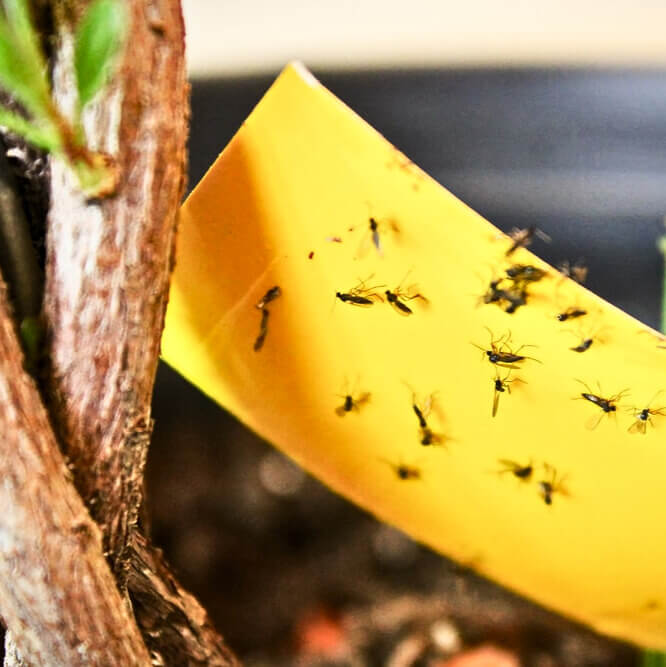
Fungus gnats are small, dark flies that you’ll most likely notice hovering around the surface of the compost or flying up when you water. The adult flies are largely harmless, but their larvae live in the top layer of moist soil and can stress the plant. They tend to be most problematic when compost is being kept consistently wet.
The most effective way to tackle fungus gnats is to let the top few centimetres of compost dry out between waterings, as the larvae cannot survive without moisture. Sticky yellow traps placed near the plant will catch adult flies and help you monitor how bad the infestation is. Improving drainage and avoiding overwatering is the best long-term prevention.
How to propagate your calathea
Calatheas are propagated by division, which simply means splitting the plant into smaller sections when you repot it. Unlike many other houseplants, calatheas can’t be propagated from leaf or stem cuttings. The good news is that it’s a straightforward process and repotting time makes for a natural opportunity to do it.
- Water the plant a day or two before you plan to divide it. This reduces stress on the plant and makes the roots easier to work with.
- Gently remove the plant from its pot. Try to keep the root ball as intact as possible.
- Shake away the loose compost from around the roots so you can see what you’re working with. You’re looking for natural clusters of stems with their own roots attached.
- Gently separate the root ball into sections, each with at least two or three stems and a healthy set of roots. Use your fingers to tease the roots apart where possible. For sections which are too tangled to divide by hand you can use a clean, sharp knife.
- Pot each section into its own container filled with fresh, well-draining compost. The pot should be appropriately sized, not too large, as calatheas prefer a snug fit.
- Water each new plant lightly and place them in a warm spot with bright indirect light. Avoid fertilising for the first four to six weeks while the plants settle in and the roots establish.
Top Tip
Freshly divided calatheas can look a little sorry for themselves in the weeks following division, and it’s easy to assume something has gone wrong. In most cases the plant just needs time to adjust. Keep conditions warm and humid, resist the urge to overwater, and new growth should begin to appear within a few weeks as a sign that the plant is getting back on track.
Calathea care FAQs
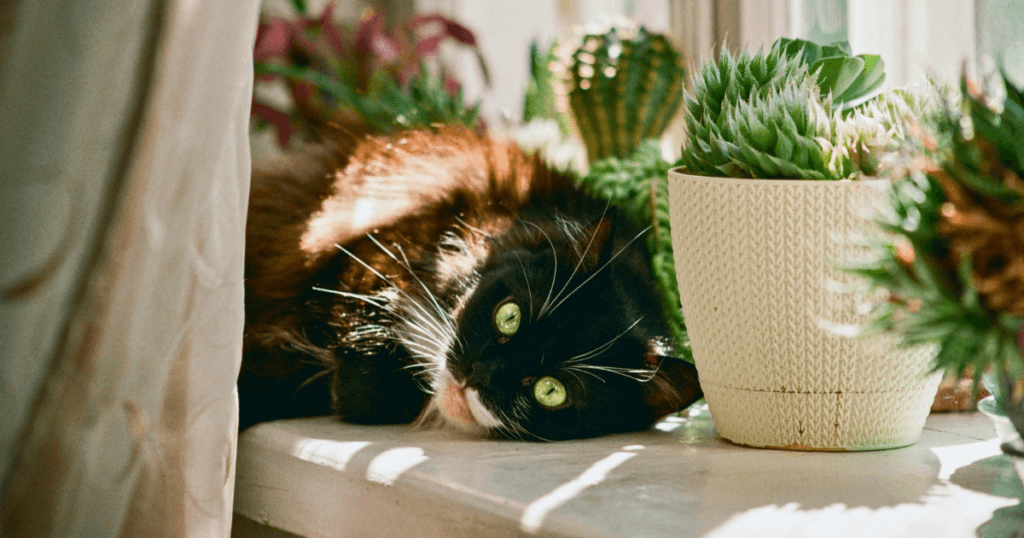
Q: Are calathea safe for pets?
A: Yes, according to the ASPCA, Calathea is non-toxic to cats and dogs.
Looking for more pet safe plants?
Check out the complete guide to pet safe plants. Get advice on how to choose the right plants for your space and schedule, as well as creative ideas for how to style them.
Q: How long can a calathea live?
A: With the right care, a calathea can live for many years, and some have been known to live for a decade or more. Regular repotting, consistent watering, and good humidity will all go a long way towards keeping your calathea happy for the long term.
Q: Are calatheas the same as prayer plants?
A: Not exactly, though the two names are often used interchangeably. “Prayer plant” is most accurately the common name for Maranta leuconeura, a close relative that shares calathea’s habit of folding its leaves upward in the evening. Because calatheas do the same thing and belong to the same broader plant family (Marantaceae), the nickname has stuck to them too.
Q: How big can a calathea grow?
A: This depends on the variety, as calatheas come in quite a range of sizes. Most common houseplant varieties will reach somewhere between 30cm and 60cm in height at maturity, with a similar spread of foliage. Some larger varieties, such as Calathea orbifolia, can reach 90cm and produce impressively broad leaves. Growth is generally slow and steady, so it will take a few years for a young plant to reach its full size, but the foliage display along the way makes it well worth the wait.
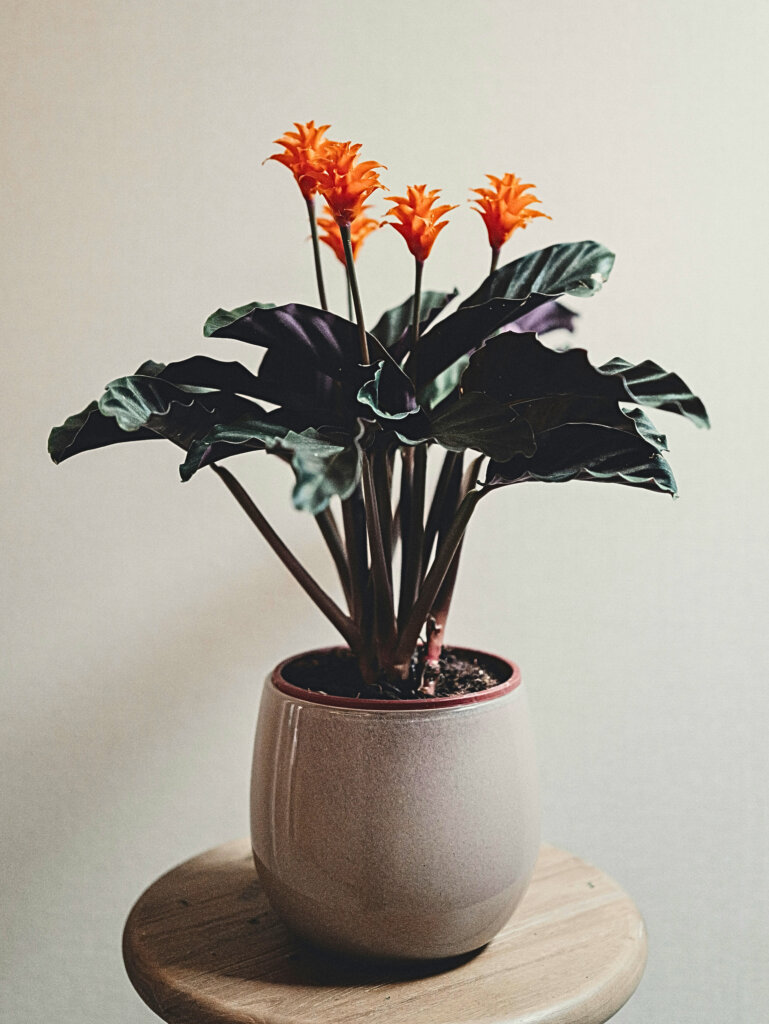
Q: Do calatheas flower indoors?
A: Occasionally, yes. Most common houseplant varieties rarely if ever bloom indoors, but it does happen, and some species are more likely to flower than others. Calathea crocata (also sold as the Eternal Flame plant) is the main exception. It produces striking orange-yellow flowers and will rebloom reliably if kept in good conditions. For the majority of calathea varieties though, the foliage is the main attraction, and you’re unlikely to see flowers without a significant amount of effort.
Q: Why does my calathea move its leaves?
A: If you’ve noticed your calathea’s leaves shifting position throughout the day, you’re not imagining things. Calatheas are nyctinastic plants, which means they move their leaves in response to changes in light levels. During the day the leaves spread out flat to absorb as much light as possible, and in the evening they fold upward. This is completely normal behaviour and a sign of a healthy, responsive plant.
Q: Do calatheas need feeding?
A: Calatheas benefit from regular feeding during the growing season but don’t need a great deal to thrive. A balanced liquid fertiliser applied at half strength once a month from spring through to early autumn is plenty. Avoid feeding during winter when the plant is resting, as the roots are less active and excess fertiliser can build up in the compost and cause damage. Always feed after watering rather than into dry compost to avoid stressing the roots.
Final thoughts
Calatheas are plants that genuinely reward the effort you put into them. Get the basics right and your plant will bring colour and personality to your home for years to come. The important thing is to observe your plant regularly, respond to what it’s telling you, and adjust as you go. Do that, and your calathea will more than return the favour.