
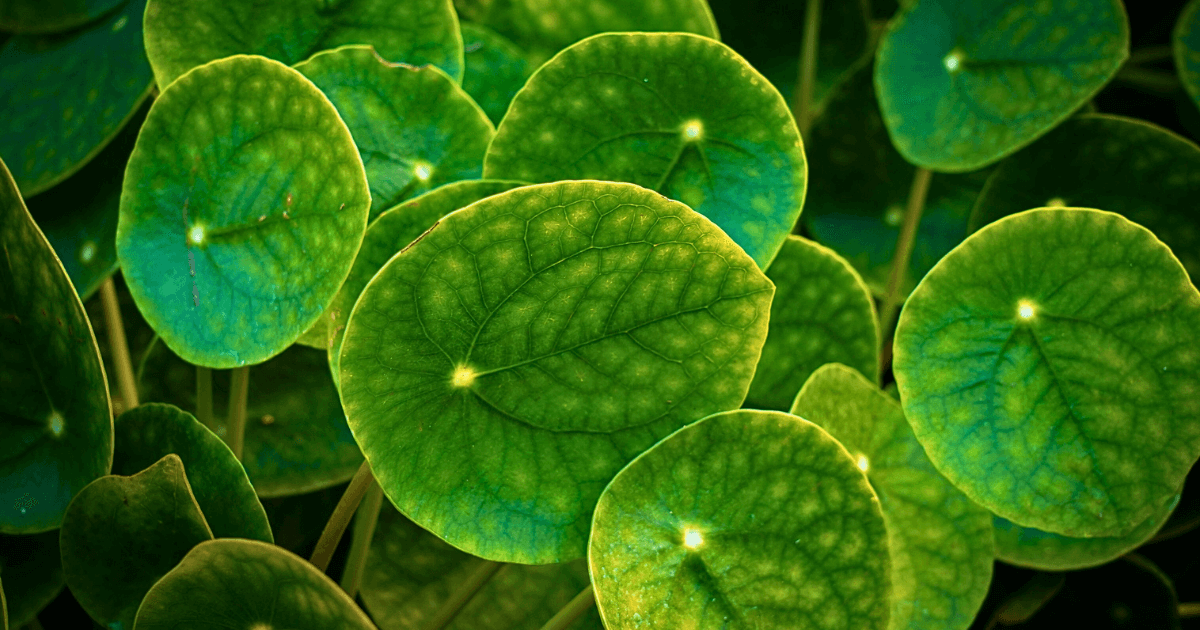
Chinese Money Plant care is easy and rewarding. Once you have found a spot it is happy in they require virtually no attention. Not only that but they are pet safe and incredibly easy to propagate, so your home will be full of greenery in no time.
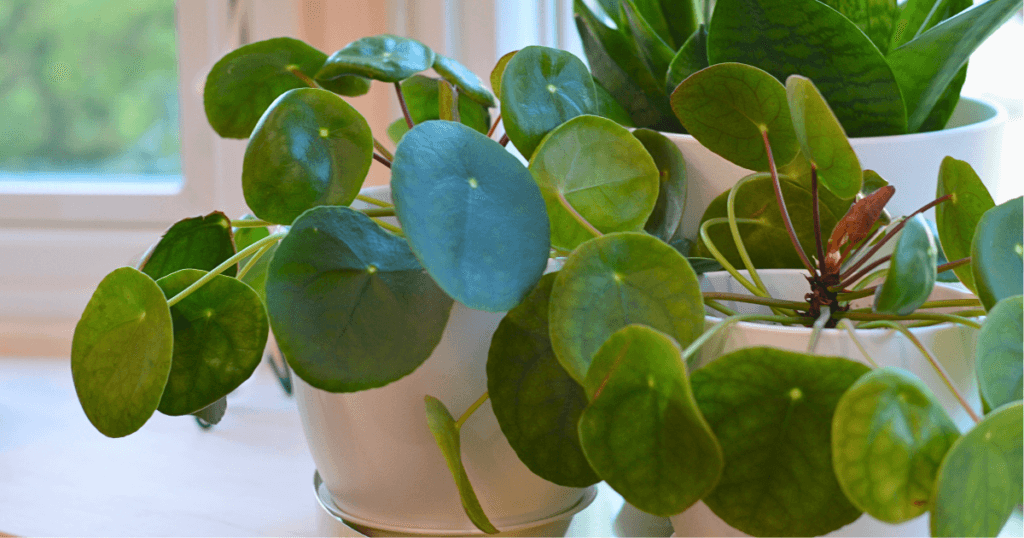
The Chinese Money Plant – Pilea Peperomioides – is easily the best known variety of Pilea. It takes its name from its distinctive coin shaped leaves which are slightly succulent. This plant maintains a pleasing, compact shape, making it a great choice for houseplant enthusiasts.
In this guide
Quick Chinese Money Plant care facts
| ☀️ Light | Bright but indirect |
| 💧 Water | Keep soil moist but don’t overwater |
| ♨️ Humidity | Moderate temperature and humidity |
| 🪴 Compost | Light and free-draining |
| 🌺 Flowering | Rarely indoors |
Best location for a Chinese Money Plant
Chinese money plants are something of a Goldilocks plant – they like it not too light, not too dark, not too hot, not too cold. Full sun will scorch their leaves but too much shade will cause them to become leggy. They grow best in bright indirect light. A bathroom windowsill out of direct sun is perfect. Just make sure they aren’t near anything that will disturb their temperature too much, like hot radiators or cold draughts.
Top Tip
Rotating your plant every now and then will help it to grow in a more symmetrical way.
How to water a Chinese Money Plant
Chinese Money Plants really hate overwatering as it can quickly cause root rot. Water only when the soil starts to dry out and never leave them standing in water. For best results you should adjust your watering schedule for the seasons, your home environment, and your plants growth phases.
When to increase watering:
- During periods of high heat, usually in Summer or if you get hot spells in Spring or Autumn.
- When humidity is low, usually because your plant is kept in a room with dry air.
- If your plant has new leaves and is actively growing.
On average you should aim to water every 1 – 3 days under these conditions.
When to reduce watering:
- When growth slows, usually in the Autumn.
- When the weather starts to cool, leading to less evaporation.
- If your plant is in a space with high humidity, like a bathroom with poor ventilation.
On average you should water aim to water every 4 – 7 days under these conditions.
When to water most infrequently:
- When heat and humidity are at their lowest, usually during Winter.
- If your plant is in its dormant phase, usually late Autumn to early Spring.
On average you should water every 10 – 14 days during this period.
Top Tip
The numbers above are just guides, you should always be guided by how dry your plants soil actually is. You can check if your plant needs water by gently putting your finger into the soil. Water only when the top 2 inches feel dry.
Best compost for a Chinese Money Plant
The most important factor when choosing compost is to ensure proper drainage. A 2:1 mixture of regular multi-purpose compost and something like perlite is fine, just make sure that you are using a pot with plenty of drainage holes to allow for easy drainage.
Top Tip
There’s no need to repot your Pilea after buying it. Unless the roots are visible showing through the bottom, it should be happy in the pot it came in.
Common Chinese Money Plant problems
While generally resilient, there are some common problems your Chinese Money Plant may encounter. As a rule these problems mostly come down to over or under watering. If in doubt, check your soil for moisture levels.
Leaves browning or curling
This is generally a sign your plant has become too dry or hot. Don’t leap straight to more watering though, it’s better to assess the plants whole environment.
- Is it sat in direct sun? This could be causing leaf scorch?
- Is it situated near a radiator or in a room with low humidity? This can cause the soil to become excessively dry.
- Are you watering too infrequently? Ideally you should let the top 2 inches of soil dry out, then water the soil evenly and allow to fully drain. Don’t be tempted to over compensate by leaving a thirsty plant to stand in water as this will cause root rot.
Leaves yellowing or dropping
These are a classic sign of overwatering or leaving you plant to stand in water. If you spot this then you’ll need to act fast to save your plant. Trim off the affected roots and allow the plant to dry out completely, then repot in fresh compost.
Stem stretching or becoming leggy
With proper care your Chinese Money Plant should retain a symmetrical, compact shape. If the central stem is beginning to stretch up then it probably isn’t getting enough light. Try moving it to a brighter space (being careful to avoid direct sun) and rotate occasionally to promote even growth.
Powdery mildew
Chinese Money Plants are susceptible to powdery mildew, a fungus which is usually identifiable by the white, dusty coating it leaves on plants. If you see this you should remove and destroy affected leaves (don’t compost these).
Powdery mildew is often a sign that your plant is located somewhere too dark and wet. Try moving it somewhere brighter and ensure the soil is able to dry out properly between watering.
Scale insects
Scale insects are sap sucker which can limit the growth of your plant. Common symptoms include:
- Bumps on stems and leaves. These are the outer coverings of the insect.
- A sticky substance called honeydew may accumulate on the top of leaves.
- In summer you may find egg clusters underneath leaves.
First quarentine your plant so that the bugs don’t spread, then manually remove them with a damp cloth.
Most scale insects come in with the plant when it is bought so be sure to check leaves well when buying.
How to propagate a Chinese Money Plant
Chinese Money Plants are ridiculously easy to propagate, in fact, you’ll have to work not to propagate them!
After they have been growing for even a short while you’ll see new baby plants start to appear at the base of the parent plant. These are often called ‘pups’ and they can simply gently out of the soil and replanted in their own pot.
Officially its a good idea to pop them in some water until you see roots developing, but I have always had equal success by just planting them straight away.
Top Tip
Transplanted pups typically take well and grow fast so you will likely end up with enough to share. In fact, this Pilea is often know as the ‘sharing’ or ‘pass it on’ plant for that very reason.
The story actually goes that the Chinese Money Plant originally travelled to Europe by passing pups from person to person.
Chinese Money Plant care FAQs
Q: Is the Chinese Money Plant safe for pets?
A: Yes, Chinese Money Plant is non-toxic to cats and dogs.
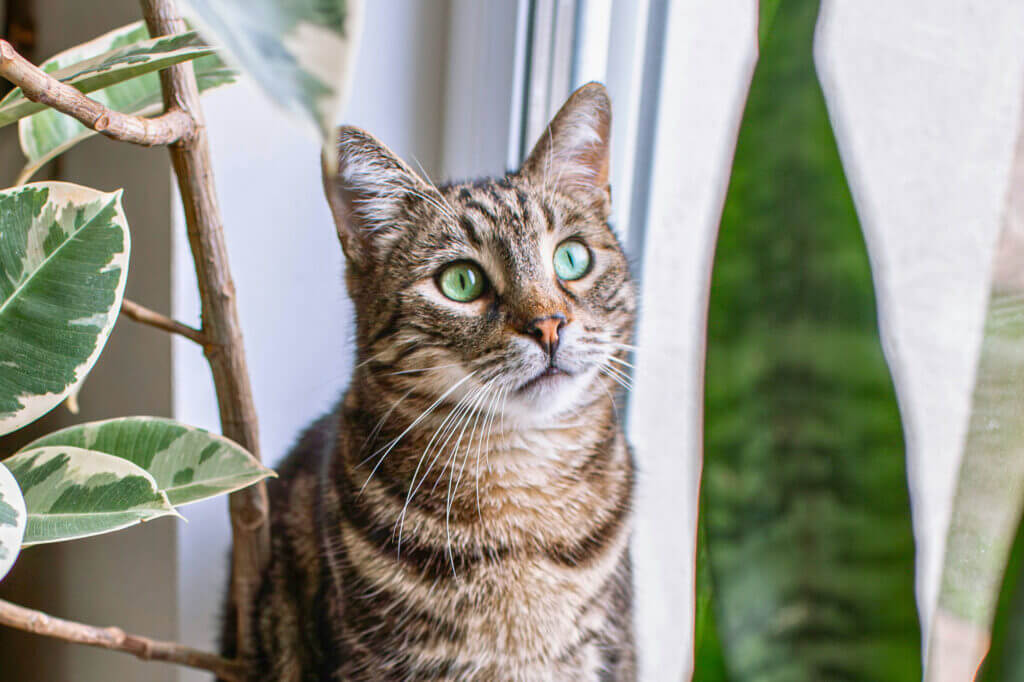
Looking for more pet safe houseplant options? Check out this list of 26 cat safe houseplants for every room.
Q: How long can a Chinese Money Plant live?
A: With proper care Chinese Money Plants can live for 5 – 10 years. By that time you’ll probably have potted up so many pups that you’ll have a dozen replacements waiting to take its pot!
Q: How big can a Chinese Money Plant grow?
A: Chinese Money Plants are generally symmetrical and compact. They should grow to around 30 x 30cm. If your plant is growing taller and becoming leggy them you should move it somewhere with more light. Rotate occasionally to encourage even growth.
Q: What do white crystals forming on the leaves mean?
A: Although surprising, this is actually nothing to worry out. These crystals are mineral deposits caused by water evaporating through the pores in the leaves, which is a sign your plant is functioning properly. You can gently wipe them off if you want, but you don’t have to.
Final thoughts
Chinese Money Plants are lovely additions to any home and their needs are actually very simple, making them great for beginners. If in doubt, just remember that they don’t like extremes. Find them somewhere that’s not too hot and not too cold; not too bright and not too dark; not too wet and not too dry. When you find their happy place they will grow happily and become one of your least demanding plants.