
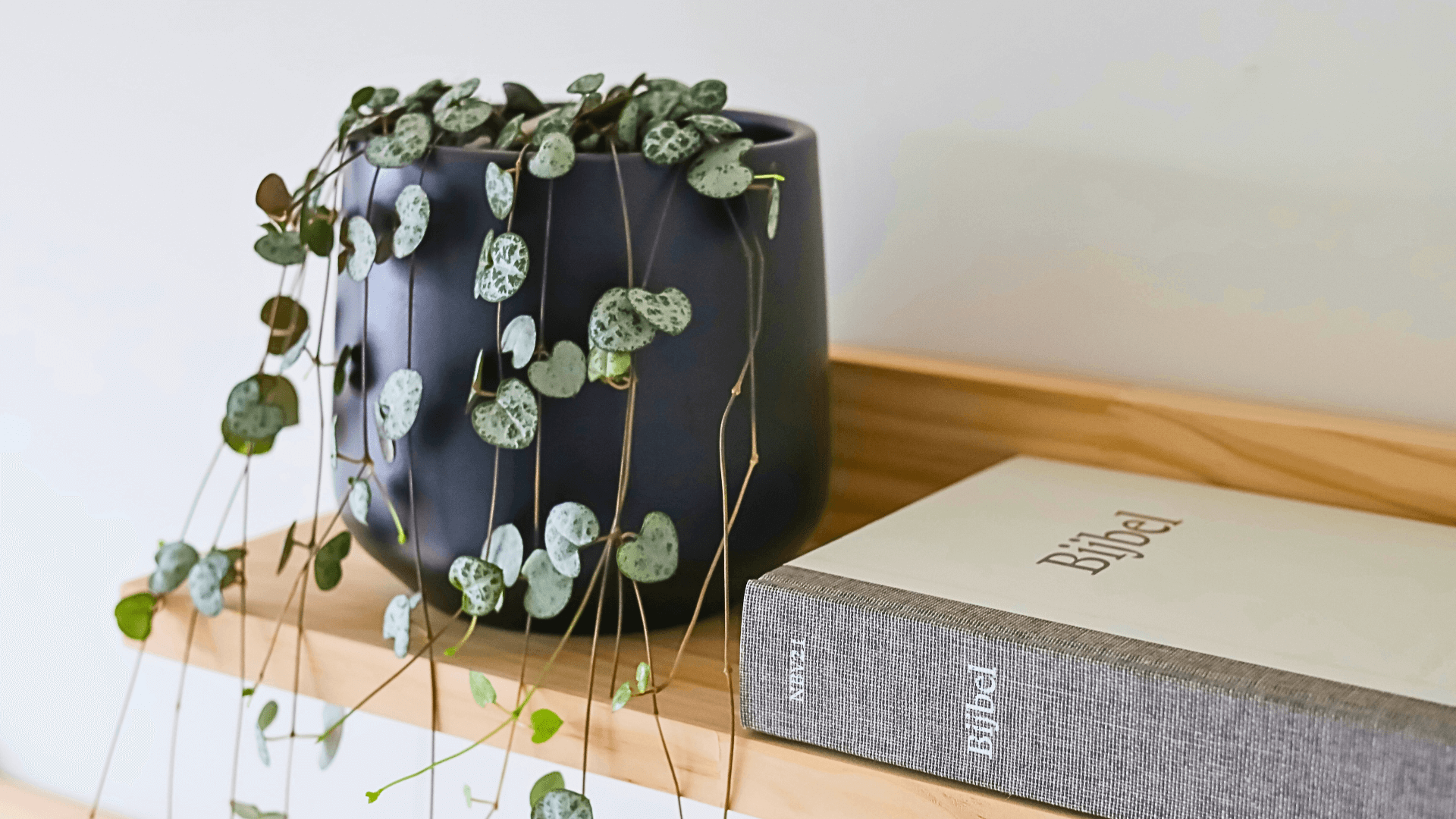
If you’re looking for a plant that’s both unusual and low-maintenance, the String of Hearts (Ceropegia woodii) is a great choice. Its trailing, heart-shaped leaves are really charming, and String of Hearts care is very beginner friendly. Sometimes known as the Sweetheart vine, this whimsical plant is also a great alternative gift for Valentine’s Day.
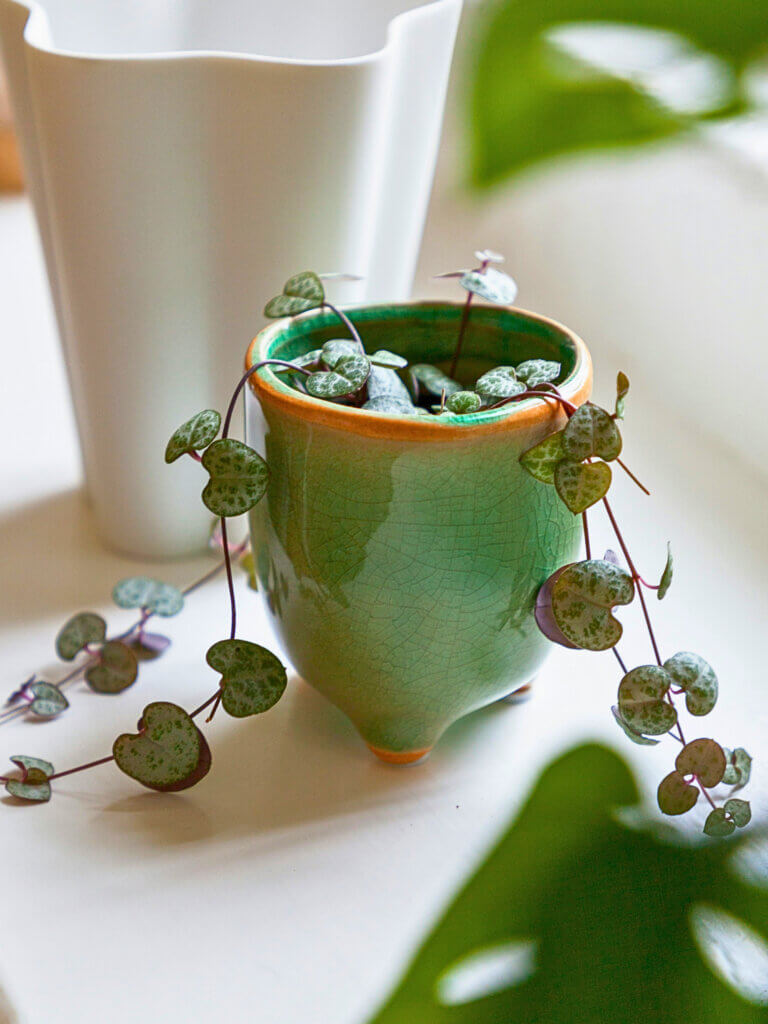
A native to Zimbabwe and South Africa, String of Hearts is a tuberous perennial with long trailing stems than can exceed 1m. Its iconic heart-shaped leaves have beautiful, purple and grey variegated patterns, and it can produce delicate pink and purple flowers under the right conditions. Provided you give them enough bright, indirect light and not too much water, they will thrive in most homes.
Whether draped over a shelf or spilling from a hanging planter, this plant is a real conversation piece and a well deserved favourite among houseplant fans.
In this guide

Quick String of Hearts care guide
| ☀️ Light | Bright but indirect |
| 💧 Water | Water infrequently and allow soil to dry. |
| ♨️ Humidity | Low to average |
| 🪴 Compost | Free-draining cactus or succulent compost |
| 🌺 Flowering | June – August |
Best location for your String of Hearts
String of Hearts plants originate from Zimbabwe and South Africa. They can often be found scrambling through bushes or trees, meaning they have a natural preference for the dappled light these forest habitats provide.
Proper String of Hearts care means giving your plant plenty of bright but indirect light. Too little light and your plant with lose the beautiful variegation on its leaves. Too much and it can become scorched.
Signs your String of Hearts is getting too much light
- The leaves start looking bleached and wilted, or sometimes red. The edges may become brown and crispy.
- The vines become limp and shrivelled.
- The soil is very dry and crumbly.
Signs your String of Hearts is getting too little light
- Your plants growth starts to slow.
- The leaves lose their variegation.
- The soil never seems to dry out.
How to display your String of Hearts
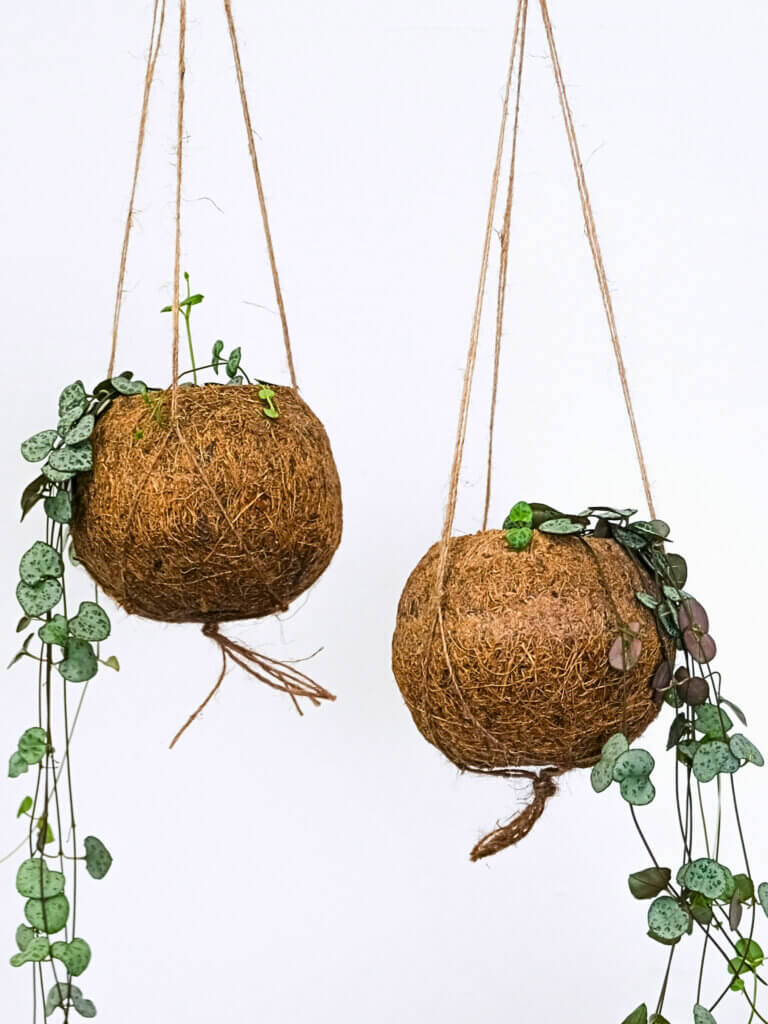
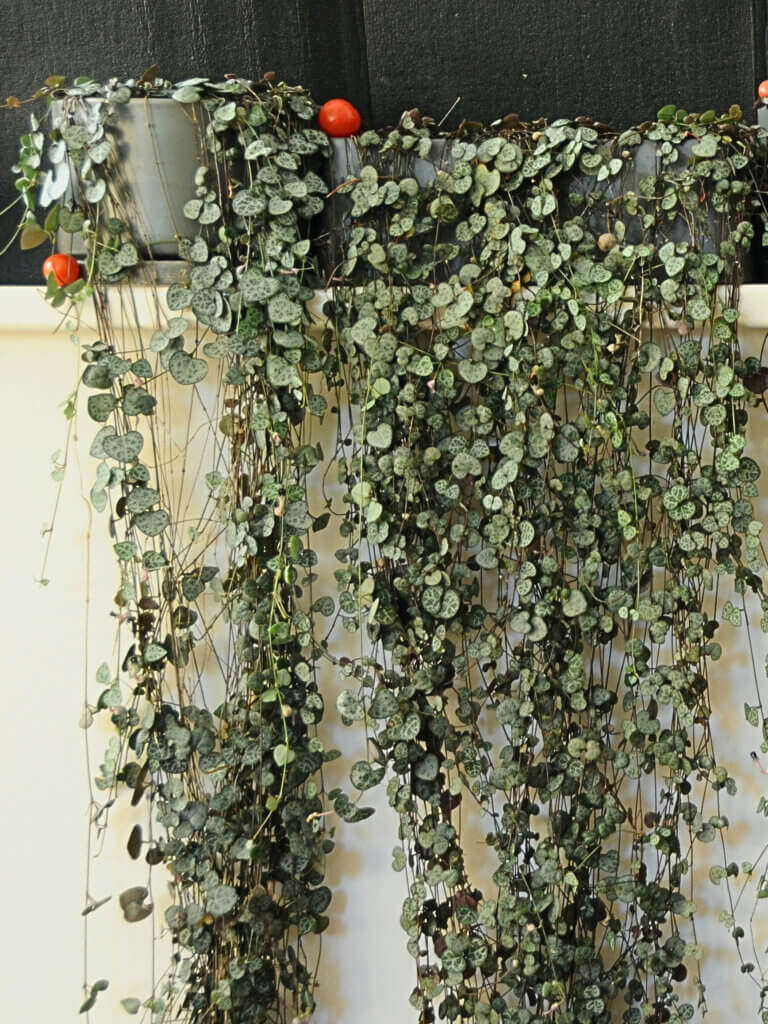
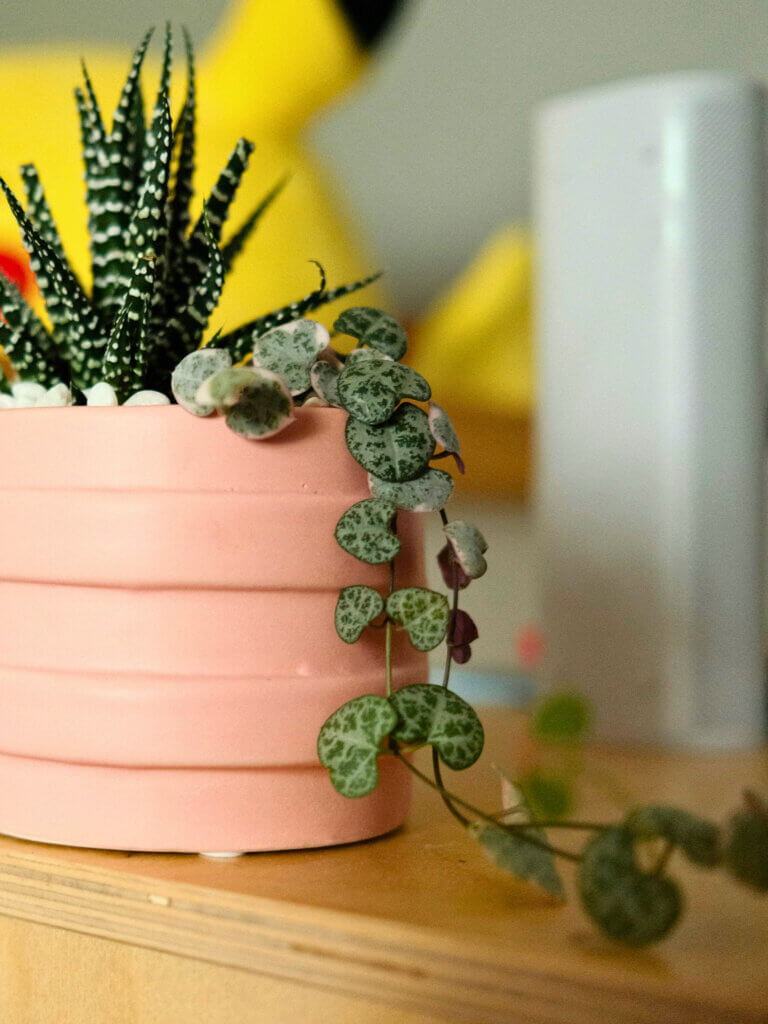
String of Hearts have incredible trailing vines so they are perfect for hanging planters and high shelves. They are fast growing plants and can grow very long (1m or more!) so be sure to position them somewhere they will have ample space to sprawl.
How often to water your String of Hearts
In their natural habitat, String of Hearts plants grows in very shallow soil in dry heat, so they are well adapted to drought. They only require watering when the soil is completely dry. If in doubt, water too little rather than too much to avoid root rot.
A rough watering schedule should be:
- Summer: every 1-2 weeks.
- Winter: every 2-3 weeks.
Make sure to let the soil dry out between waterings. For the best possible String of Hearts care, you should aim for an adaptive and regular schedule that considers the seasons, the environment, and the actual condition of the plant’s soil.
When to increase watering:
- During periods of high heat, usually in Summer or if you get hot spells in Spring or Autumn.
- If your plant is actively growing – look for new leaves or flowers.
- If your plant is showing signs of underwatering, such as limp stems or wilted, curling leaves.
When to reduce watering:
- When growth slows, usually in the Autumn.
- When the weather starts to cool, leading to less evaporation.
- If your plant is in a space with high humidity, like a bathroom with poor ventilation.
- If your plant is showing signs of overwatering, such as yellowing or dropping leaves.
When to water most infrequently:
- When heat and humidity are at their lowest, usually during Winter.
- If your plant is at risk of, or recovering from, root rot – look out for roots which seem to be turning mushy.
Top Tip
There is no substitute for monitoring the actual condition of your plant’s soil. Gently put your finger into the soil to check the moisture levels, and give more water when the top 2 inches feel dry. If in doubt, it’s better to underwater than to overwater.
Best compost for a String of Hearts plant
String of Hearts hates soggy soil and can quickly suffer from root rot, so it’s important to choose a compost which allows for excellent drainage. The best choice is a compost that is specialised for cactus and succulents, but you can also make your own. Mix roughly 50% potting soil with 50% perlite. You can also add in some coarse sand if you need even more drainage. Finally, make sure you use a container with good drainage holes.
Common String of Hearts problems
Here are some of the common problems your String of Hearts plant may encounter, and how to fix them.
Slow growth
To grow and thrive, your String of Hearts needs three things:
- Adequate light and warmth.
- A healthy root system.
- To have completed its normal period of seasonal dormancy.
If it’s winter time then there’s no need to worry, slow growth at this time is not only normal but healthy. Your plant needs time to rest before it enters its next active growth phase.
If it’s summer time then the top culprit is likely to be too little light. Check for other symptoms like leggy stems and loss of variegation on leaves. Move your plant to a spot with plenty of bright, indirect light and see if that helps.
If you have already done the above then it’s time to check the roots. If your plant has root rot then slow growth is the least of your worries, so check for this first. Mushy, discoloured roots and general failing plant health are key symptoms. If this is the cause then act fast. Trim the affected roots and allow to dry out completely before repotting in fresh compost. Make sure you check drainage and adjust your watering schedule to prevent more issues.
If the roots look healthy then they may just not have enough space to grow. String of Hearts usually quite likes being root bound, but like any plant you can have too much of a good thing. Try going up a pot size to give your plant more space to thrive.
Leggy stems
This is a common symptoms of too little light. Move your String of Hearts plant somewhere with plenty of bright but indirect light and it should bounce back. Don’t be tempted to over compensate by putting it in full sun, this won’t speed up its recovery and will instead risk causing leaf scorch.
Lack of flowers
It may be that your plant is just in the wrong season for growth. Don’t expect any flowers during winter or the colder months of late autumn and early spring.
It may also be that your plant just isn’t old enough yet. Flowers are most likely to be produced on mature plants with established root systems. If your plant is under a year old then a lack of flowers isn’t cause for alarm.
If neither of those are a factor then the issue is probably – you guessed it – lack of light.
Root rot
Root rot is a classic sign of overwatering or leaving you plant to stand in water. It’s easy to identify by the visible discoloured and unpleasant smelling roots. You may also notice mushy stems, or leaves which turn yellow and drop off. If you spot this then you’ll need to act fast to save your plant. Trim off the affected roots and allow the plant to dry out completely, then repot in fresh compost.
Leaf discolourstion
The causes for this depend on the colour your leaves have turned:
- Yellow: This is a sign of overwatering. Be sure to adjust your schedule to the seasons and let the soil dry fully between waters.
- Loss of variegation: this is a symptom of low light levels. Give your plant bright but indirect light to keep its markings looking healthy.
- Bleached or brown: the light is too direct and your plant has become scorched.
- Red: the light is too direct and your plant is taking early protective measures to stop damage happening.
Leaf drop
This can be a sign of overwatering and an indicator of root rot. Check the roots for problems and then adjust your watering schedule to allow the soil to dry out.
Mealy bugs, aphids, and scale insects
These common sap feeders are drawn to String of Hearts plants. Sap feeders are often identifiable by the presence of a sticky substance called honeydew which may accumulate on the top of leaves, but each pest has its own quirks as well.
Mealy Bugs
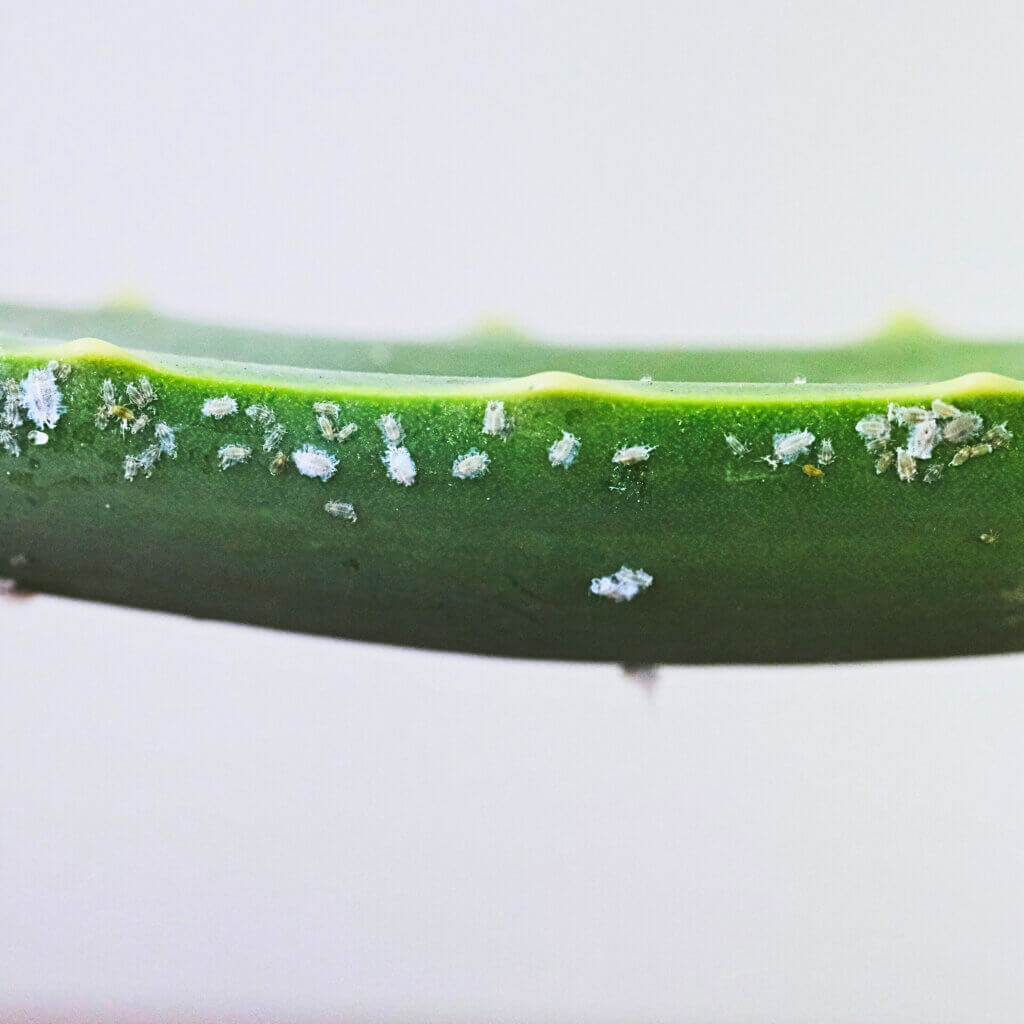
Mealy bugs often appear as a strange white fluff developing on your plant. These common household pest loves humidity so if you have them it might be good to move your plant somewhere drier.
Aphids
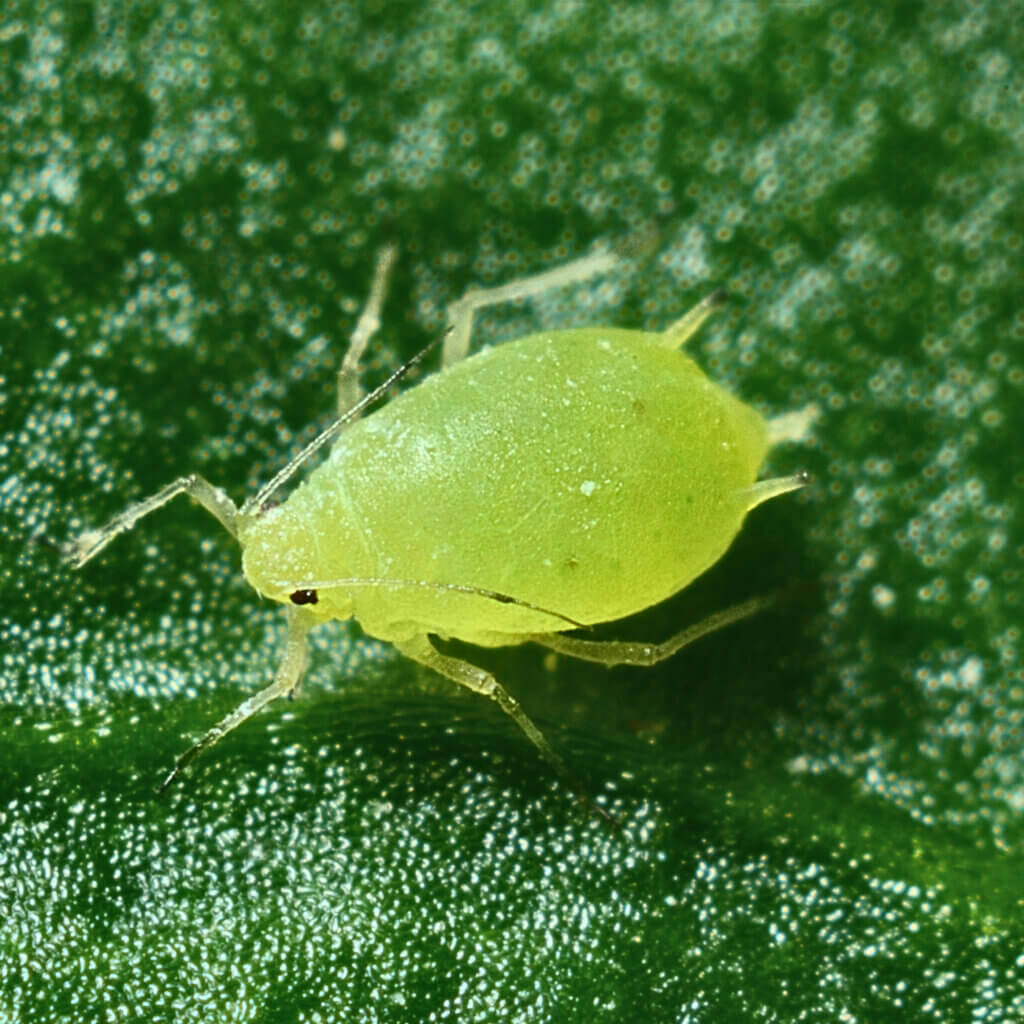
Aphids are usually pretty easy to spot, but you may be alerted to their presence by distorted and curling leaves, or by their white cast skins which can accumulate on leaves.
Scale Insects

Scale insects can be spotted by looking for bumps on stems and leaves. These are the outer coverings of the insect. In summer you may also find egg clusters underneath leaves.
If dealt with promptly your plant should recover just fine. For a small population, manually removing them with a damp cloth is usually the easiest way.
They are usually already on plants when they are purchased, so be sure to check stems carefully when bringing a new plant into your home.
How to propagate your String of Hearts
There are two main ways of propagating your String of Hearts: by its tubers, or by rooted cuttings.
Tuber propagation
One of the easiest ways to propagate a String of Hearts plant is using the small aerial tubers, often called beads, which grow from the stems. To root them, lay the stems over the soil of a new pot so the beads sit on the surface. Gently cover them, and cut the new plant free when roots form.
Rooted cuttings
Start by identifying a healthy stem and take a cutting with at least 4 nodes using a sharp, clean knife. Remove the lower leaves so that you are able to cover the lower two nodes in either water or compost.
If placing the cutting in water, watch for roots and transplant the cutting into its own pot once they appear. If planting straight into soil it’s a good idea to keep the soil moist by covering it with a plastic bag until you see signs of growth.
Top Tip
String of Hearts is easiest to propagate during its active growth phase. This usually means late spring or summer, so watch out for signs like flowers and new leaves. It’s not impossible to propagate in winter, but it’s much harder and your cutting will take longer to root (if they root at all).
String of Hearts care FAQs
Q: Is a String of Hearts plant safe for pets?
A: Yes, String of Hearts is non-toxic to cats and dogs.

Looking for more pet safe plants?
Check out the complete guide to pet safe plants. Get advice on how to choose the right plants for your space and schedule, as well as creative ideas for how to style them.
Q: How long can a String of Hearts plant live?
A: With proper care String of Hearts plants can live for 10-20 years. It typically reaches maturity around age 2-5.
Q: How big can a String of Hearts plant grow?
A: String of Hearts plant can grow to be a whopping 1-2m long at maturity.
If your plant is getting too long, you can always give it a little trim with sharp clean scissors. This will keep the plant tidy and also encourage it to become more bushy.
String of Hearts like to sprawl so the width of the plant is usually determined by the width of their container.
Final thoughts
String of Hearts care is easy and undemanding. In fact, the less you do the happier it will be. All it really wants is enough light and the bare minimum amount of water. Not only that, they’re easy to propagate and make cute, quirky gifts so they will definitely earn their keep on your shelf. With a little bit of know-how, this charming, heart-shaped vine will keep your home full of lush, cascading greenery for years to come.