
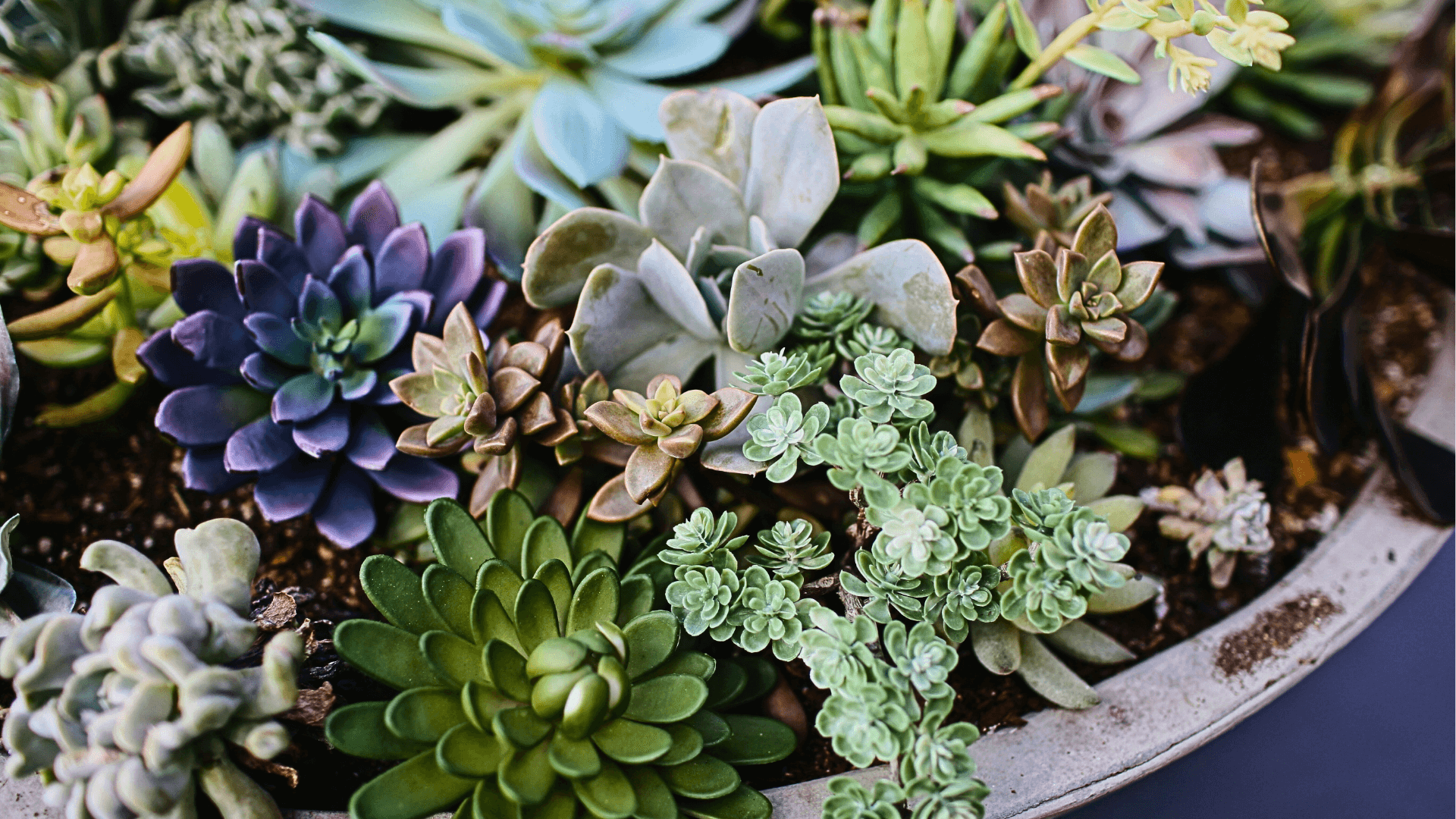
There is something deeply satisfying about a well-chosen succulent collection. Whether it’s the jewel coloured rosettes of an Echeveria or the prehistoric charm of a Ponytail Palm, succulents are a simple and sculptural way to add plants to your home. For pet owners, however, building that collection requires a little bit of care and knowledge. Some of the most popular and widely sold succulents are harmful to cats and dogs, and the risks are not always clearly labelled. The good news, though, is that there are also plenty of pet-safe succulents to choose from. In this article I’ll cover choosing and caring for your plants, as well as common varieties to avoid.
In this guide
Top 10 pet-safe succulents
These ten succulents are perfect for any pet-friendly collection. Each one has been selected for its safety, beauty, and suitability as an indoor plant. From familiar favourites to dramatic statement plants, there’s something here for every home.
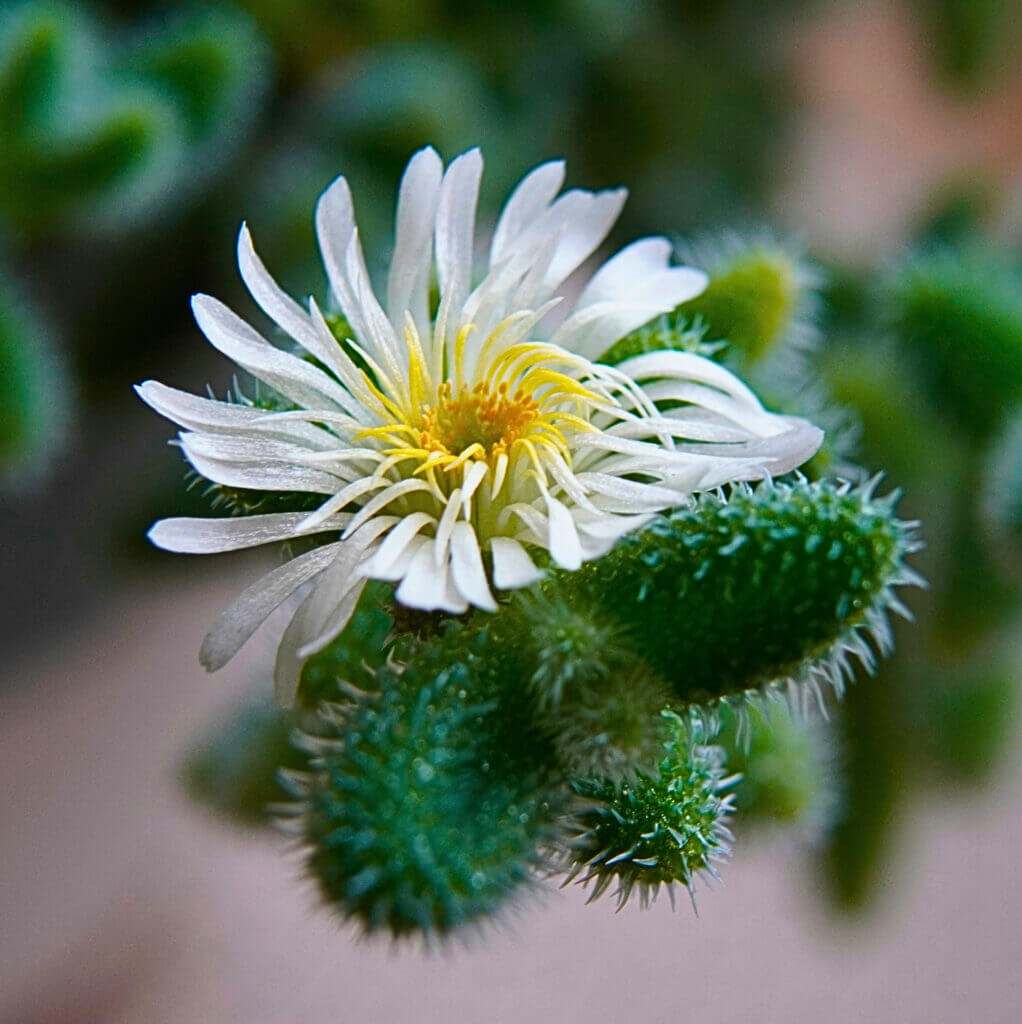
1) Pickle Plant (Delosperma Echinatum)
It’s easy to see how this plant gets its name. This unusual succulent has plump, fuzzy leaves and, when happy, will also produce delicate daisy like flowers. It originates from South Africa where it grows in open scrubland. It will typically grow to about 30cm tall and stays nicely compact, making it an ideal houseplant for any space.
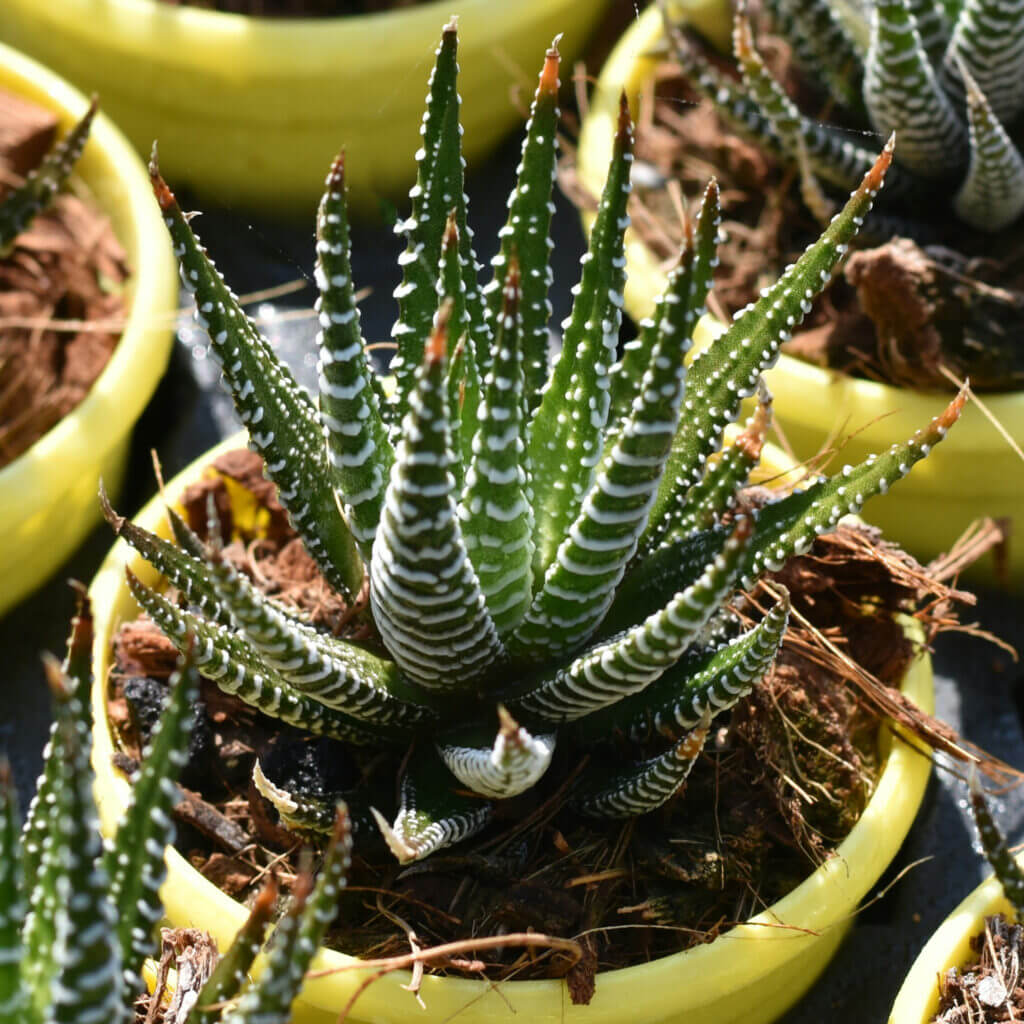
2) Zebra Plant (Zebra Haworthia)
This small but striking succulent features pointed leaves with pale striping. They are native to southern parts of Africa where they thrive in dry, desert like habitats. They grow slowly and reach a mature size of roughly 25cm high and 40cm wide, making them perfect for a pot on a sunny shelf. While it is possible for Zebra plants to flower, it’s less common when they’re grown inside.
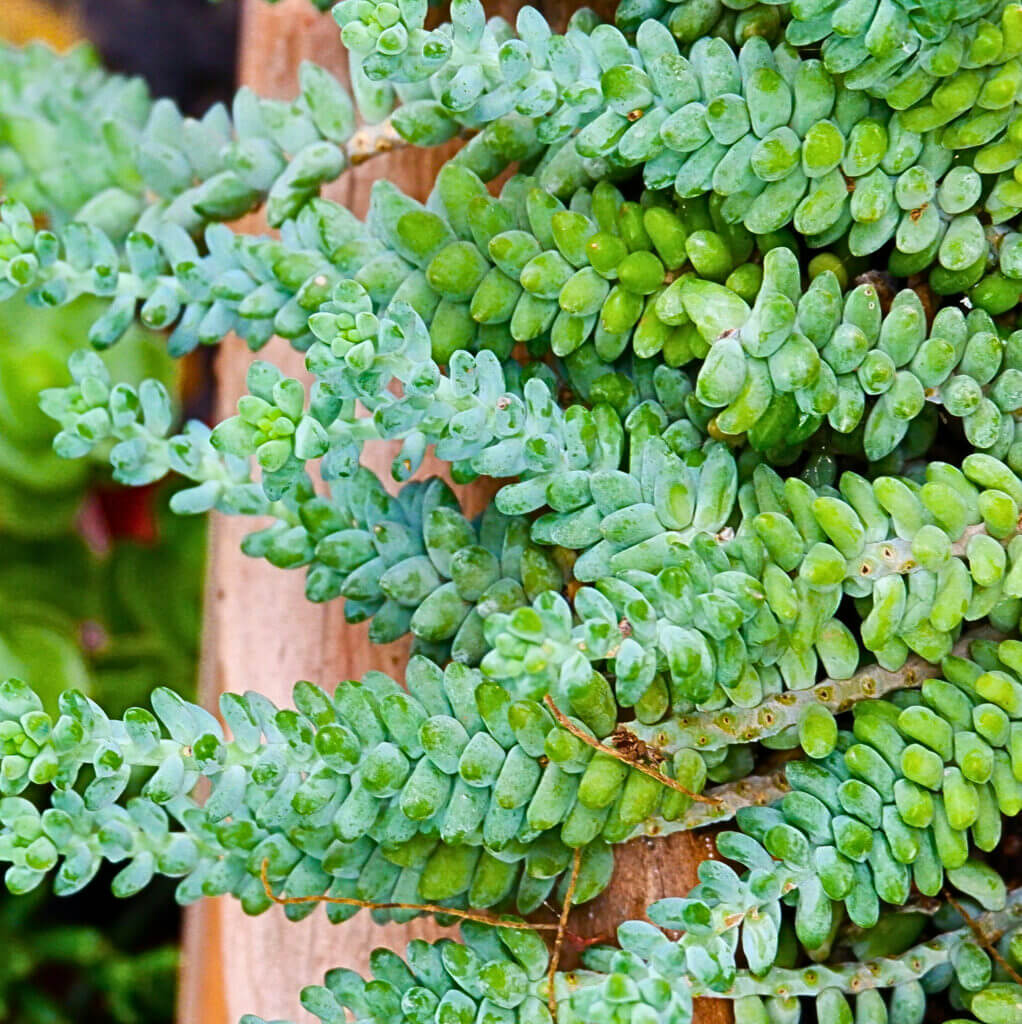
3) Stonecrop (Sedum)
Sedums are a large group of resilient pet-safe succulents with thick, water-storing leaves. There are many different varieties of sedum but some beautiful options include:
- Coppertone: a variety with yellow-copper leaves which grow like little shooting stars at the end of its stems.
- October Daphne: a striking variety with blue-green leaves and pompom like pink flowers on trailing stems
- Burro’s Tail, the variety in the picture. This is one of the easiest varieties to grow and looks wonderful trailing from a hanging planter.
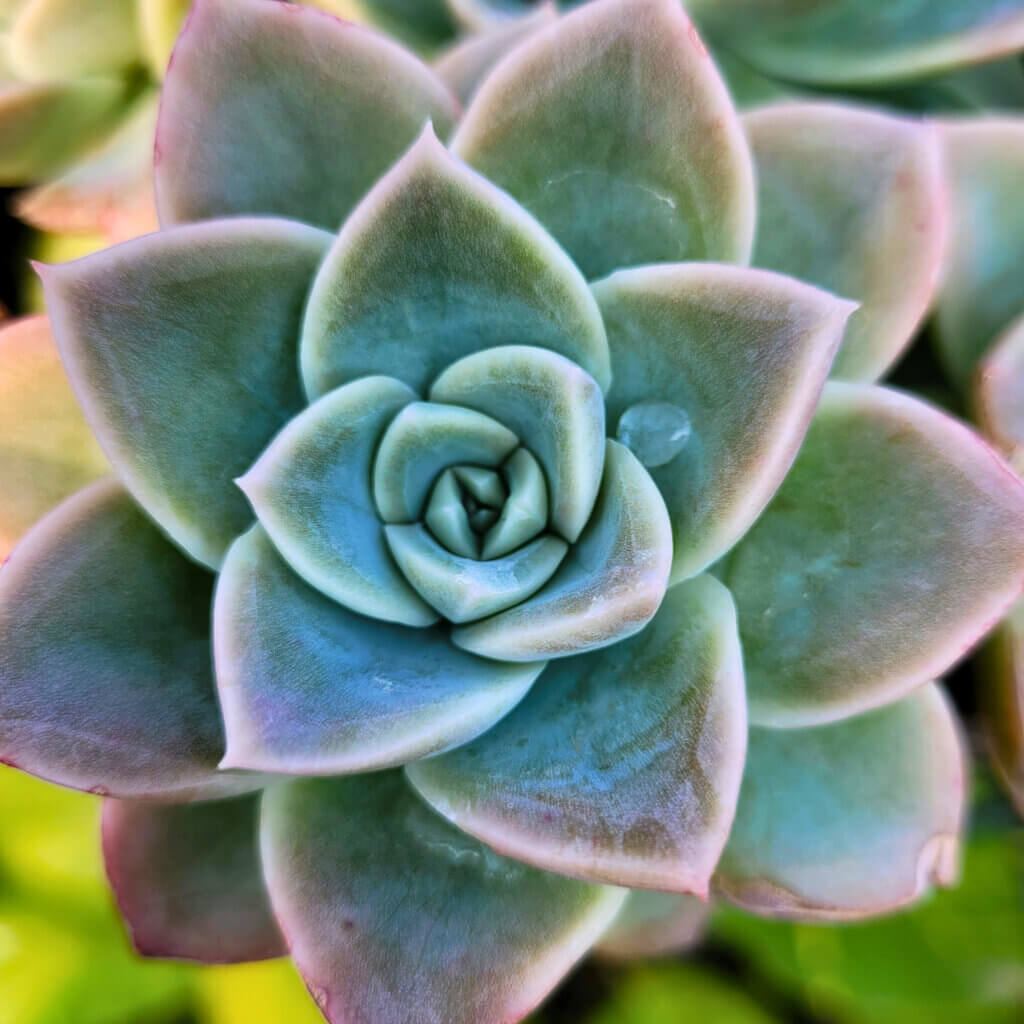
4) Echeveria (Echeveria glauca)
Echeveria are a common favourite in many homes thanks to their charming little blue and green rosettes. These pet-safe succulents make excellent houseplants because they stay compact enough to be placed almost anywhere in the home. These sun loving desert plants originate from Mexico and Central America, though, so just make sure you choose somewhere they will get plenty of light.
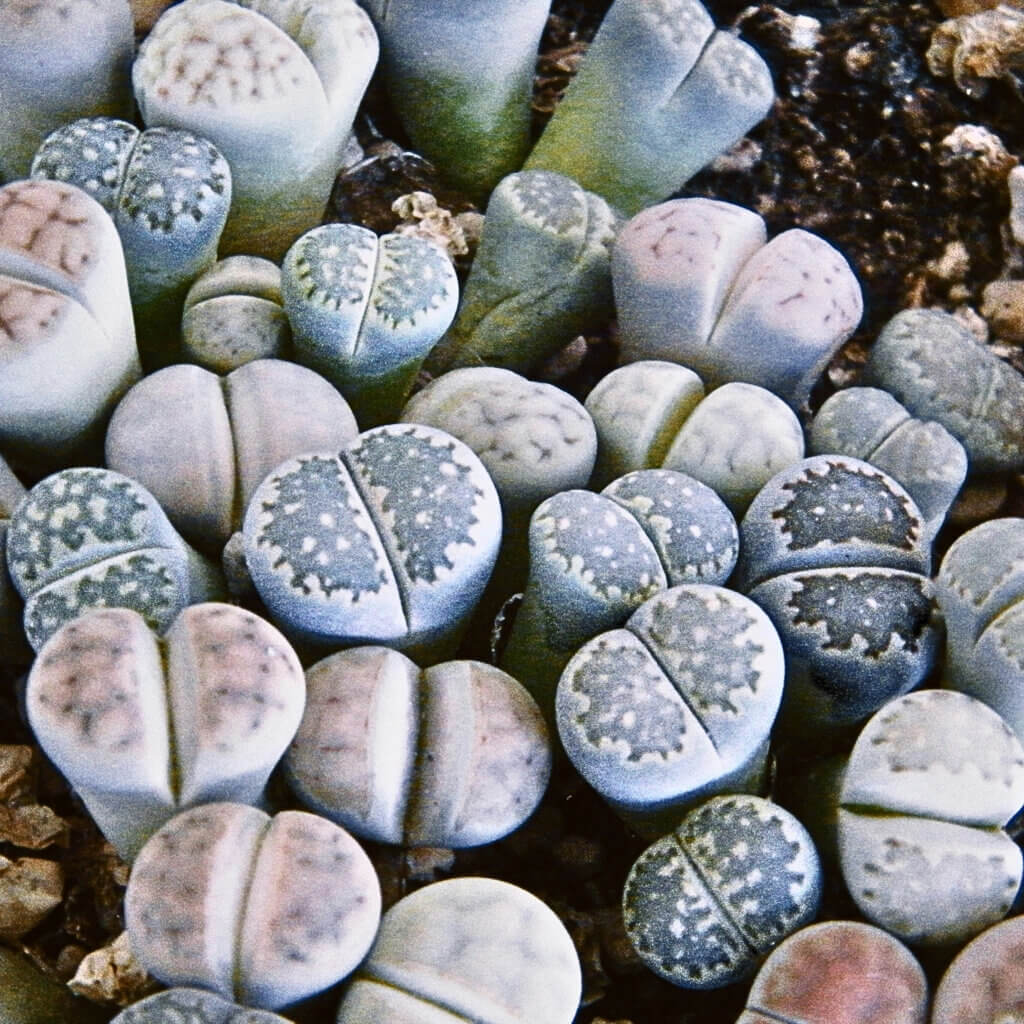
5) Living Stones (Lithops naureeniae)
As the name suggests, Living stones are fascinating little succulents which have evolved to look stones to avoid being eaten. They come from the driest regions of South Africa and need virtually no water. For a lot of the year it’s actually best not to water them at all. Stop watering completely:
- Between October and May, (or whenever the old leaves have completely died back).
- During their dormant period in the summer months.
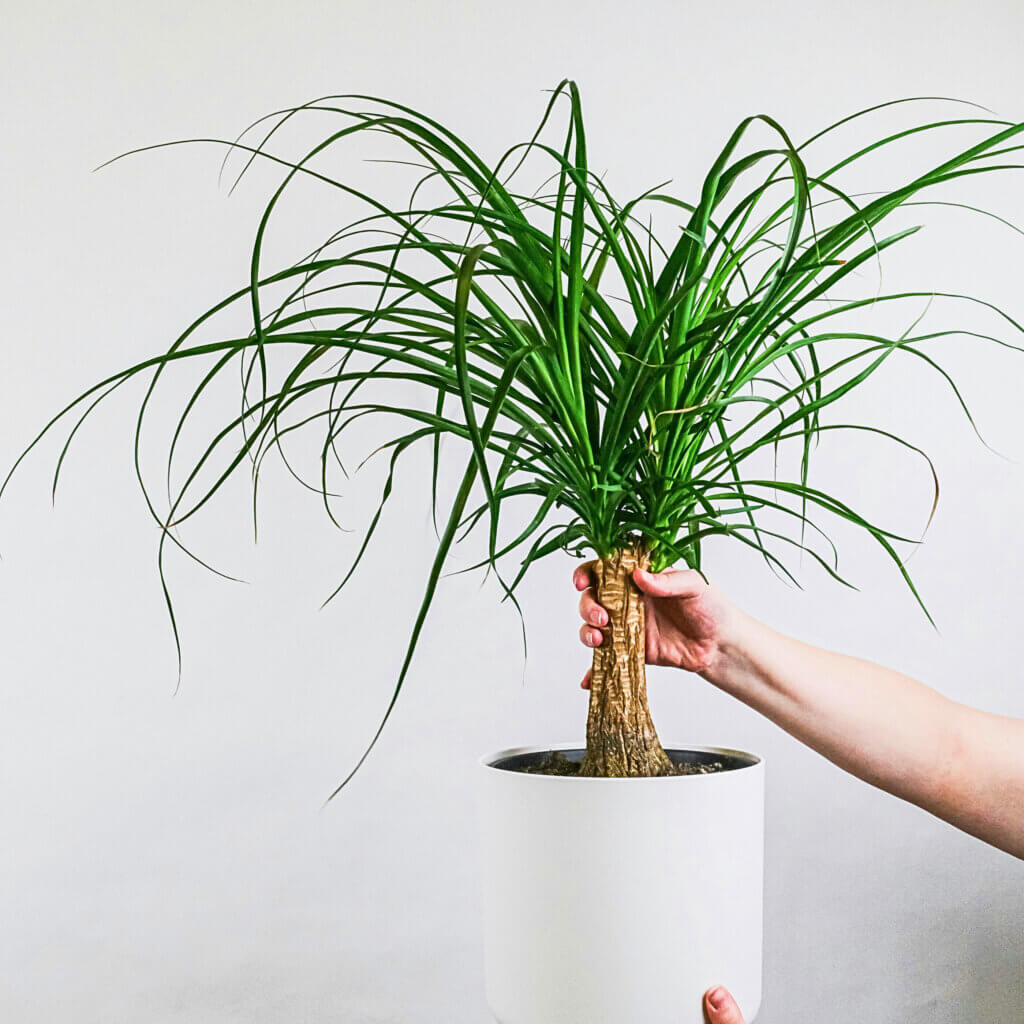
6) Ponytail Palm (Beaucarnea recurvata)
The Ponytail Palm is a striking, low-maintenance houseplant that’s actually more closely related to agave than a true palm. Native to arid regions of Mexico, it’s instantly recognizable by its swollen trunk and cascading leaves that fountain outward like a ponytail. Ponytail Palms are slow growing, drought tolerant, and can live for decades, so they’re an excellent choice for any home.
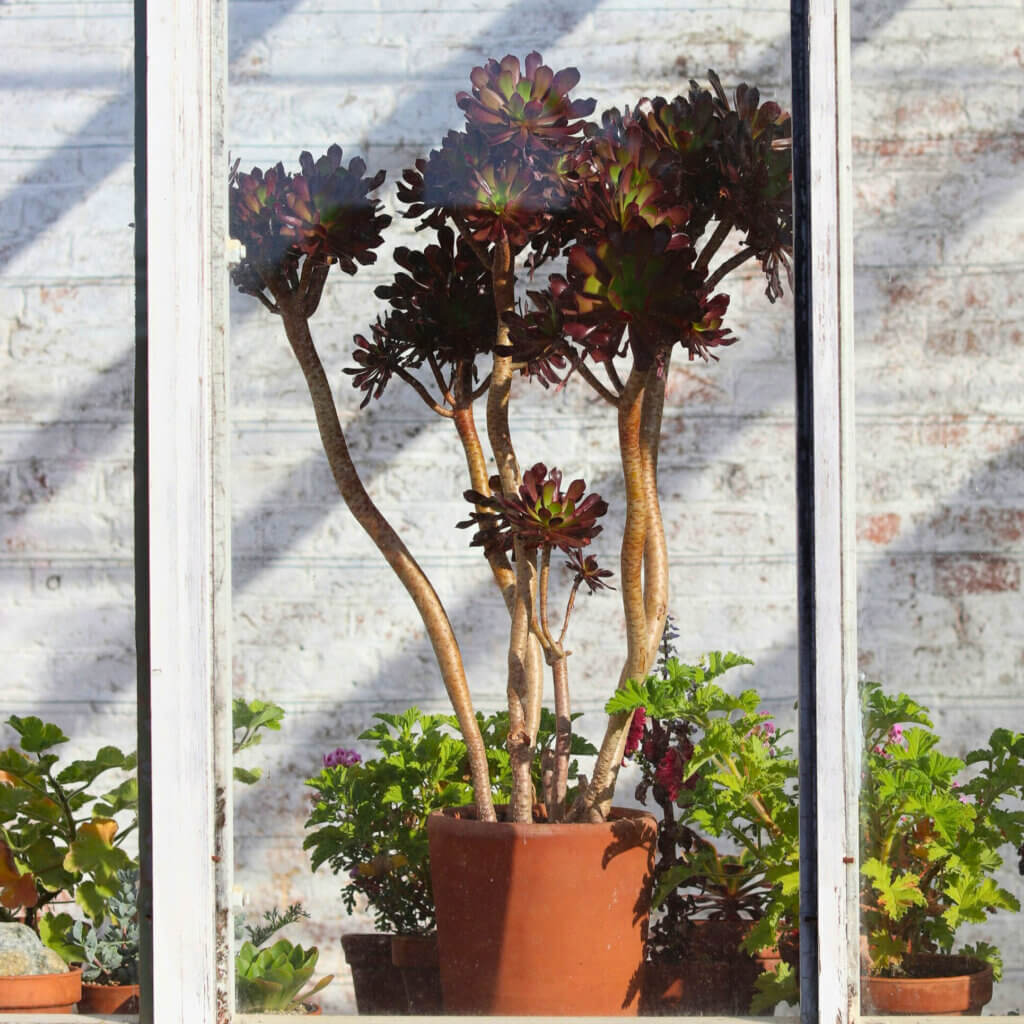
7) Tree Houseleek (Aeonium arboreum)
Tree Houseleeks are stunning pet-safe succulents native to the Canary Islands, prized for their architectural, rosette-shaped leaves arranged on branching woody stems. There are several varieties to choose from and the rosettes come in a range of colours, from bright green to deep burgundy.
Unlike most succulents, it actually prefers cooler temperatures and winter rainfall, going dormant in hot, dry summers.
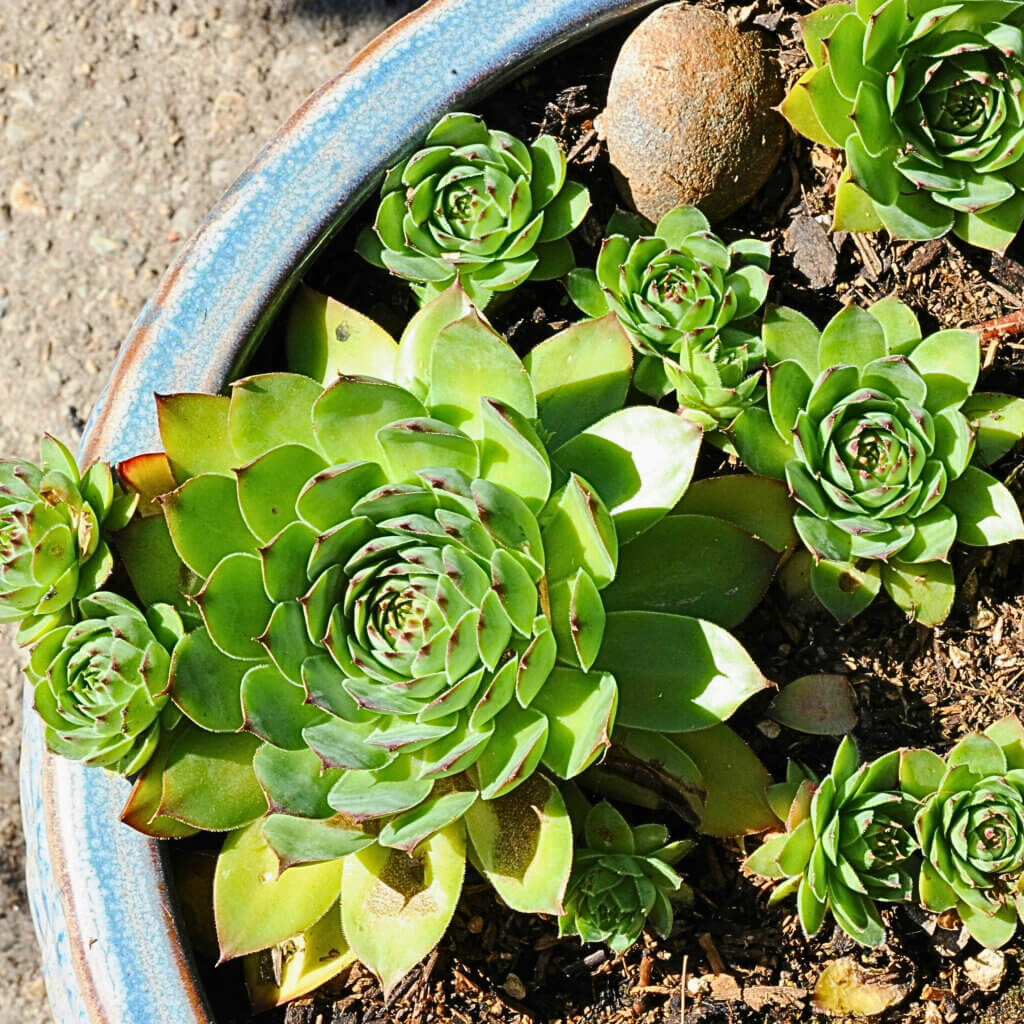
8) Hens and Chicks (Sempervivum)
Sempervivum, commonly known as Hens and Chicks, is a hardy, mat-forming succulent native to the mountains of Europe and Asia. The central rosette, the “hen,” produces clusters of smaller offsets, or “chicks,” that spread outward to form dense, attractive mats. Available in hundreds of varieties, foliage ranges from pale green to deep red and purple, often intensifying in colour with sun exposure or cold.
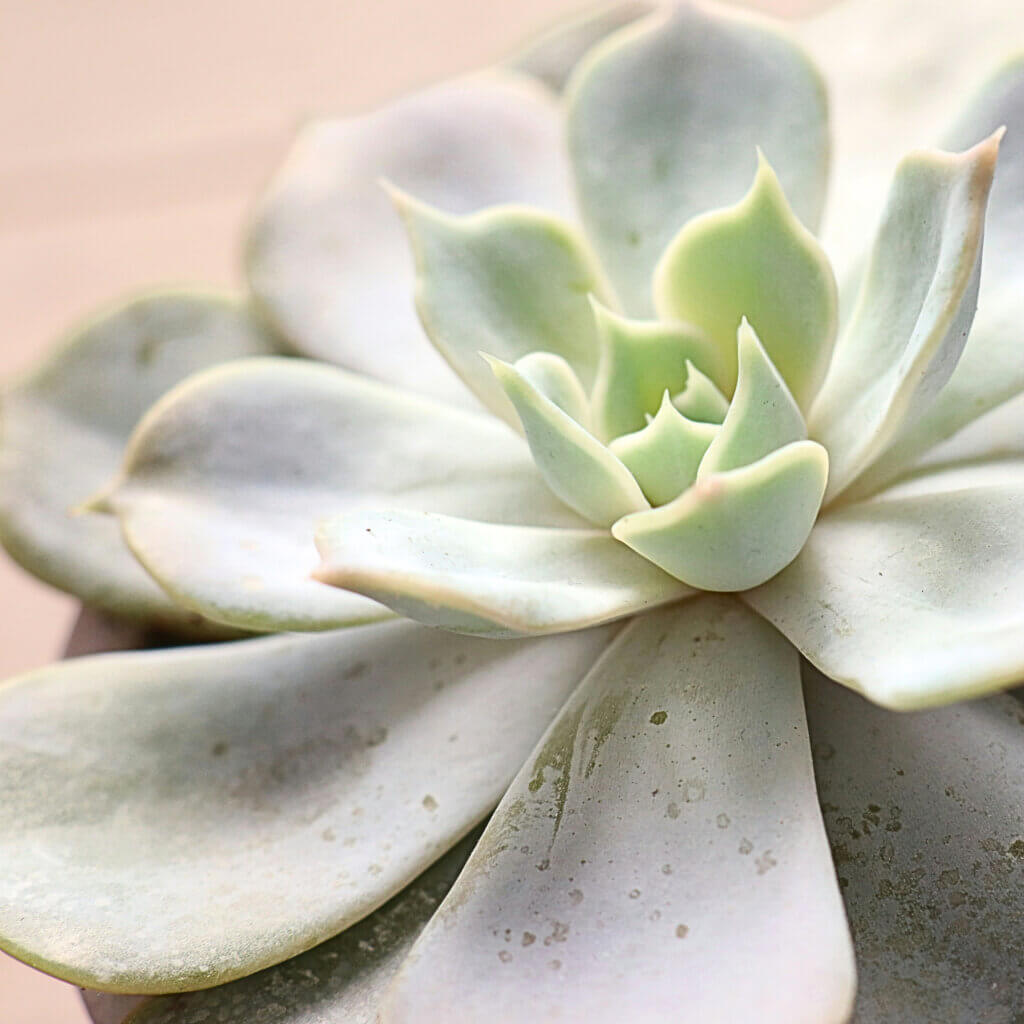
9) The Ghost Plant (Graptopetalum)
Graptopetalum is a genus of charming rosette-forming succulents native to Mexico and Arizona, closely related to Echeveria. Sometimes called Ghost Plants, they are prized for their pale, pearlescent foliage which develops a beautiful blush in bright sunlight. The leaves are thick and fleshy, arranged in tight, elegant rosettes that produce trailing offsets over time.
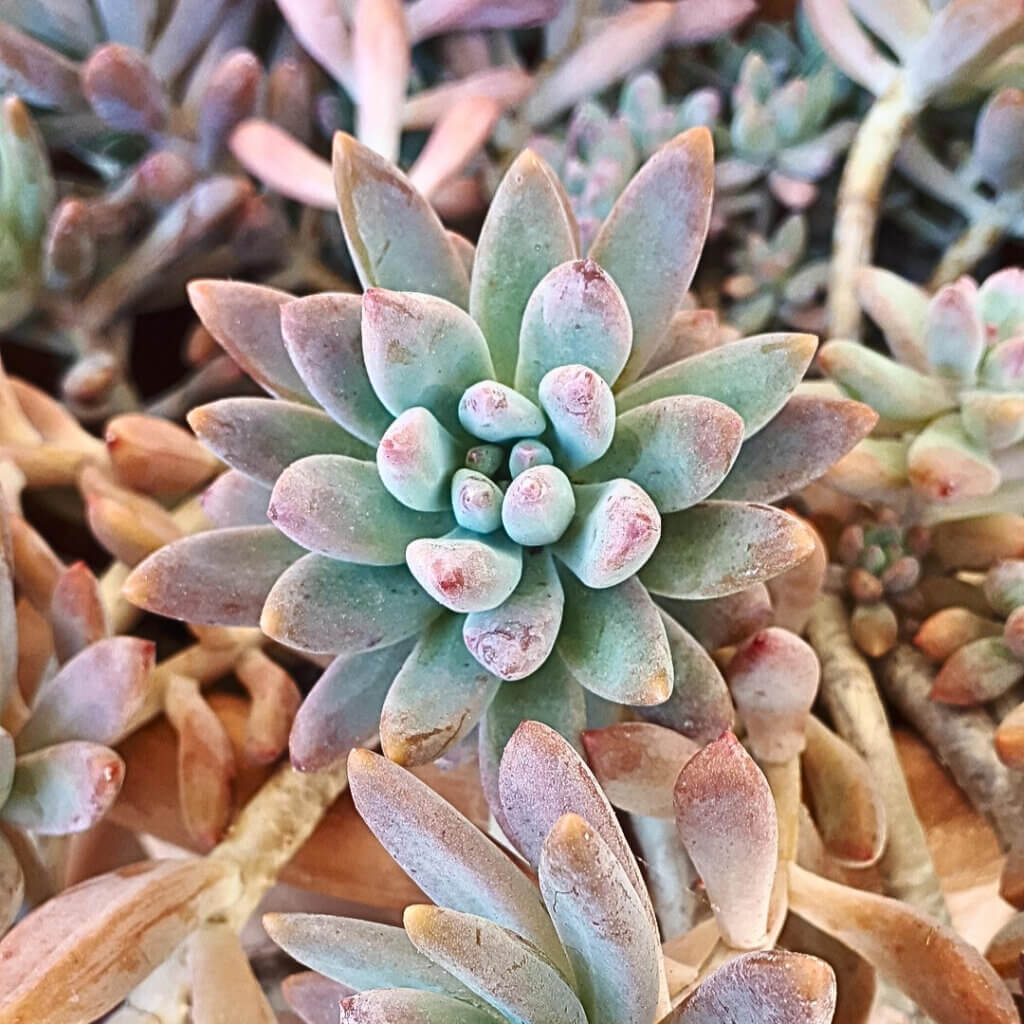
10) Moon Stones (Pachyphytum)
Pachyphytum is a genus of pet safe succulents native to Mexico. Closely related to Echeveria and Sedum, they are sought after for their plump, jewel-like leaves leaves, which come in soft shades of lavender, pink, silver, and pale blue, often dusted with a delicate powdery coating called farina. This waxy bloom helps protect the plant from intense sunlight and should be handled with care to avoid smudging. Their sculptural, almost otherworldly appearance makes them particularly popular among succulent enthusiasts.
Bonus semi-succulents
Not quite succulents in the strictest sense, but close enough to justify an honourable mention. These five semi-succulents share the same low maintenance appeal while adding variety in texture, form, and foliage. All are pet safe, and all are well worth a place on your windowsill.
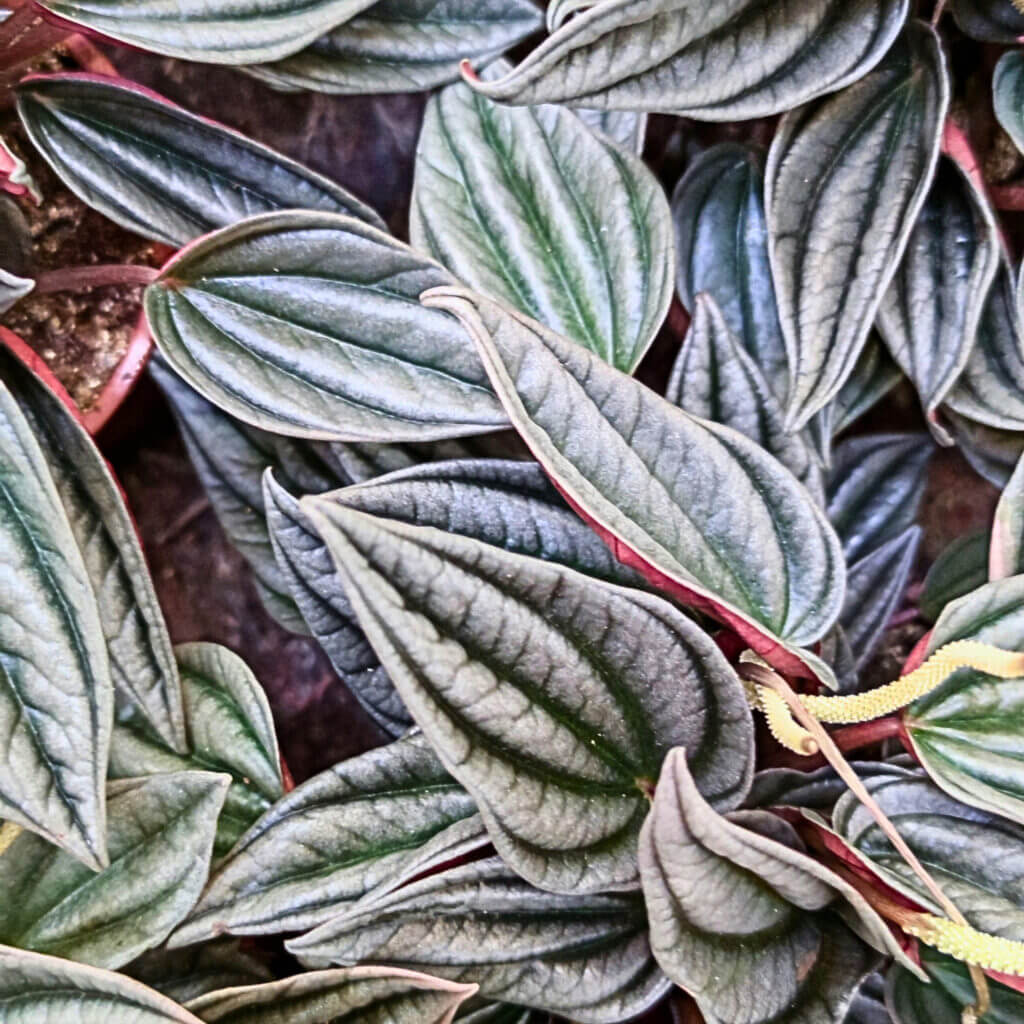
Peperomia
Peperomia is a wonderfully diverse genus of compact, easy going houseplants. With over a thousand species, it offers extraordinary variety, from the thick, fleshy leaves of Peperomia obtusifolia to the deeply ridged, watermelon-patterned foliage of Peperomia argyreia. The entire genus is considered non-toxic to cats and dogs by the ASPCA, making it a safe and versatile choice for pet friendly homes.
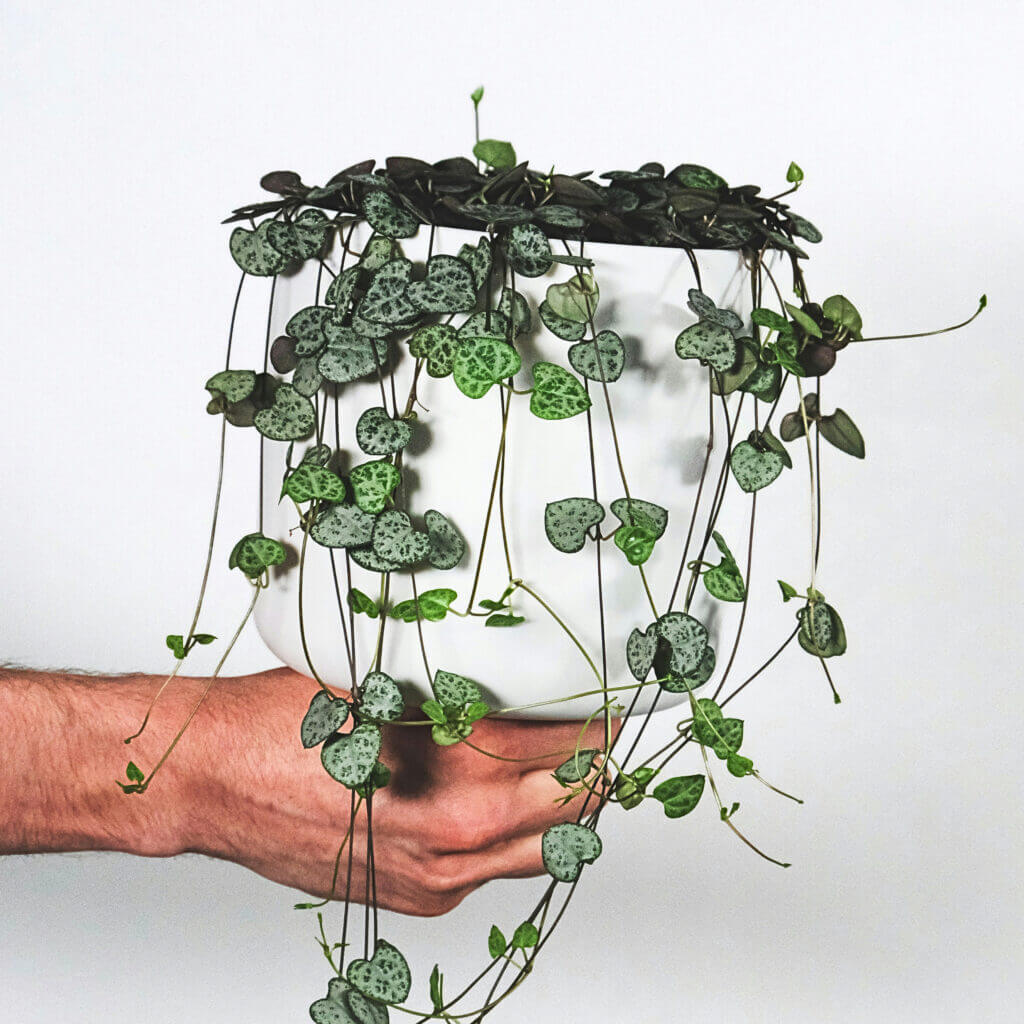
String of Hearts (Ceropegia woodii)
String of Hearts is a charming trailing houseplant with long, delicate stems and small heart-shaped leaves patterned in silver, green, and deep purple. Native to southern Africa it is used to dry conditions and stores water in its leaves and small stem tubers. It’s a beautiful choice for high shelves or hanging baskets, but be warned – it’s fast growing and can reach lengths of over a meter!
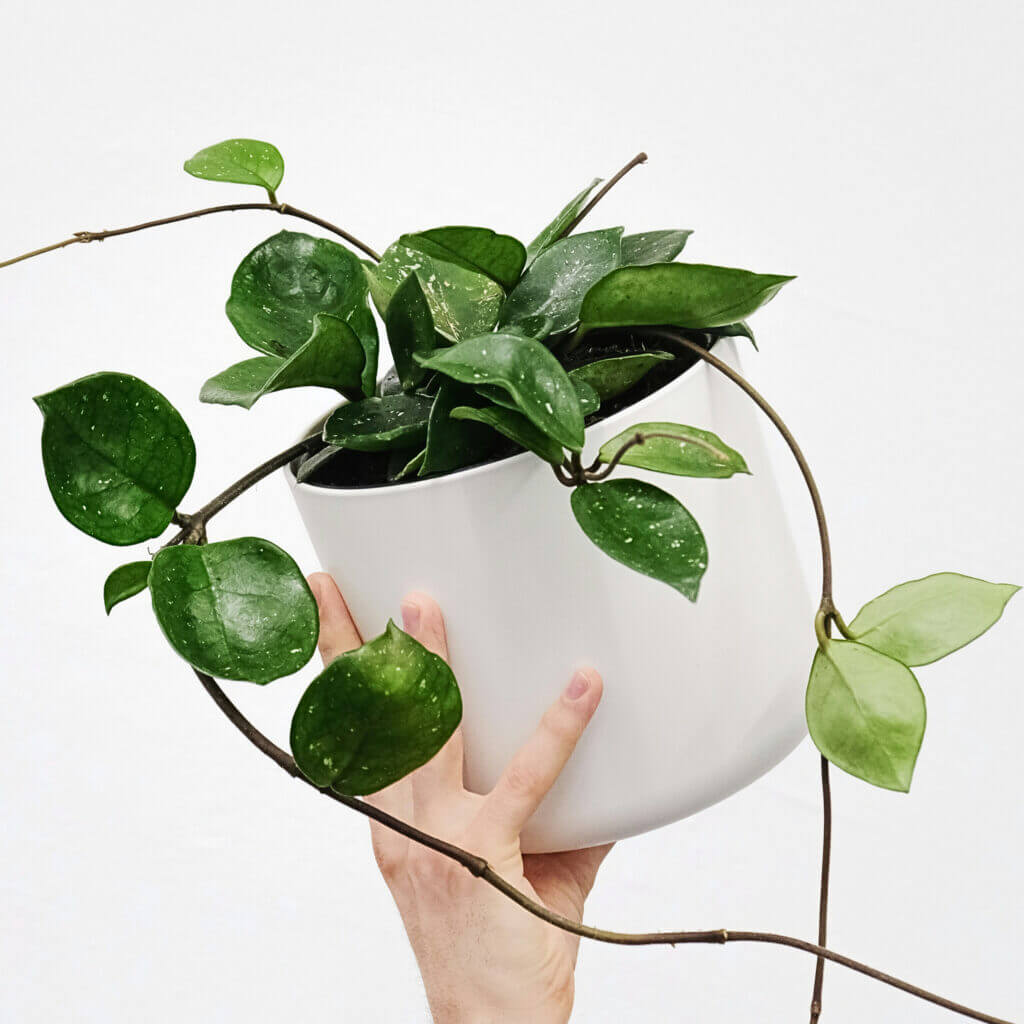
Wax Plant (Hoya)
Hoyas are a wonderful choice for pet friendly homes. They are non-toxic to cats and dogs and available in a remarkable range of shapes and sizes. Sometimes called Wax Plants for their thick, glossy foliage, they are semi-succulent in nature, storing water in their leaves and tolerating periods of drought well. With proper care a mature Hoya may also produce clusters of fragrant, star-shaped flowers, making them a truly special houseplant.
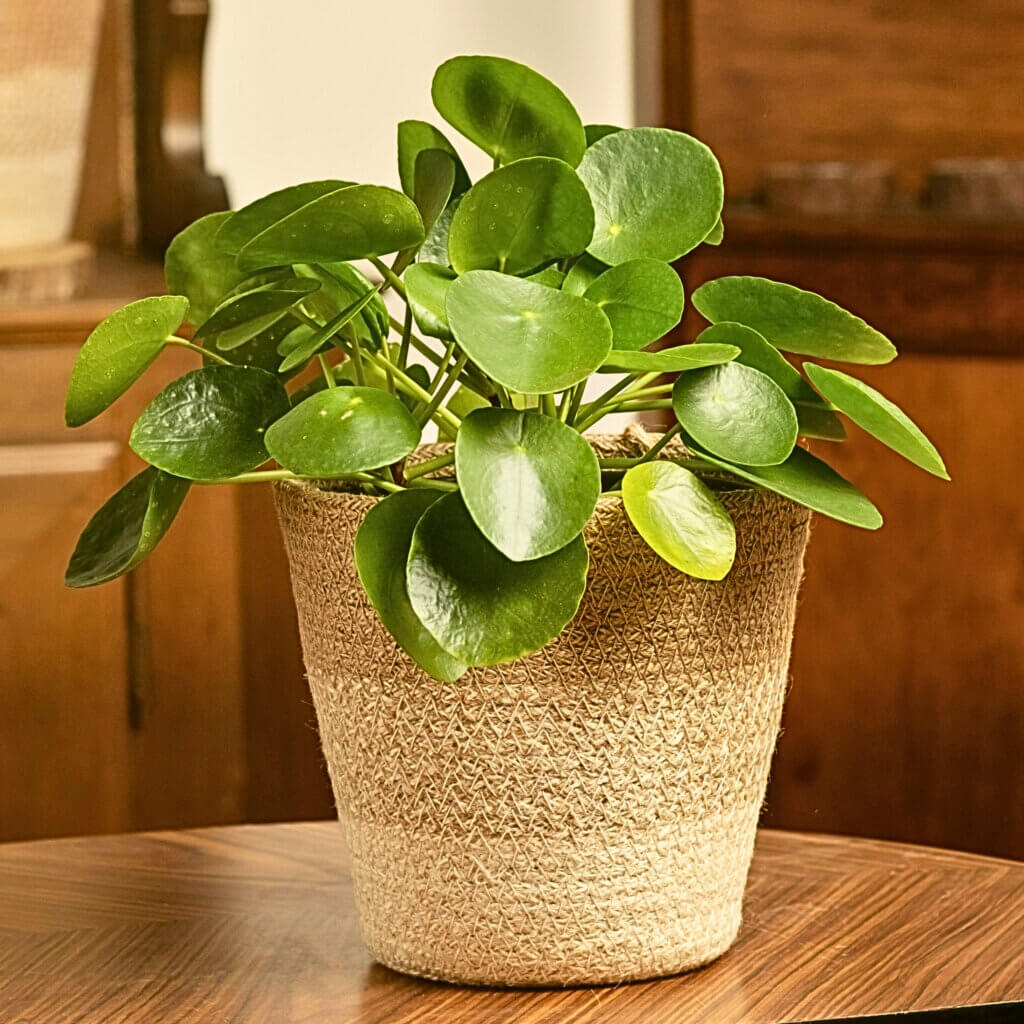
Chinese Money Plant (Pilea Peperomioides)
An easy care classic and holder of the RHS Award of Garden Merit, the Chinese Money Plant is instantly recognisable by its distinctive coin shaped leaves. It is also one of the easiest houseplants to propagate, earning its nickname the ‘pass it on’ plant. Simply pot up the small ‘pups’ that appear around the base once they reach a few inches tall.
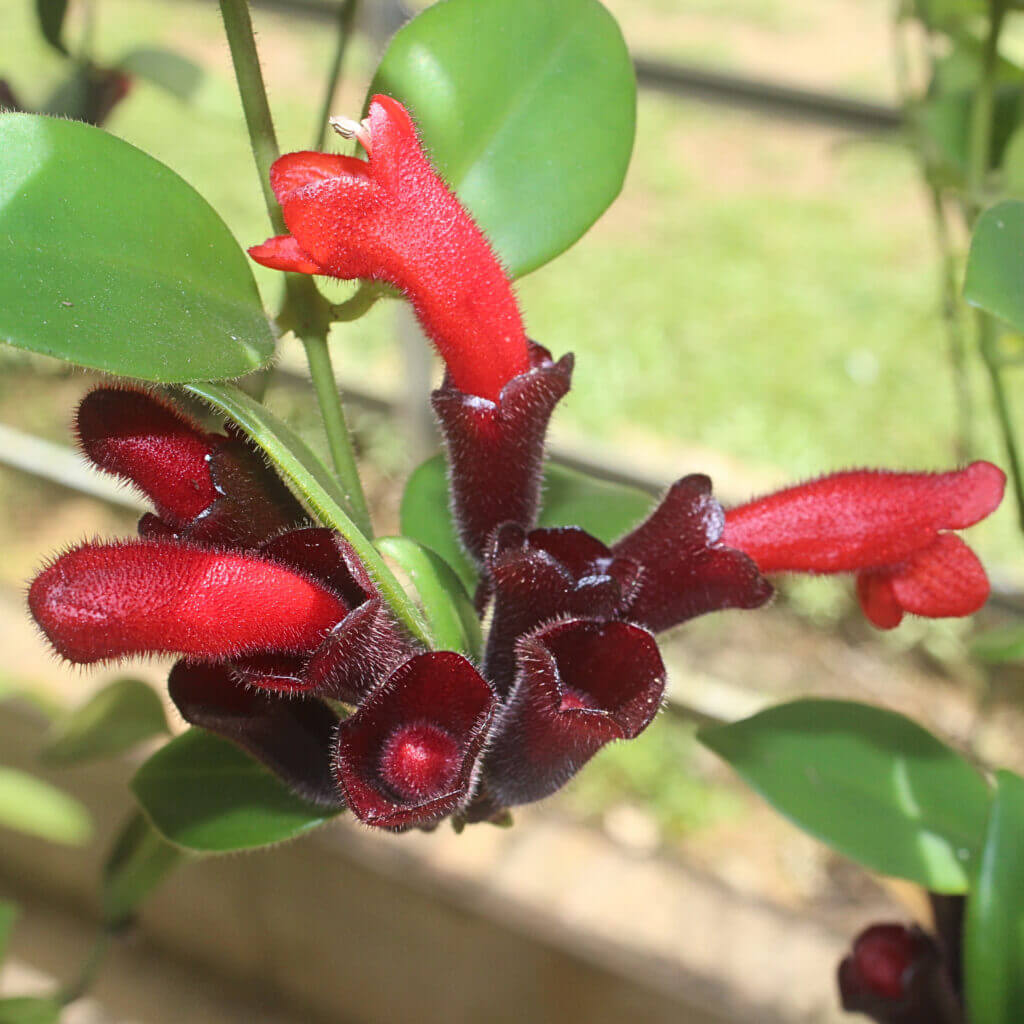
Lipstick Plant (Aeschynanthus)
The Lipstick Plant earns its name from its striking tubular flowers, which emerge from deep burgundy buds like a tube of lipstick. Non-toxic to cats and dogs, it is a unique addition to any pet friendly collection. Semi-succulent in nature, its thick, waxy leaves store some moisture, offering a degree of drought tolerance. A warm, humid environment suits it well, making it perfect for a brightly lit bathroom.
Toxic succulents to avoid
Not every succulent belongs in a pet friendly home. This section covers five popular varieties that are toxic to cats and dogs.
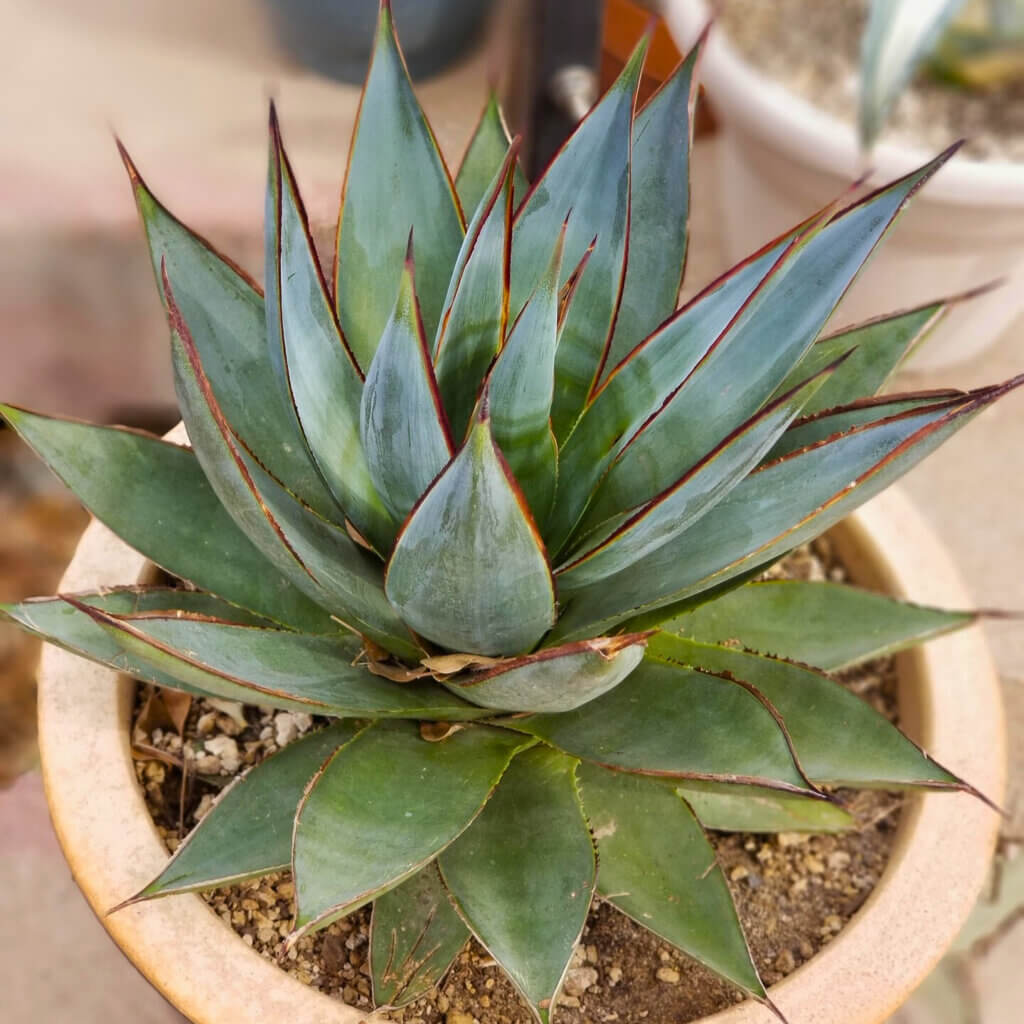
Agave
Agave is a popular, architectural succulent popular, but pet owners should be aware it can cause mild to moderate reactions in cats and dogs if ingested. The leaves contain oxalate crystals and sapogenins, which may cause vomiting, diarrhea, drooling, and mouth irritation. While Agave is not listed among the ASPCA’s most toxic plants and serious poisoning is unlikely, caution is still advised.
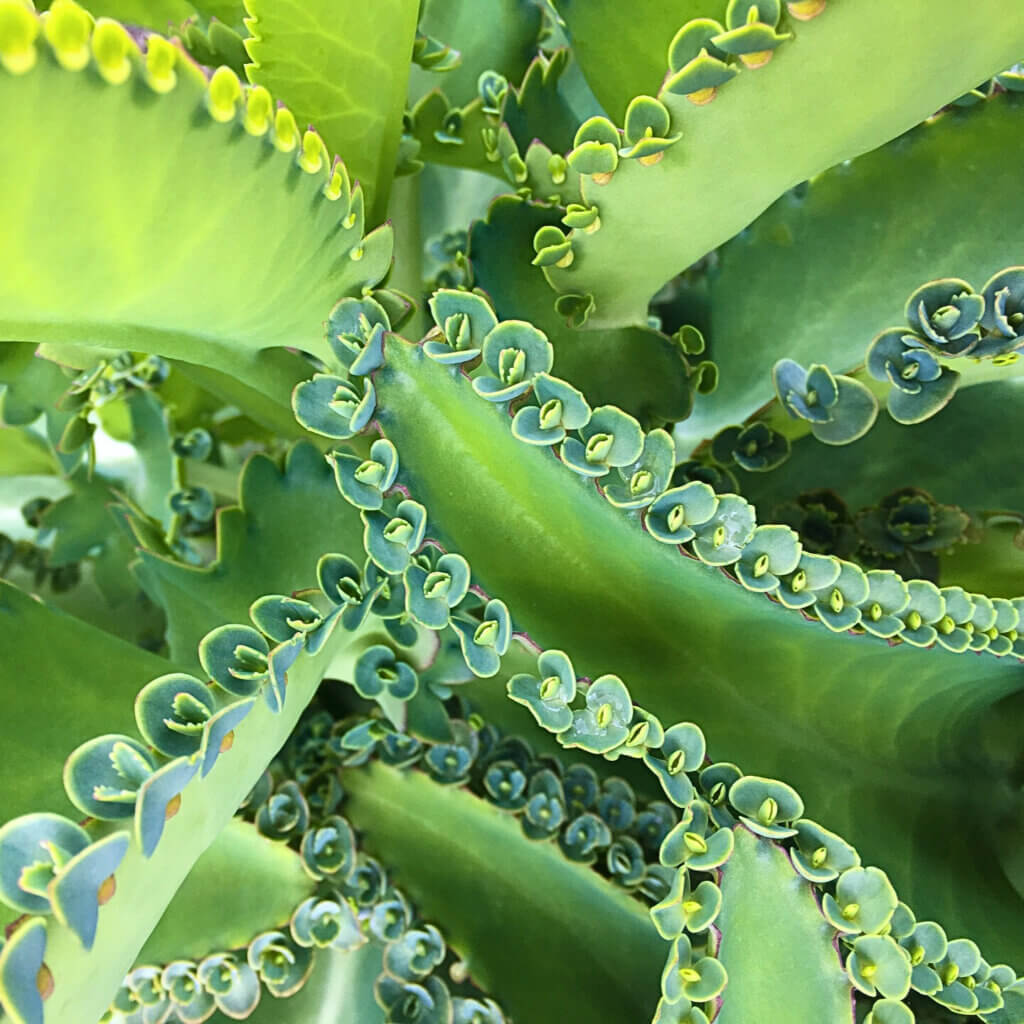
Mother of Millions (Kalanchoe Delagoensis)
Mother of Millions is an incredibly intriguing looking plant, but sadly it is definitely one to avoid if you own pets. It contains bufadienolide cardiac glycosides, which can cause vomiting, diarrhea, lethargy, and disrupt heart function in cats and dogs. Any suspected ingestion should be treated as urgent and veterinary advice sought immediately.
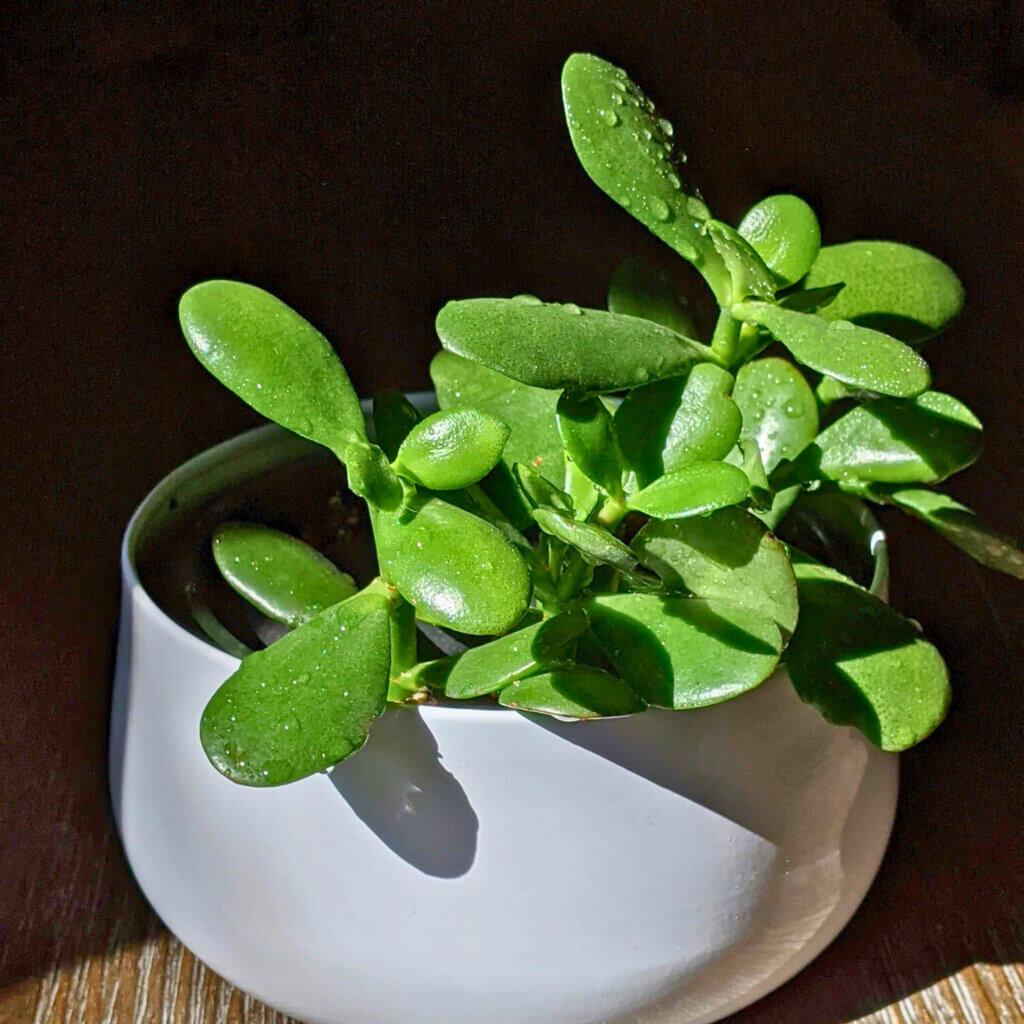
Jade Plant (Crassula Ovata)
Jade Plant is one of the most popular houseplants, but it is confirmed as toxic to cats, dogs, and horses by the ASPCA. Ingestion causes vomiting, depression, loss of coordination, and lethargy. Some pets may also experience an elevated heart rate. The fleshy, chewable leaves can be attractive to animals, making accidental ingestion a real risk in homes with the plant. While Jade Plant toxicity is rarely life-threatening, affected pets should be seen swiftly by a vet.
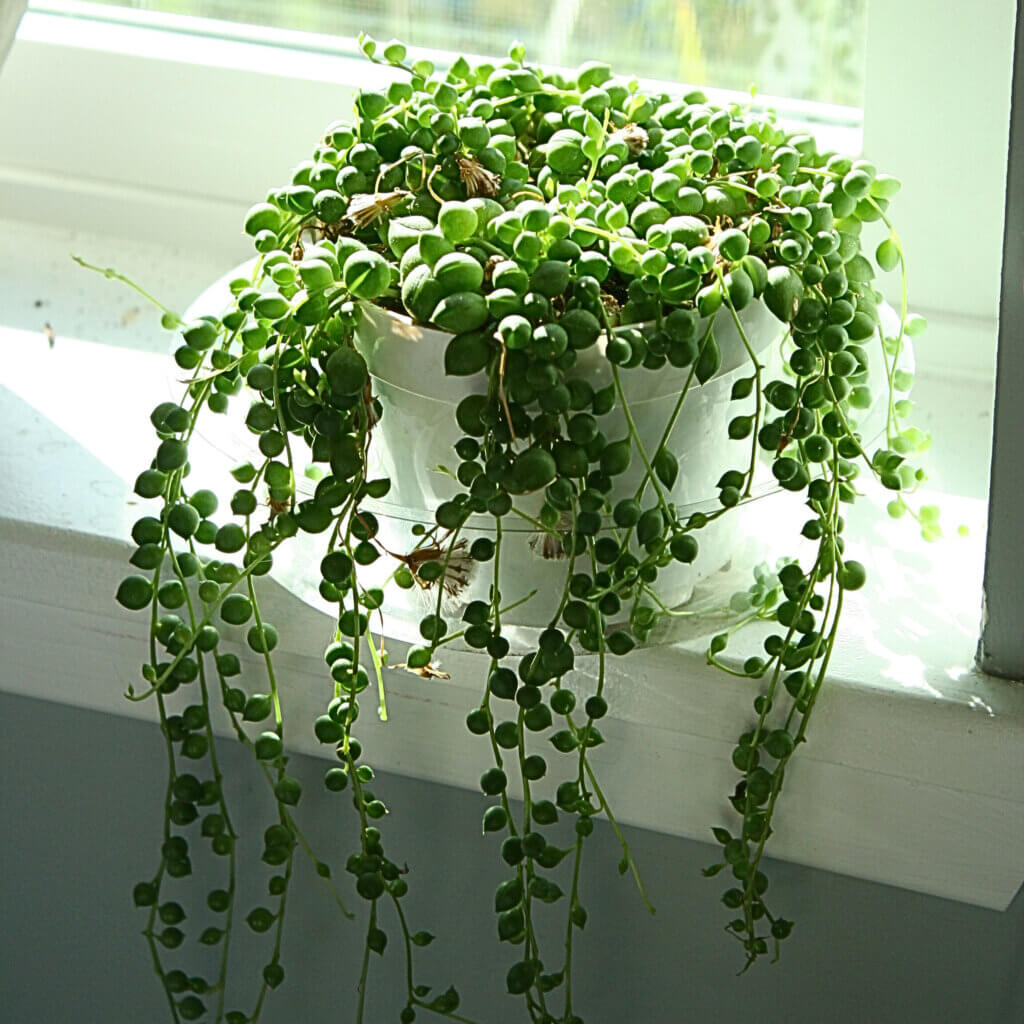
String of Pearls (Senecio Rowleyanus)
String of Pearls is a popular trailing succulent with distinctive ball like leaves. It’s toxic to both dogs and cats so be careful not to mix it up with the String of Hearts mentioned above. The sap contains pyrrolizidine alkaloids, which cause stomach upset including vomiting and lethargy. In cases of significant ingestion, liver damage is possible.
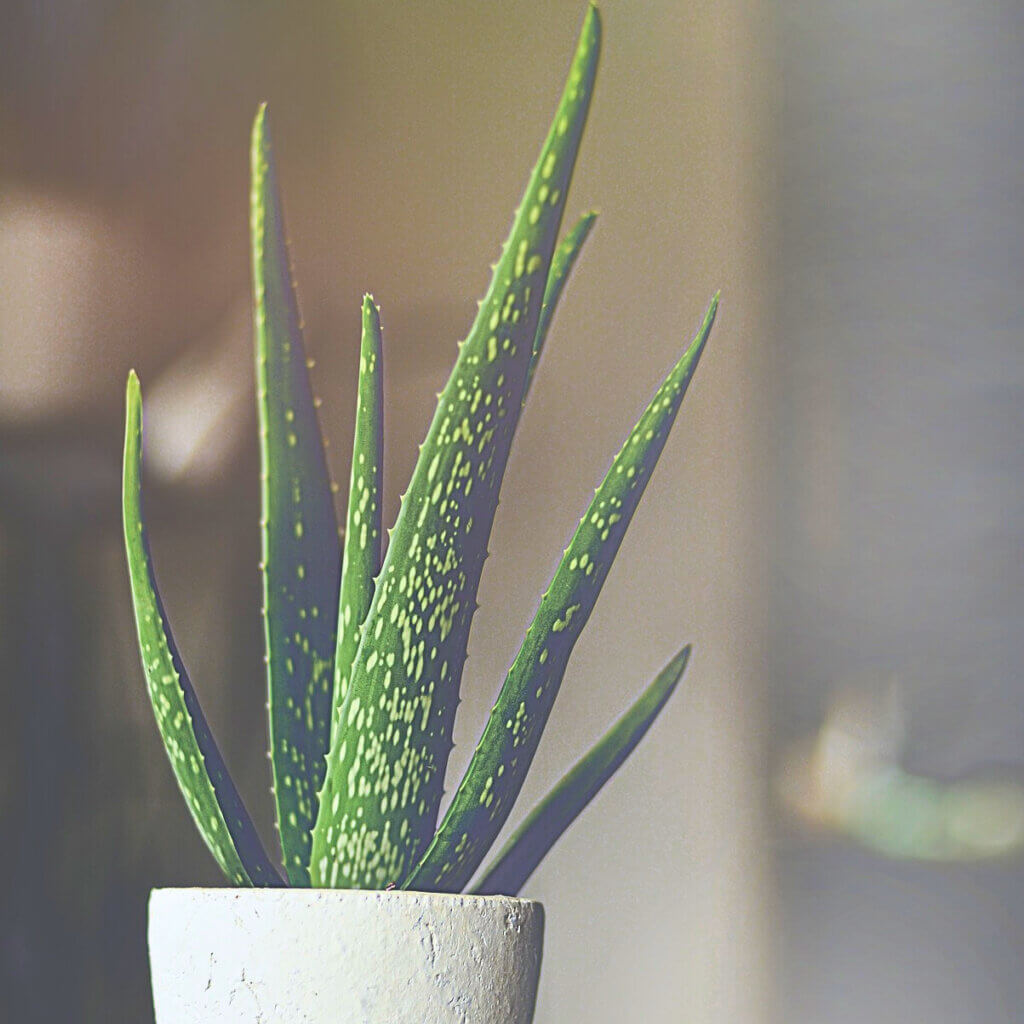
Aloe Vera
Aloe Vera is an incredibly popular plant with a reputation for soothing and healing. Sadly this only applies to humans as it is confirmed toxic to cats, dogs, and horses by the ASPCA. The danger lies specifically in the latex layer just beneath the leaf skin, which contains saponins and anthraquinones. These compounds cause vomiting, diarrhea, and lethargy in pets. relocating or replacing it entirely.
Best compost for succulents
The best compost for growing succulents indoors is one that offers excellent drainage. Standard multipurpose compost holds too much moisture which can quickly lead to root rot (the most common killer of indoor succulents). Instead, look for a dedicated cactus and succulent compost. These are easy to find in most garden centres, and have a grittier texture that allows water to pass through freely.
If you can’t find, or don’t want to buy, a specialist compost, you can always make your own. Mix your standard multipurpose with at least 50% perlite or something else coarse like sand or horticultural grit. Avoid fine sand, which can actually compact the mix over time and impede drainage.
A slightly acidic to neutral pH of around 6.0–7.0 is ideal. Succulents also thrive in lean conditions, so a compost that is low in nutrients is preferable. Overly rich mixes encourage soft, weak growth and makes plants more vulnerable to pests and disease. Repot every two to three years to refresh the compost and check root health.
Proper succulent watering technique
Watering succulents correctly is arguably more important than any other aspect of their care. Fortunately this is quite straightforward, you just need to ensure that the soil has dried fully before giving more water. For best results, soak the compost fully and then allow it to dry out completely before watering again. This mimics the natural rainfall cycles of their native environments and encourages roots to grow deep and strong in search of moisture.
The best technique is to water directly at the base of the plant, avoiding the leaves and rosette centre where trapped moisture can cause rot. A good method is to p it the pot in a shallow tray of water and let the compost absorb it from below. Remove the pot from the tray once the surface compost feels damp.
The best watering schedule takes the season into consideration. During spring and summer, watering every one to two weeks is usually okay. In autumn and winter, when most succulents enter a period of dormancy, this should be reduced to once a month or even less. Always check the compost with your finger before watering. You are usually looking for the top 2 inches to be dry before giving more water. When in doubt, underwater rather than over.
Best position for succulents
Light is essential to healthy indoor succulents, and the most common mistake is underestimating just how much they need. Most succulents require bright, direct or near-direct sunlight for several hours a day. As a rough guide, 6 hours a day is a good minimum to aim for. A south-facing windowsill is ideal for most homes. Too little light will usually cause plants to stretch and lean toward the light source, becoming pale, leggy, and weakened.
During summer it is fairly easy to meet your plants light needs, but in winter when natural light levels can drop, a dedicated grow light can make a big difference. Full-spectrum LED grow lights are the most energy-efficient option and can be set on a timer for consistency.
It is worth rotating you pots a bit every week or two to let each side get even light. This will keep your plant growing straight and symmetrical. Be careful if you need to move your succulents suddenly from low light into intense direct sun, as this can cause leaf scorch. Its best to change their light conditions gradually over a couple of weeks.
Final thoughts
Building a beautiful collection of pet safe succulents doesn’t need to be hard work. I hope that this list has given you some good options so that you can keep your pets safe without compromising on variety or colour.
No matter what plants you choose though, it’s important to remember that even non-toxic plants can cause mild irritation or stomach upsets if eaten in large quantities. Where possible, positioning your plants out of reach can help prevent this. Always monitor you pets closely for signs they have eaten something that disagrees with them, and call your vet as soon as possible if you have any concerns.
For a full list of both toxic and non toxic plant, please check this guide by the ASPCA.
Looking for more pet safe plants?
Check out the complete guide to pet safe plants. Get advice on how to choose the right plants for your space and schedule, as well as creative ideas for how to style them.