
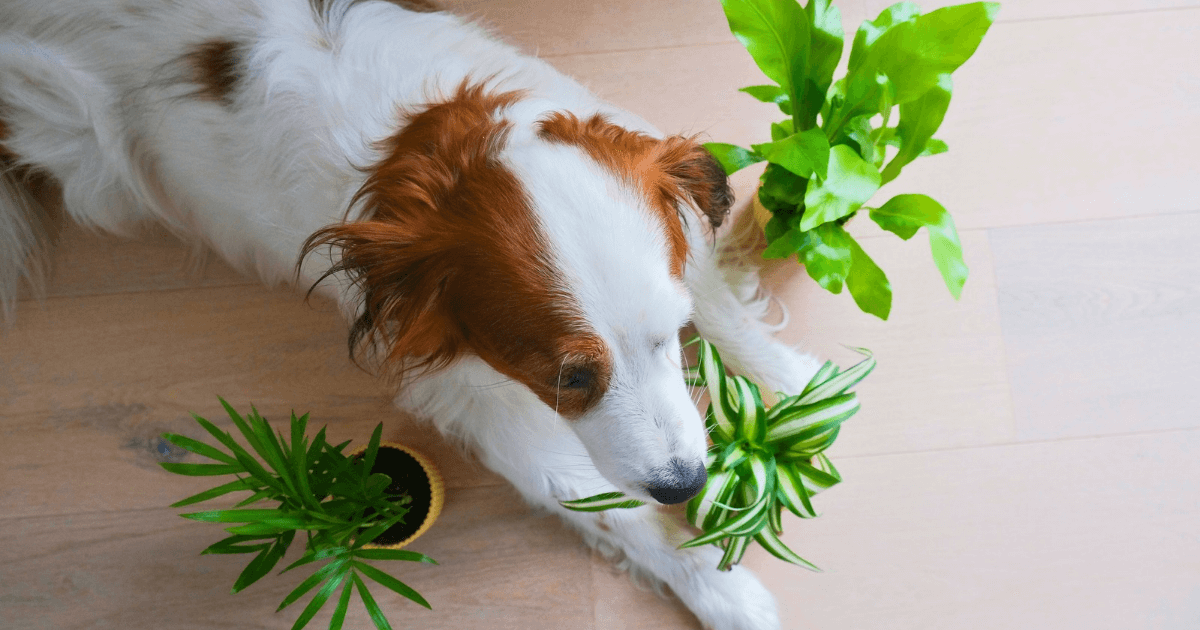
Anyone who’s lived with a dog knows how curious they can be. Whether you have a new puppy who is chewing everything it can find, or an an older dog who just can’t resist investigating your new plant, if you aren’t careful that one unwise mouthful can easily turn into a panicked visit to the vet. The good news, though, is that there are plenty of beautiful, dog safe houseplants you can find which will bring more greenery to your life without putting your furry best friend at risk.
In this list I’ve tried to round up something for everyone, from easy, familiar favourites to unique and unusual statement pieces. No matter what your vibe, there are dog safe houseplants to suit every style. Many of the plants listed here also hold the prestigious RHS award of merit, which recognise plants of outstanding merit.
This list was put together using this comprehensive catalogue of plants from the ASPCA so be sure to take a look for the full list.
In this guide
Easy-care Classics
If you’re new to houseplants or simply want low-maintenance greenery, these easy-care classics are a great place to start. These dog safe houseplants are resilient and well suited to a variety of homes and spaces. This collection is ideal for beginners and busy households.
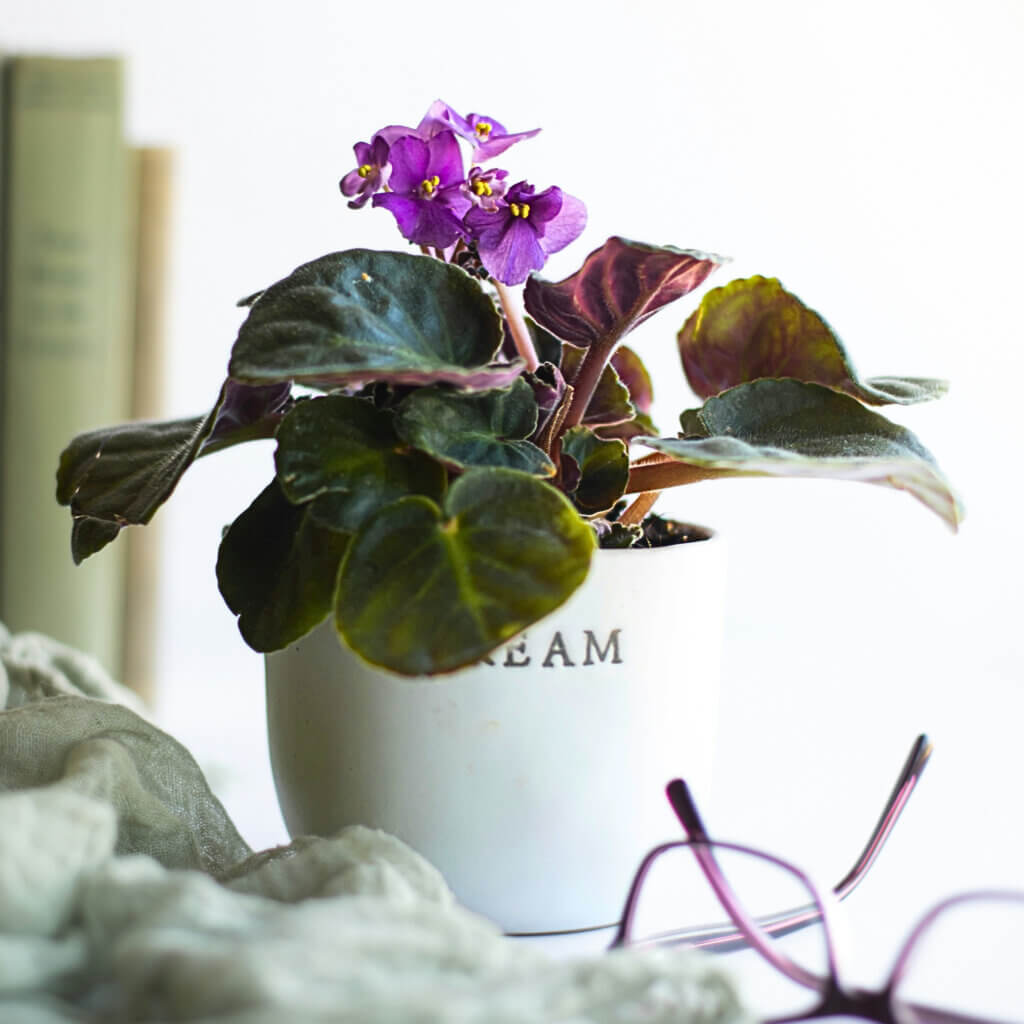
1) African Violet (Streptocarpus)
These beautiful, compact houseplants are a common favourite for their velvety leaves and delicate blooms. They come in an amazing variety of jewels tones and can bloom for months on end. They’re easy to find at your local garden centre, but for the full range of colours you’ll probably need to look online.
African Violets originate in East Africa and need well draining soil and bright light to thrive. Just be careful not to leave them in direct sun or it will scorch their leaves.
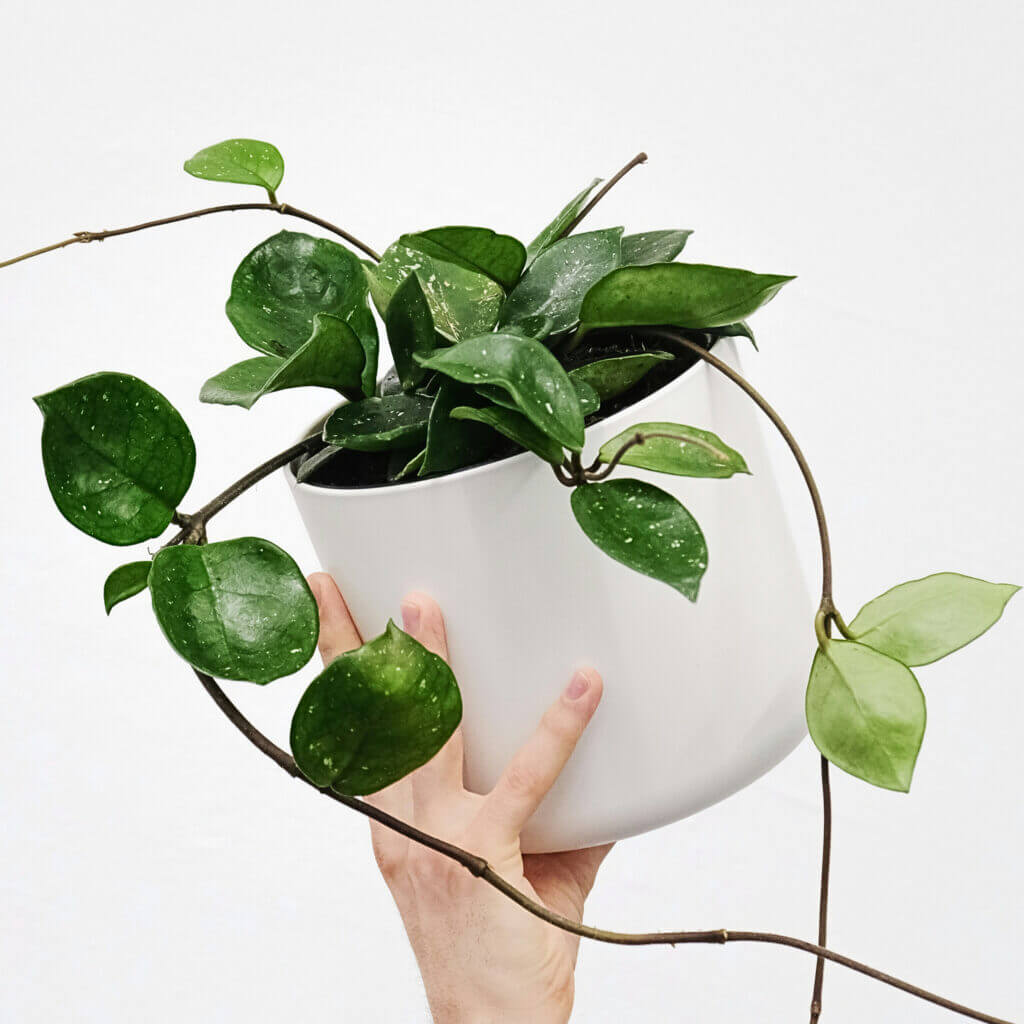
2) Wax Plant (Hoya)
Hoyas are a staple houseplant that every home should have. Not only are they safe for pets, they come in a fascinating variety of shapes. They can climb, trail, and even grow into charming novelty shapes like the adorable heart shaped ‘Valentine’s Hoya’. They also bear clusters of fragrant white and pink flowers. Many varieties hold the RHS award of merit.
Grow in bright, indirect light in a spot suited to your variety’s growth habit. Like many plants with succulent characteristics, they like to be kept moist while growing and drier in winter when growth slows.
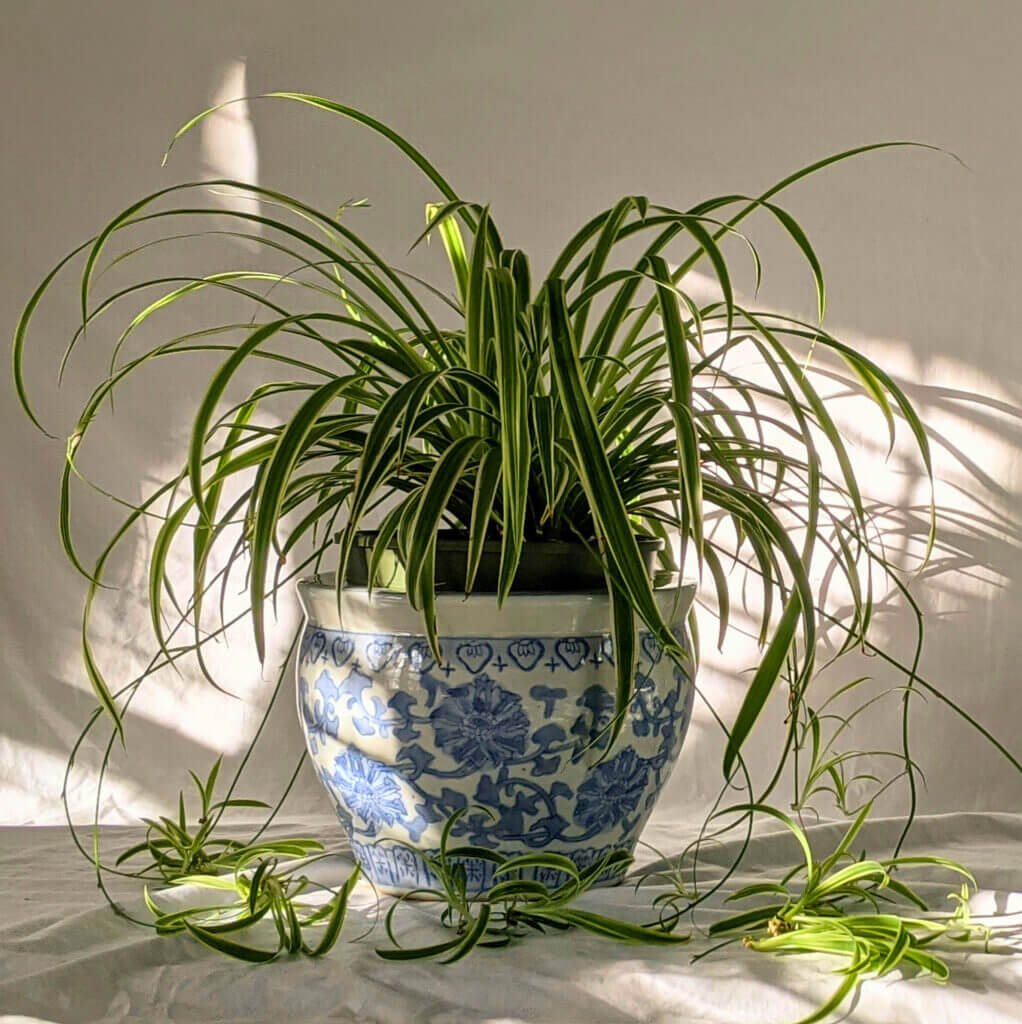
3) Spider Plant (Chlorophytum comosum)
Spider plants are gorgeous, easy to grow plants with arching, variegated leaves. They are very forgiving plants and adapt easily to a variety of light levels and indoor conditions – perfect for beginners and forgetful gardeners. Keep the soil lightly moist but never soggy, and repot every couple of years.
Spider plants readily produce ‘spiderlings’ which can be found dangling from the end of their leaves. To propagate, simply detach these baby plantlets once they reach a good size and pop them in a glass of water until you see roots forming, then pot them up in a well draining compost. You’ll have your own little Spider plant family in no time.
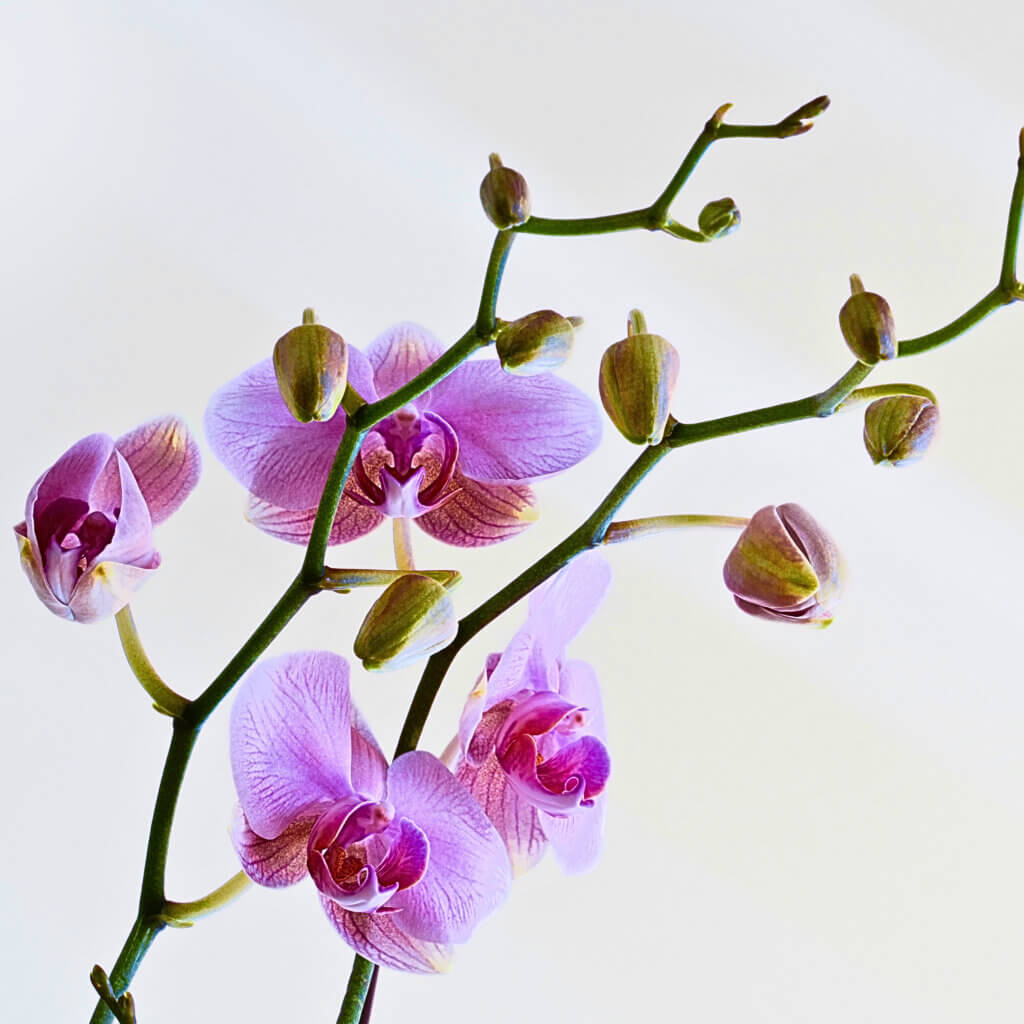
4) Moth Orchid (Phalaenopsis orchids)
Although many types of Orchid are safe for dogs, the vibrant and easy to grow Moth Orchid is probably the best known and easiest to find at your local garden centre. These elegant plants love bright, indirect light and appreciate being allowed to dry slightly between waterings. When cared for properly they will produce their long-lasting jewel coloured blooms multiple times throughout the year.
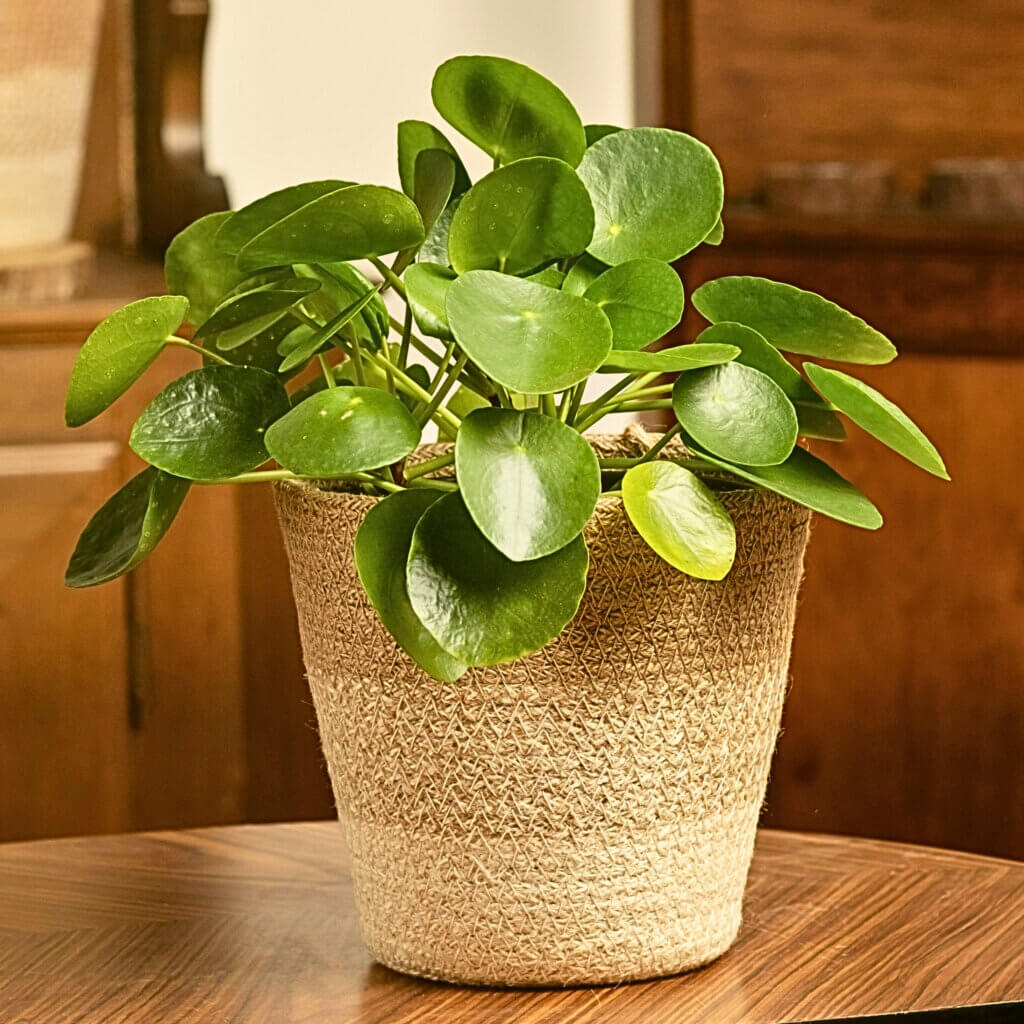
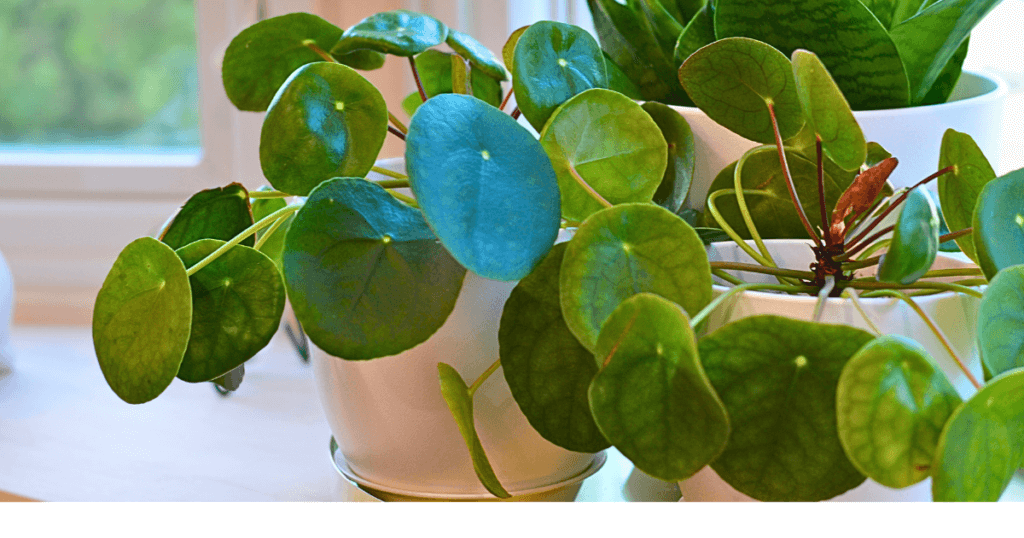
5) Chinese Money Plant (Pilea Peperomioides)
The Chinese Money Plant is an easy-care classic which holds the RHS award of merit. Named for its iconic coin-shaped leaves, this plants grows best when given bright, indirect light and moist but never wet soil. Once you find a spot that makes it happy it requires extremely little care, just a light water when the soil starts to dry out.
The Chinese Money Plant is so easy to propagate that it is often nicknamed the ‘pass it on’ plant. Just look out for the ‘pups’ which grow around its base and when they are a few inches tall carefully remove them and pot them up. If you want you can put them in water first and watch for developing roots but I’ve never found this to be necessary.
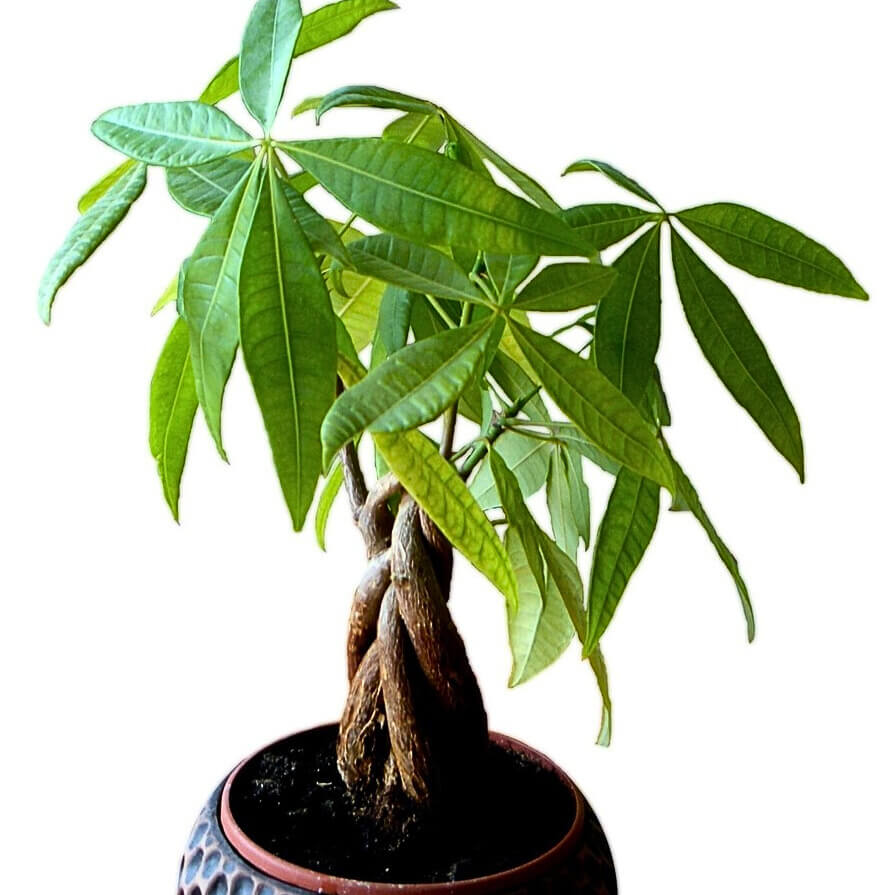
6) Money Tree (Pachira aquatica)
Famous for its unusual and distinctive trunk which looks like it has been plaited, this tree-like plant is often associated with good luck and prosperity. In their native habitat of the Central and South American wetlands they can grow to be vast, but grown in a container as a houseplant they will stay at a manageable size. They like bright, indirect light and moist but never wet soil. Overwatering is a common issue, so good drainage is essential for long-term health.

Lush & Tropical
If you love the jungle look or just want to add some drama to your home, the following plants are a great place to start. These dog safe houseplants all have lush, tropical foliage, perfect for adding height and texture.
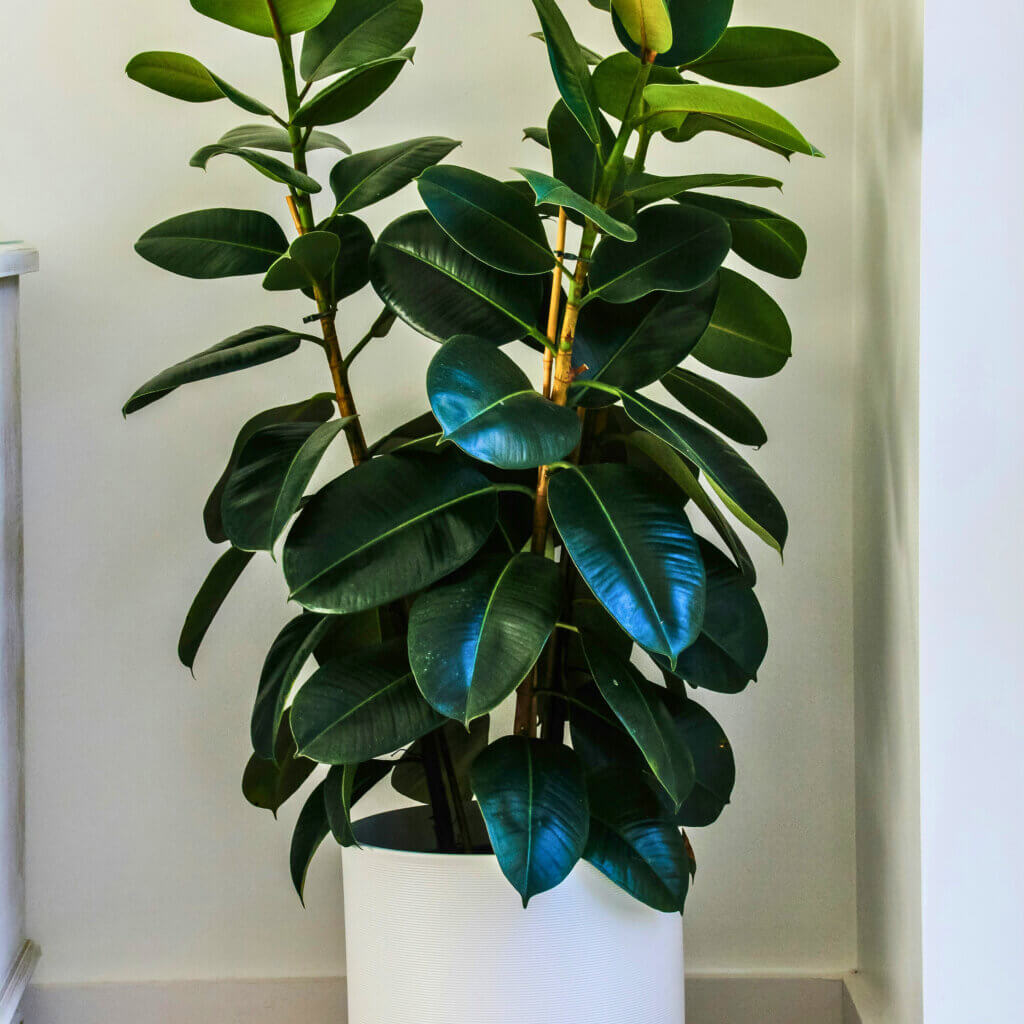
7) American Rubber Plant (Peperomia obtusifolia)
The American Rubber Plant is a stunning plant which brings height and structure to any room. Its wide, glossy leaves bring a lush, tropical vibe to any space. It also holds the RHS award of merit.
For best results grow in bright, indirect light and keep away from draughts or radiators. Wait until the soil is almost totally dry before watering. If the leaves start to turn yellow or mushy that’s a sign that you’re watering too much. If you’re feeling extra attentive you can even give it an occasional dust to keep the leaves looking vibrant and help them breathe.
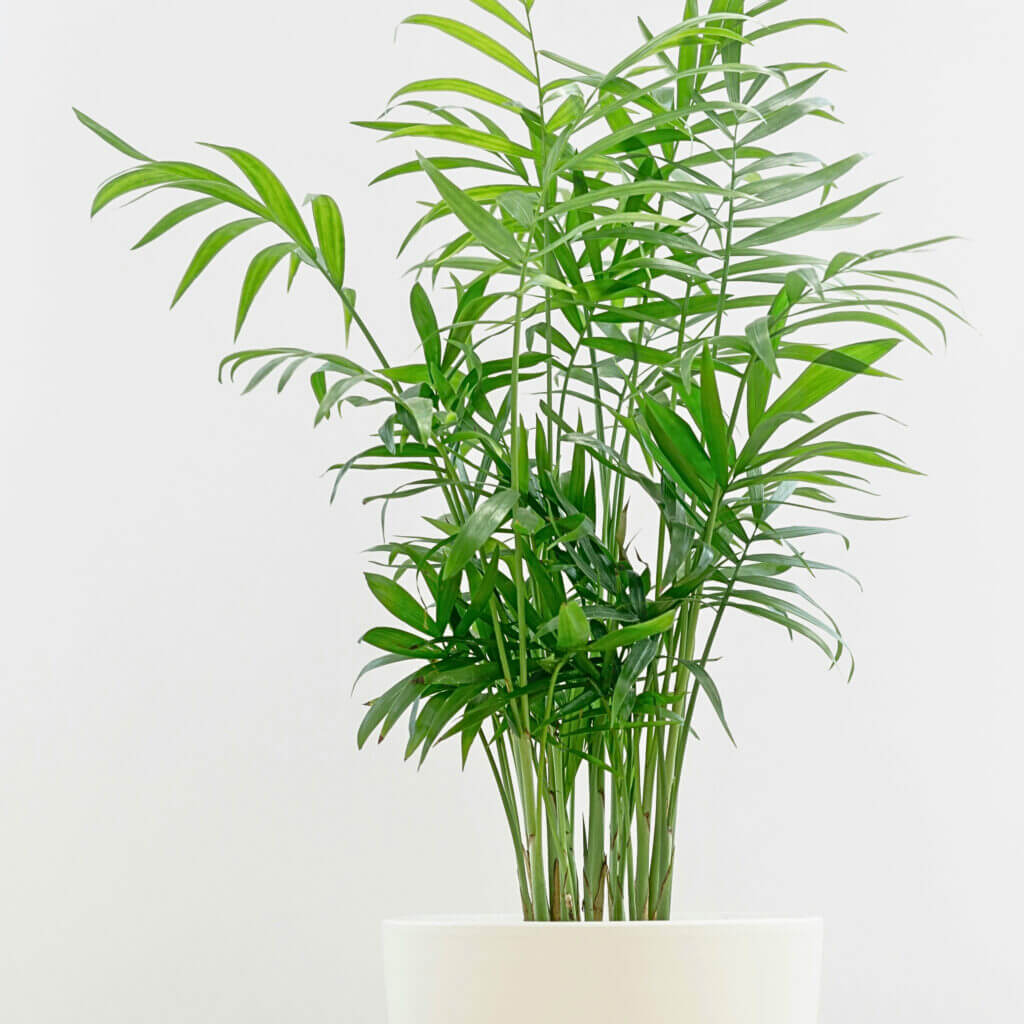
8) Parlour Palm (Chamaedorea elegans)
This compact palm is a gorgeous addition to any tropical houseplant scheme with it soft, feathery fronds and slender stems. Parlour palms love consistency so aim to keep their soil moil and their temperature steady – no draughty windows or direct, scorching sunlight.
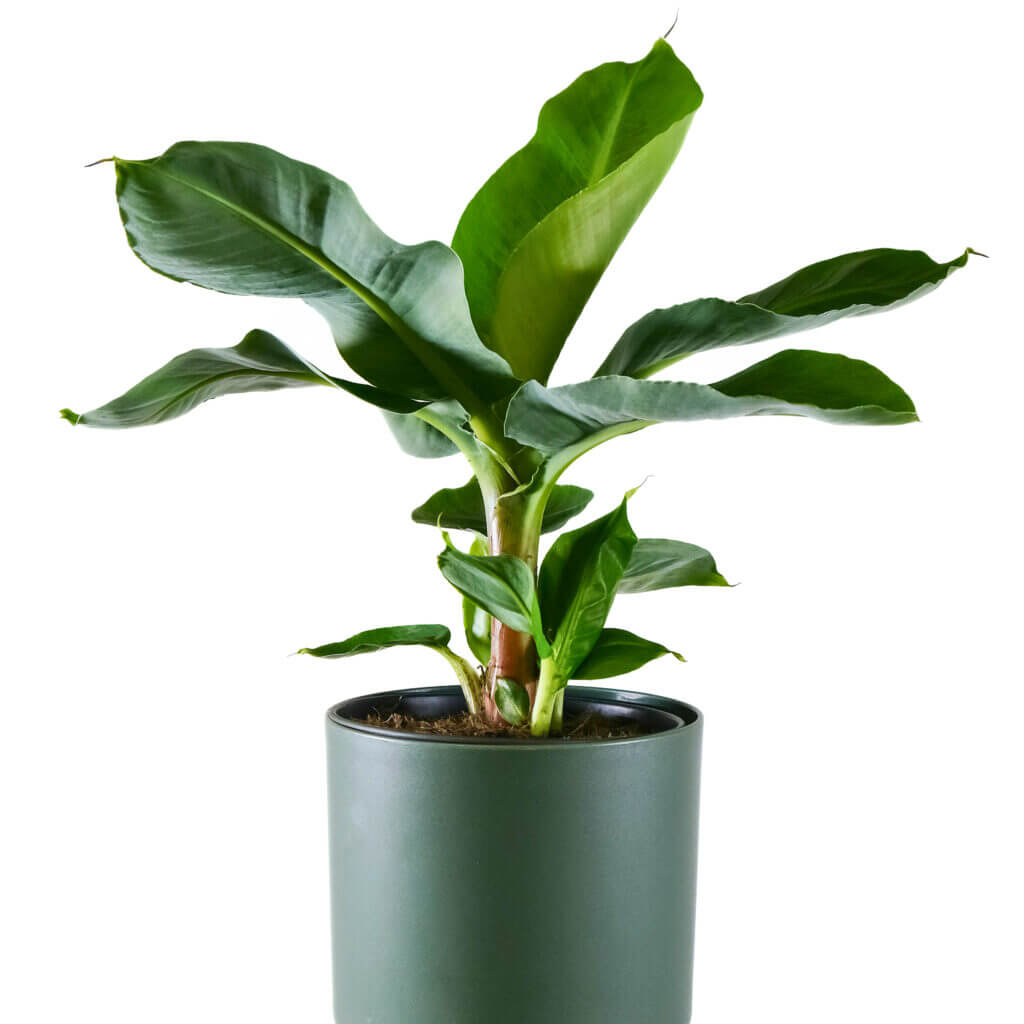
9) Banana Plant (Musa Cavandish)
If you can only buy one plant to give your home tropical vibes, make it Musa Cavendish. This dwarf Banana plants has the same bold, tropical foliage as its fruit bearing outdoor cousins, but at a size that is manageable for regular homes. Give it plenty of bright light, rich soil, and keep it well watered. These plants grow well and make an excellent statement pieces – just don’t expect your own banana harvest any time soon.
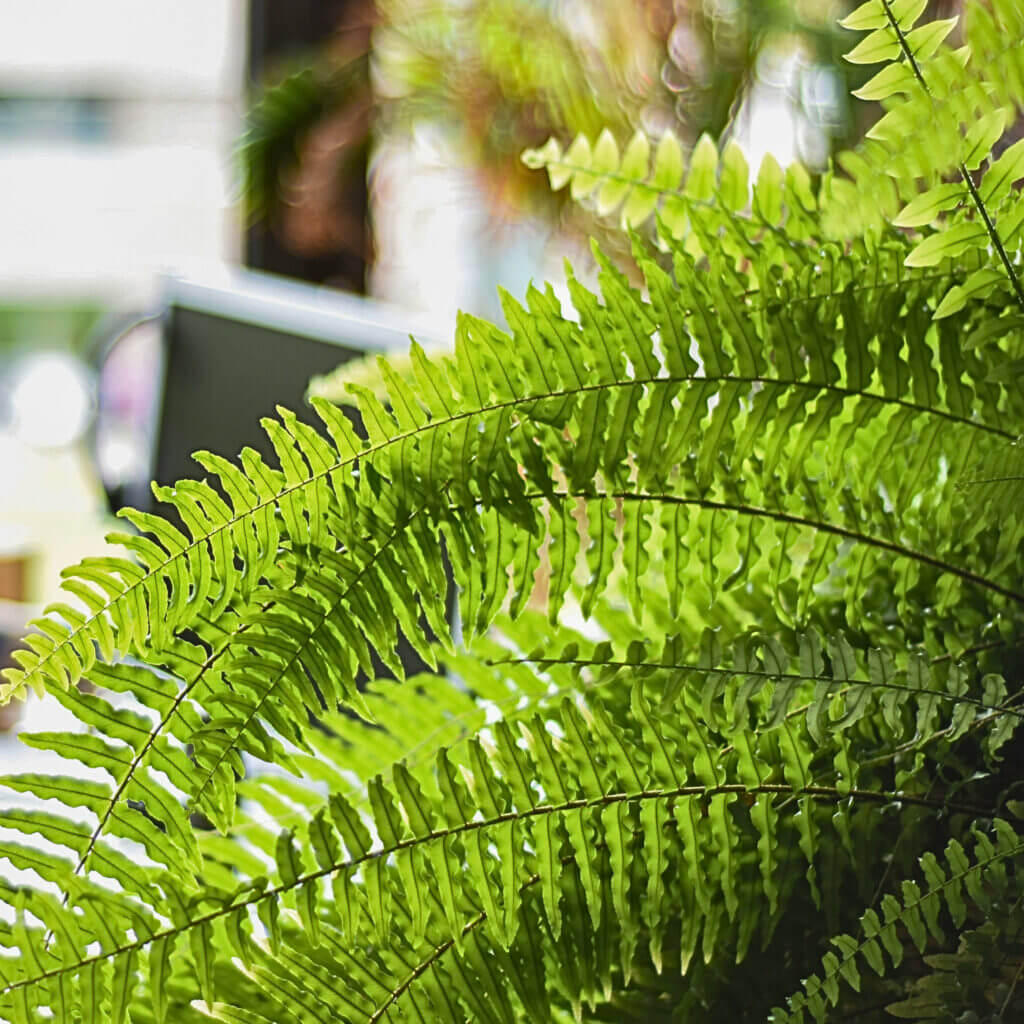
10) Boston Fern (Nephrolepis exalta bostoniensis)
Boston ferns are gorgeous plants which are native to the tropical parts of South America. They produce large, feathery fronds that instantly bring tropical drama to any room. They prefer humid air and indirect light, so a spot in your bathroom is ideal, however if you are able to mist them regularly they should be fine in drier rooms.
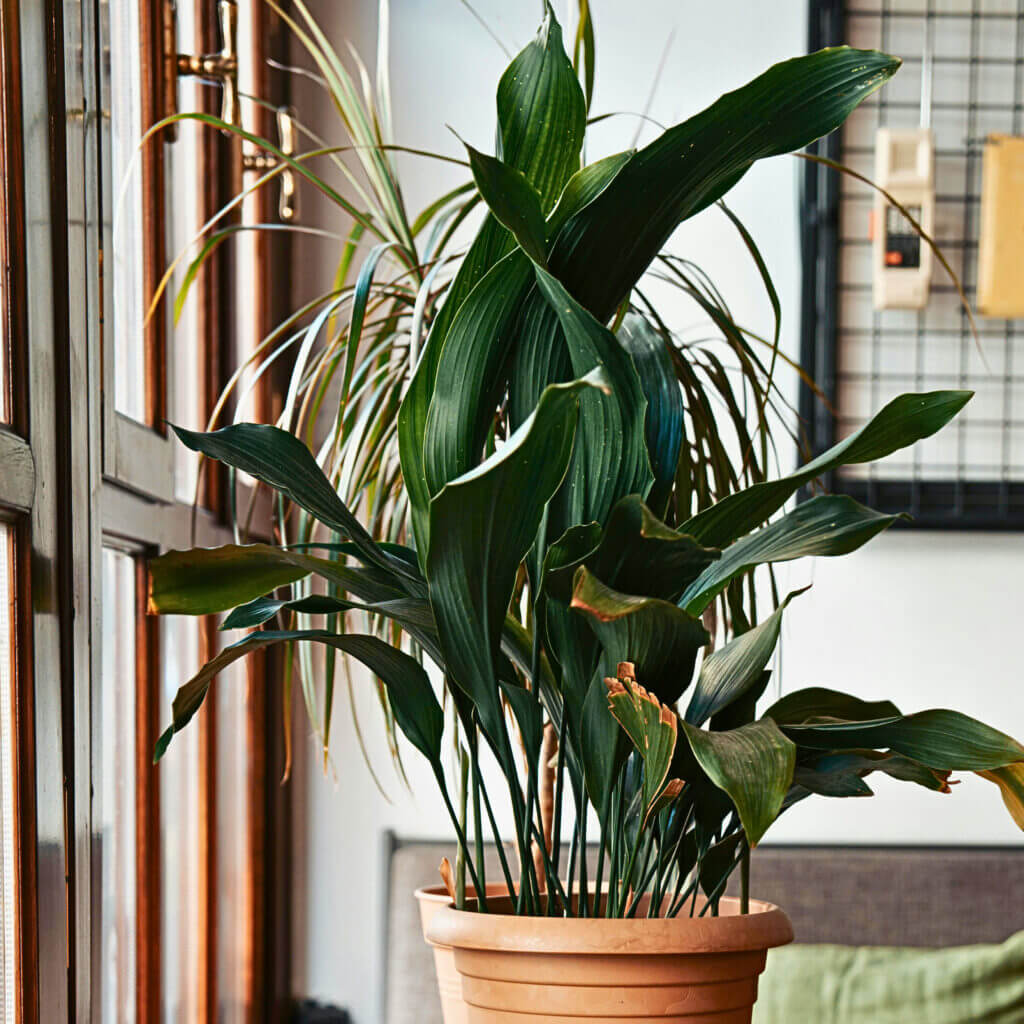
11) Cast Iron Plant (Aspidistra)
The Cast Iron plant is another entry on this list which has the RHS award of merit. It is known for being tough and adaptable, so it’s a great low-maintenance choice for your tropical themed space. Although not technically a tropical plant (it actually originates from Japan where it grows on shady mountainsides) its upright, deep-green leaves are perfect for anyone looking for large, lush foliage.
Famously hard to kill, it tolerates low light, temperature changes, and inconsistent watering. If you’re new to houseplants, low on time, or just want something undemanding then this is the plant for you.
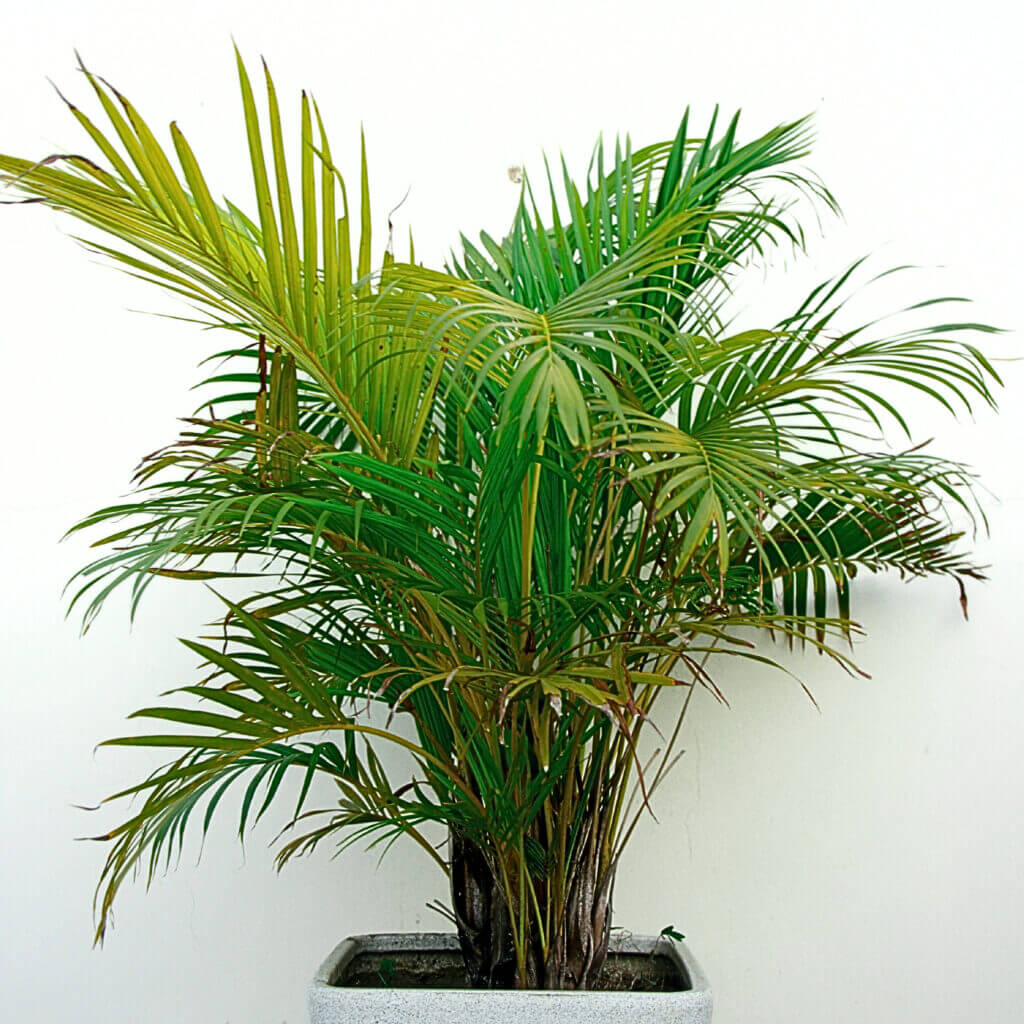
12) Kentia Palm (Howea Forsteriana)
Kentia palms are perfect for adding height and elegance, with their neat, arching fronds and compact habit. They grow slowly so it’s best to splash out on one that is already mature. For best results, keep them in bright, indirect light with evenly moist soil. They can be a bit fussy about being moved so once you find a space that makes them happy try to not to reposition them.
Statement Foliage
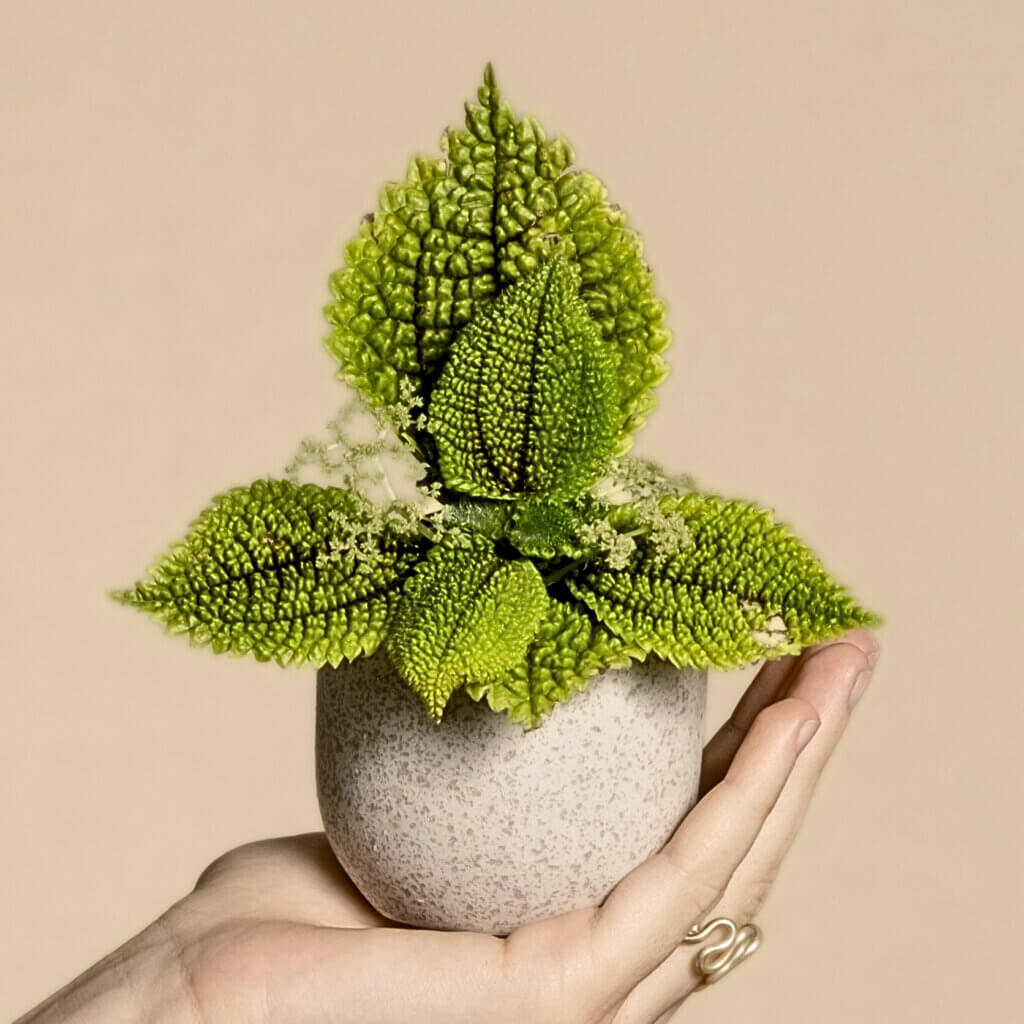
13) Friendship Plant (Pilea involucrata)
This trailing, unusual Pilea gets its name from the ease with which it can be propagated and shared, and is well loved for its deeply textured leaves. It’s often found in terrariums and bottle gardens. Like other Pilea it likes bright, filtered light and moist soil which is never saturated. It holds the RHS award of merit.
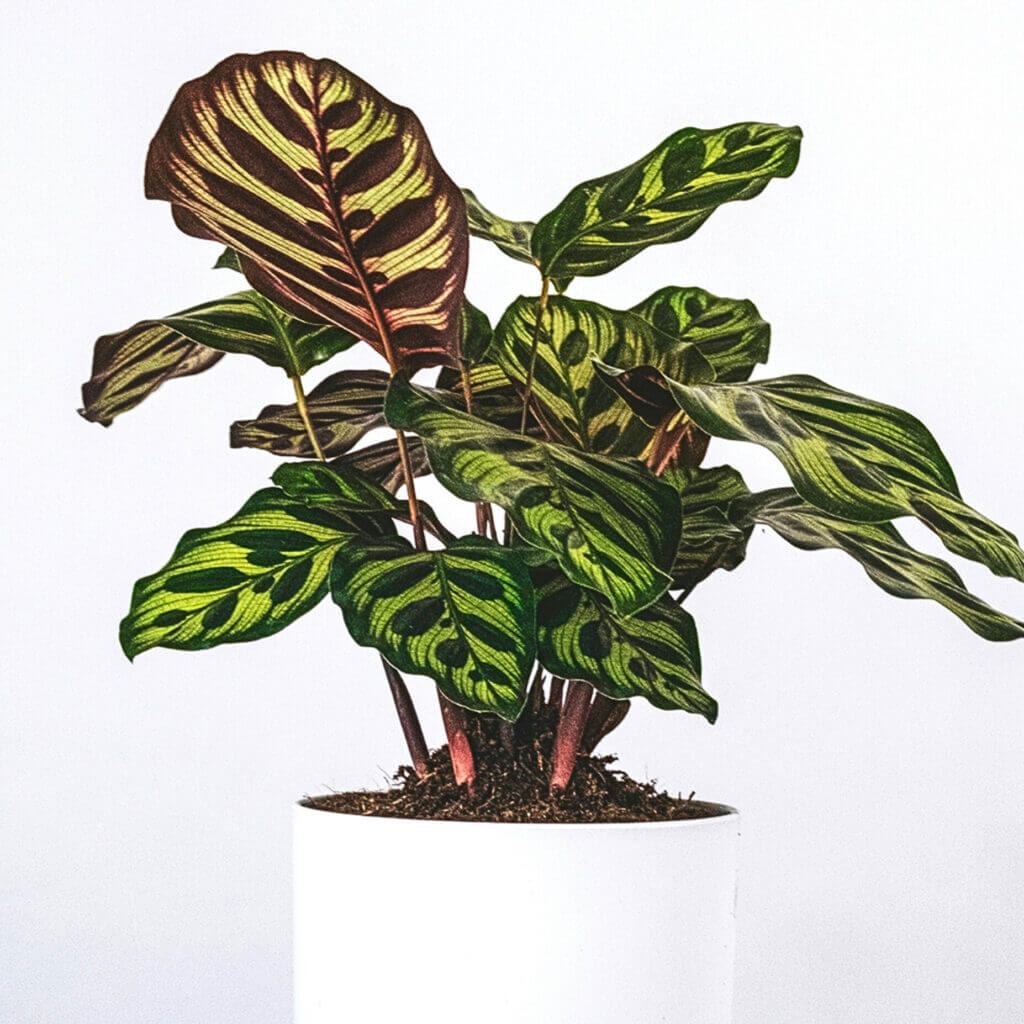
14) Peacock Plant (Calathea)
Calathea go by many names, but can most often be found referred to as the ‘Peacock plant’ for their highly patterned foliage, or the ‘Prayer plant’ for the way that the leaves raise up in the evening. They are sought after for their stunning foliage, which comes in many different variations. They like bright but indirect light to keep their colours vibrant, as well as consistent moisture, warm temperatures, and higher humidity.
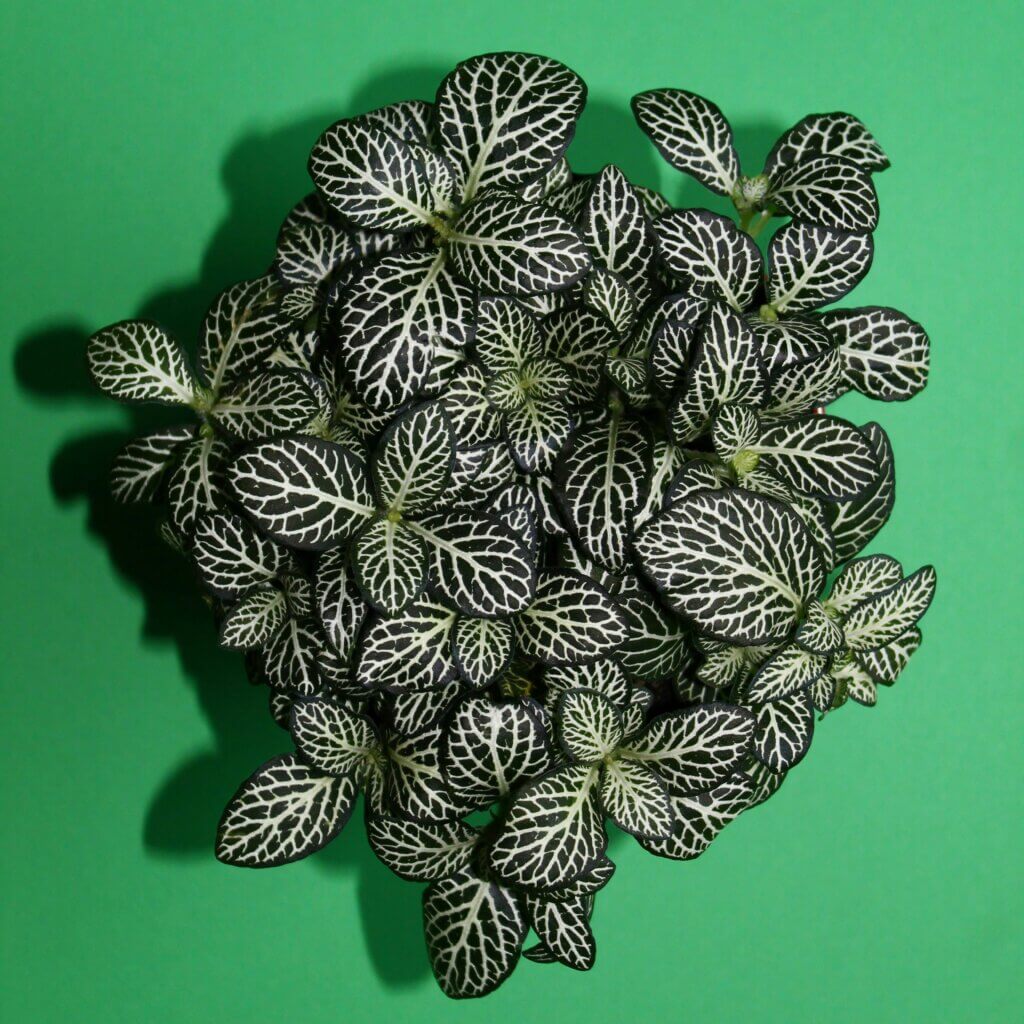
15) Watermelon Plant (Pilea cadieri)
The intricate, silvery markings on this plant make it easy to see how to came by its name. You may also find it sold as the ‘Aluminium plant’ because of its metallic markings. It stays neat and compact at around 30cm, making it perfect for a variety of spaces.
Like most Pilea, too much sun will scorch the leaves making them lose their colour, but too little will cause the plant to become leggy. They are happiest in bright but indirect light, with soil that stays moist but not wet.
The Watermelon Plant has been given the RHS award of merit, and would make a great plant for a terrarium. Just be aware that they grow quickly and be prepared to repot them often
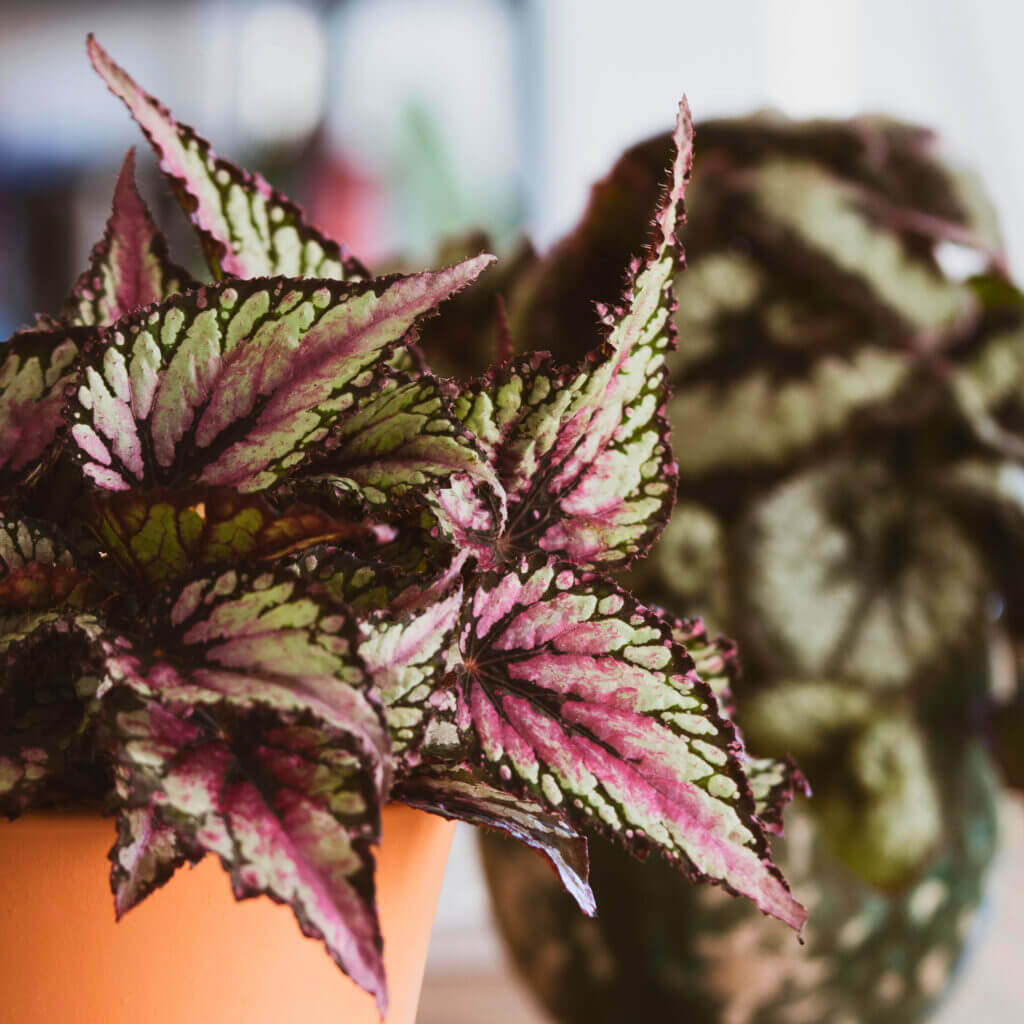
16) Rex Begonia Vine (Cissus dicolor)
The vivid, variegated foliage of this vine make it a real statement piece. If left to its own devices it will trail, however it can also climb if given the right support. It prefers bright, indirect light and evenly moist soil during its active growth phase, and does best in higher humidity.
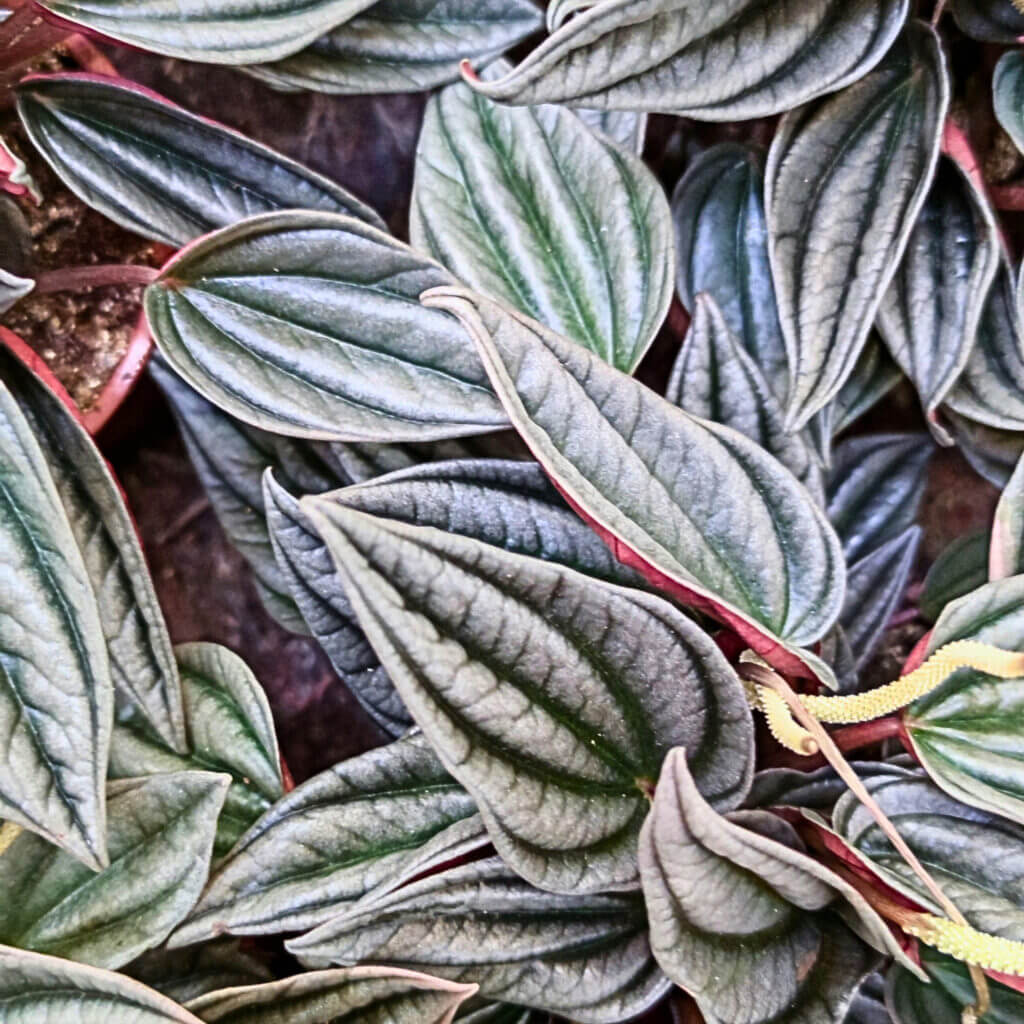
17) Peperomia
There are many varieties of Peperomias, and lots of them have bold, highly patterned, or variegated foliage. They can be trailing or clump forming, but remain compact overall making them well suited to many spaces. Most prefer moderate light and infrequent watering. Ideally they prefer to be somewhere humid like a bathroom, but they can tolerate occasional neglect without issue.
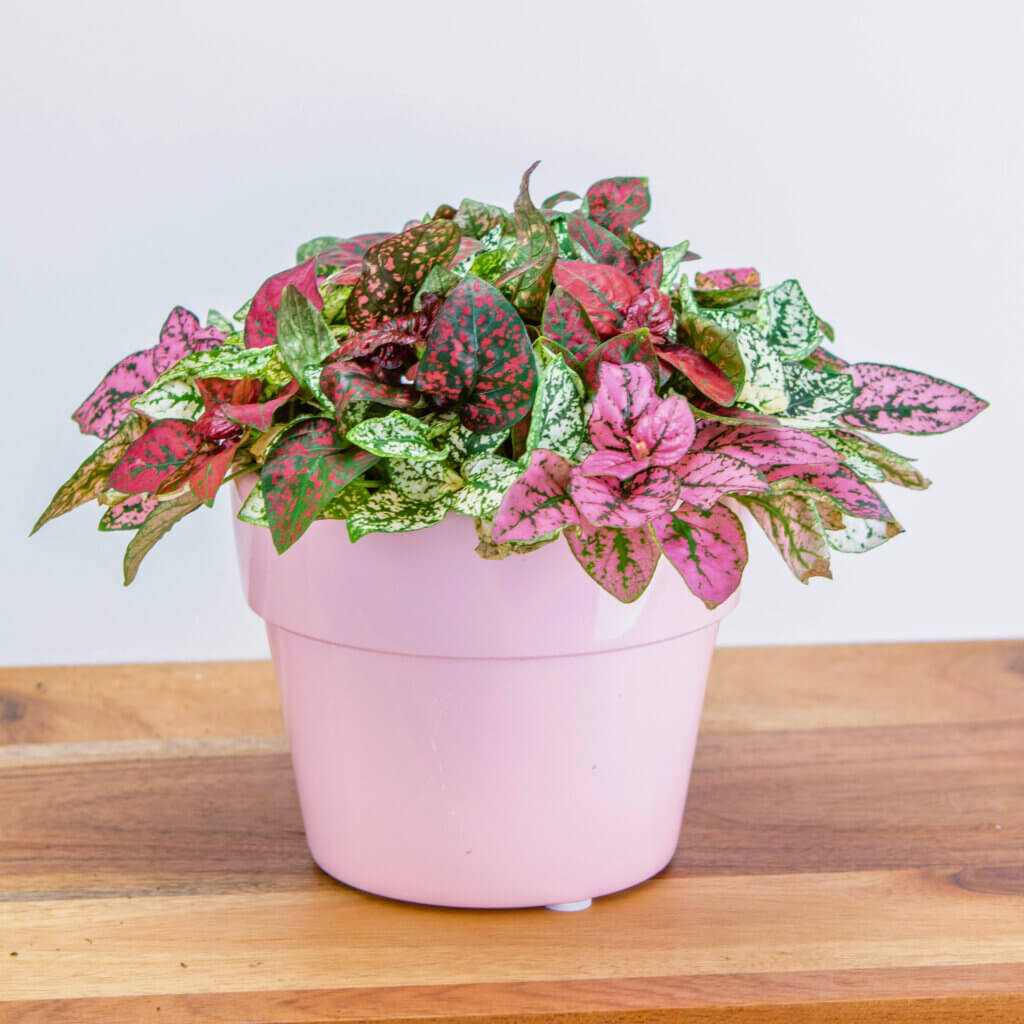
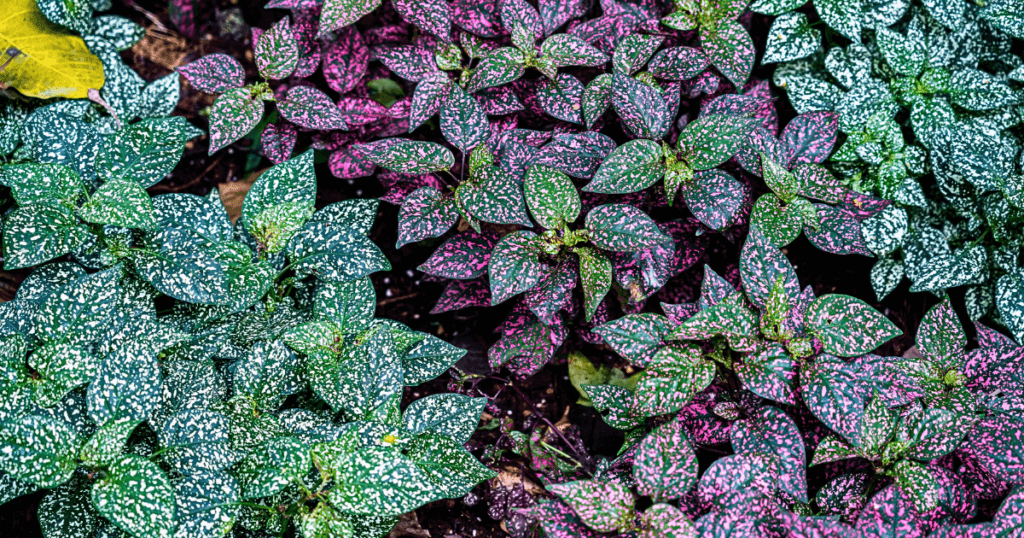
18) Polka Dot Plant (Hypoestes phyllostachya)
This stunning and unusual plant is immediately recognisable for its vivid, variegated leaves. The variety of colour and pattern combinations, and compact growth habit (~30cm tall) make them a wonderful houseplant. It also bears small, delicate flowers in shades of pink.
The Polka Dot plant is happiest when grown in bright, indirect light, with moderate to high humidity. A warm bathroom or terrarium placed out of direct sun would be perfect. For best results, plant in a peat-free potting compost and adjust your watering schedule to the seasons. Water more in the Spring and Summer when they’re actively growing, and then reduce watering in the Winter while they’re dormant.
Succulents & Cacti
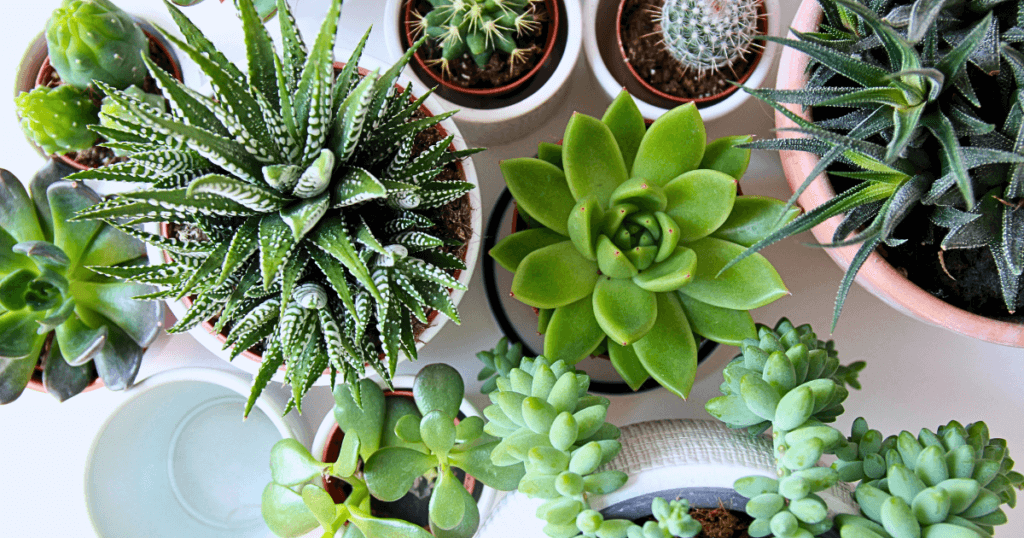
Succulents and cacti are great choices for anyone who wants low-maintenance greenery or is just drawn to interesting, sculptural shapes. These dog safe houseplants are usually compact and happy with minimal watering, making them a great choice for shelves, desks, and sunny windowsills.
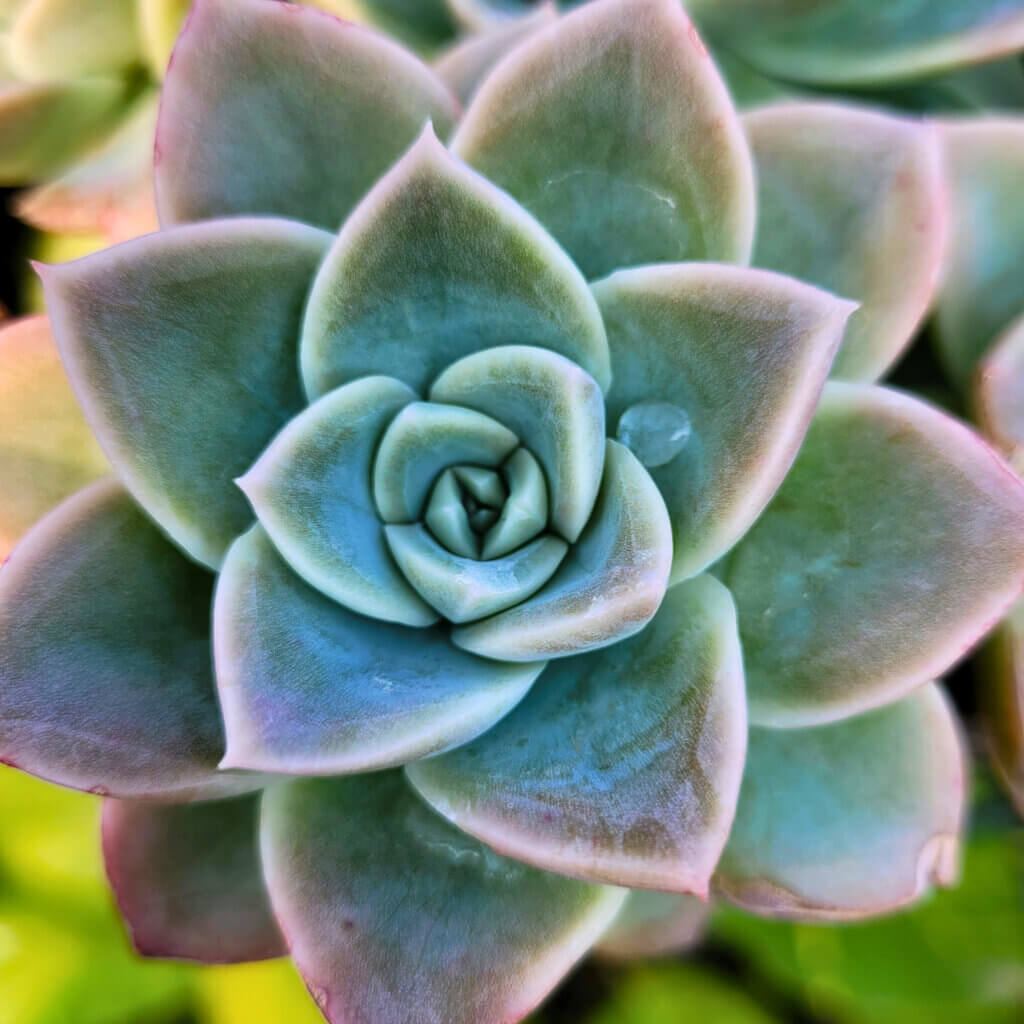
19) Echeveria (Echeveria glauca)
Echeveria are fantastic little succulents which come in several shades of blue and green, and form compact little rosettes. They make excellent dog safe houseplants because, not only are they non-toxic, they are compact enough to be fit almost anywhere so you can easily put them out of reach.
They are sun loving desert plants originating from Mexico and Central America, making them perfect for bright windowsills and forgetful waterers. Make sure they are in a well draining soil (mix in some grit to improve drainage if you need to) and choose a pot with plenty of drainage holes. Keep humidity low and restrict watering as much as possible in winter.
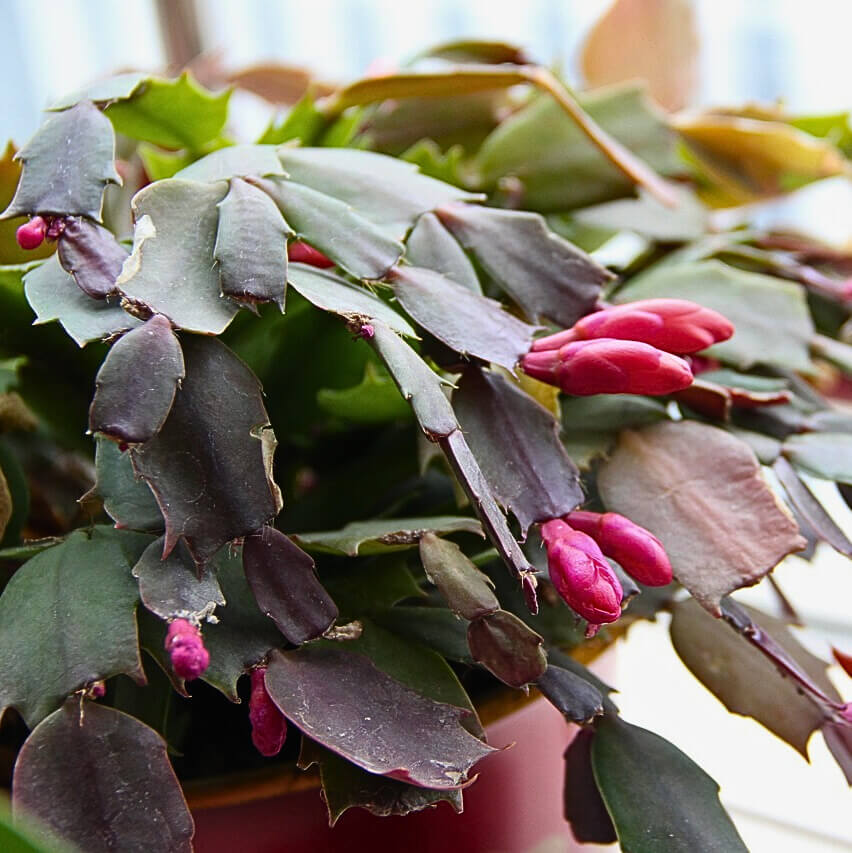
20) Christmas Cactus (Schlumbergera bridgesii )
Christmas cacti are beautiful and iconic holiday houseplants, which are famous for their winter flowers in festive colours. Although they are best known for their seasonal appeal, these cacti are perennial and with proper care they will earn their keep year after year. They love humid spaces with moderate watering and indirect light. Give them a spell of cool air and lower light in Autumn to allow them to enter their dormant phase as this will promote Winter flowering.
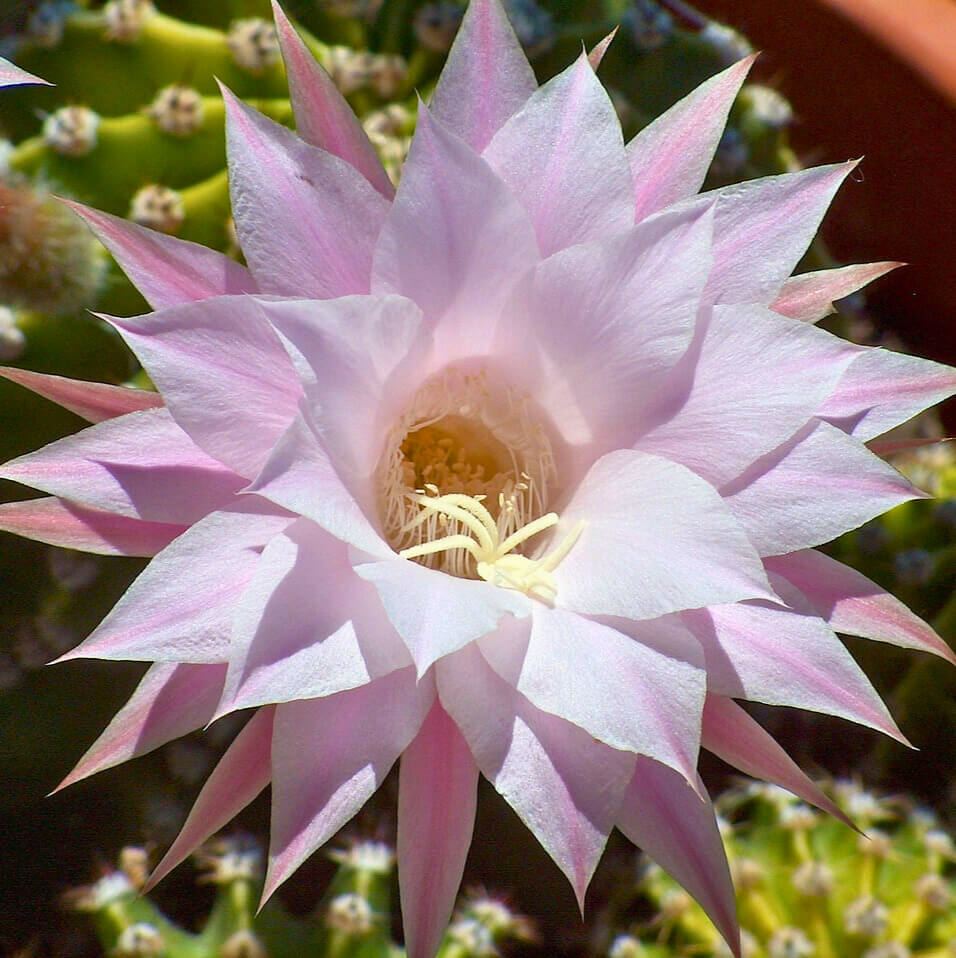
21) Easter Lily Cactus (Echinopsis multiplex)
This cactus, which holds the RHS award of merit, is best know for its white-pink funnel shaped flowers. These flowers have an almost magical quality to them because they open at night and typically last for only a single day. Although they can bloom around Easter time they usually bloom a little later than that, often in late Spring or early Summer. They actually get there name from their strong resemblence to the Easter Lily.
The Easter Lily cactus comes from South America and is a true sun lover. Keep it out of direct midday sun but make sure it gets as much bright light as possible. Like many cacti it is drought tolerant but prefers its soil to be kept moist.
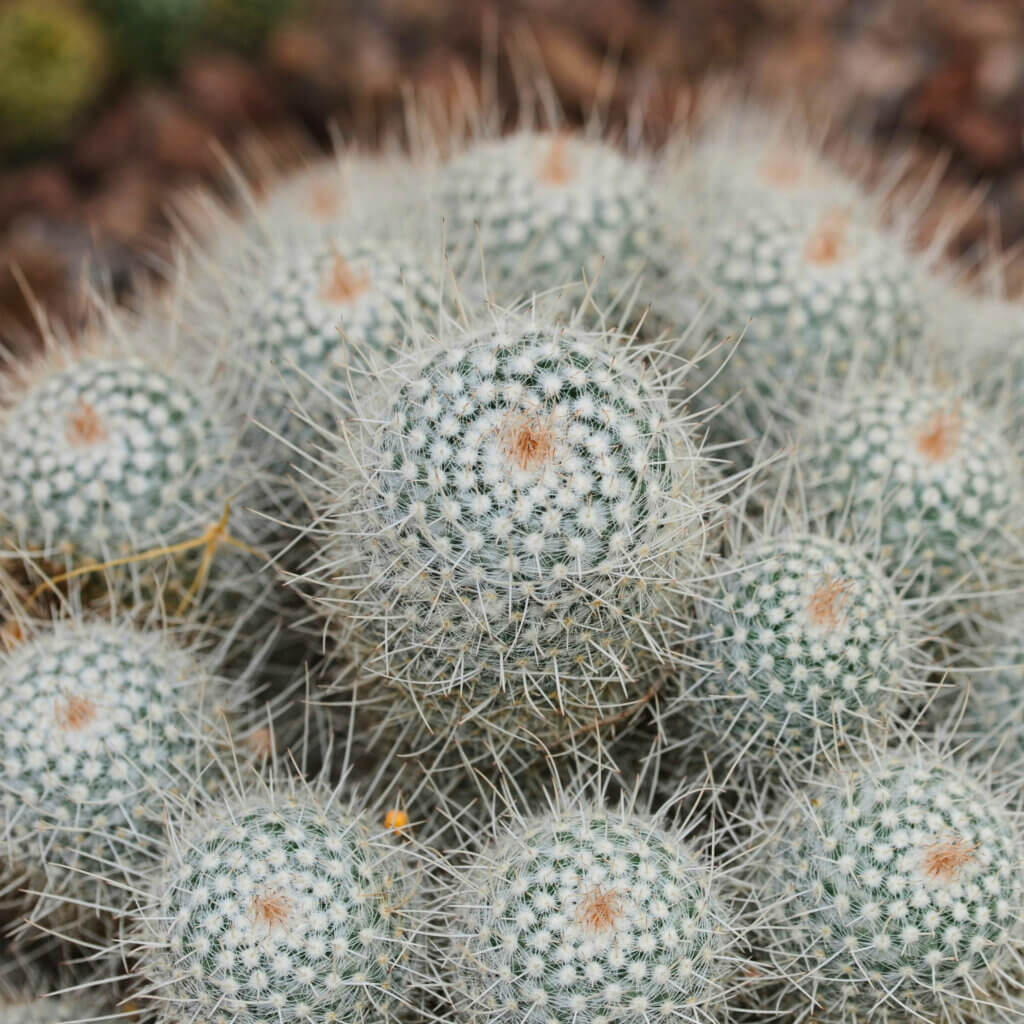
22) Thimble Cactus (Mammillaria fragilis)
The Thimble Cactus is a sweet little cactus which grows tiny clusters of thimble sized offshoots. Eventually these form into an attractive mound, covered in tiny white-silver needles which give it an almost fluffy appearance. These fun little cacti are great dog safe houseplants. It’s non-toxic and easy to place out of reach, however its spiky covering doesn’t exactly shout “eat me” so you probably won’t need to bother.
Originating in Mexico, the Thimble Cactus can cope with both drought and high heat, but will suffer if exposed to low temperatures. You can grow it in a specialist cactus compost or mix a handful of course sand in with your potting compost to ensure good drainage. Water sparingly, especially in winter. Thimble Cactus will always prefer to be too dry than too wet.
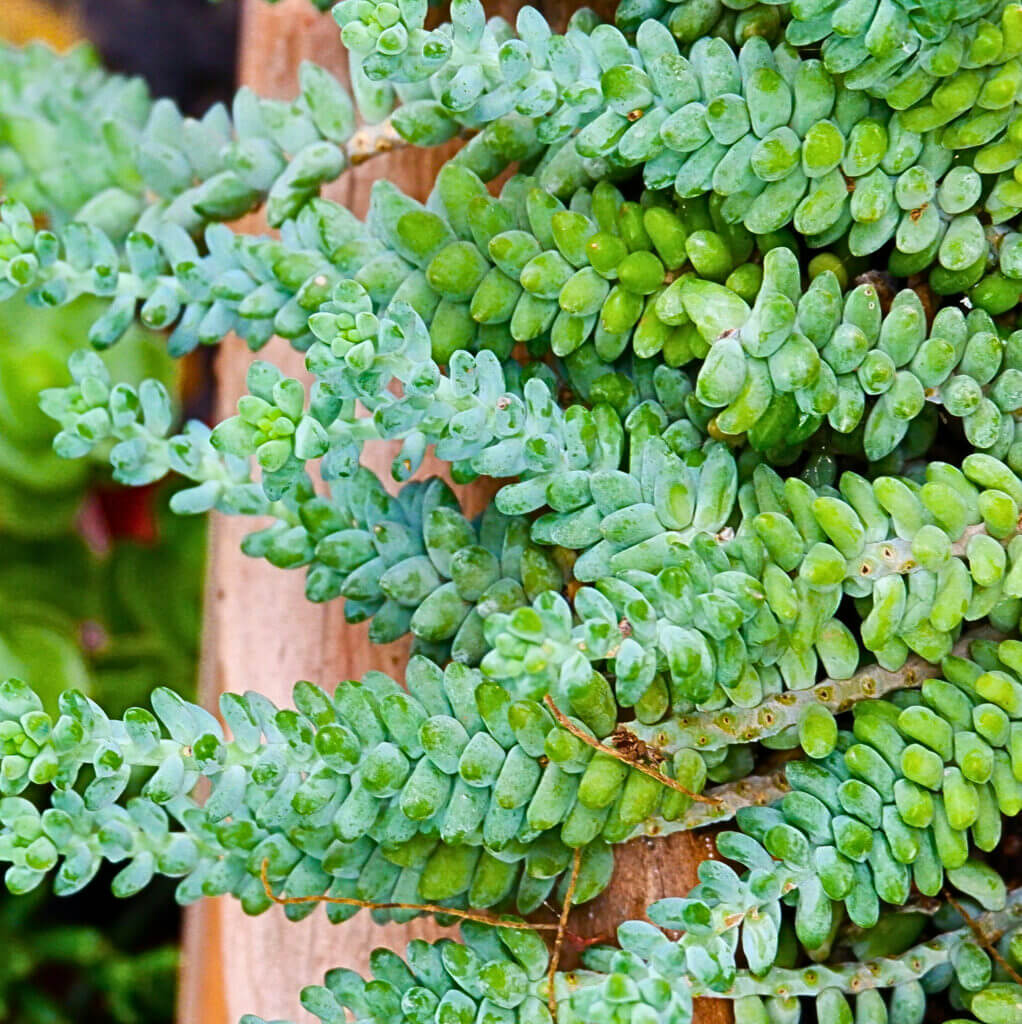
23) Stonecrop (Sedum)
Sedum are easy to grow succulents which come in a variety of attractive shapes and colours. They have a compact habit and don’t need much watering, making them brilliant low-maintenance houseplants. Give them a spot with bright but indirect light and only water when the soil has completely dried out.
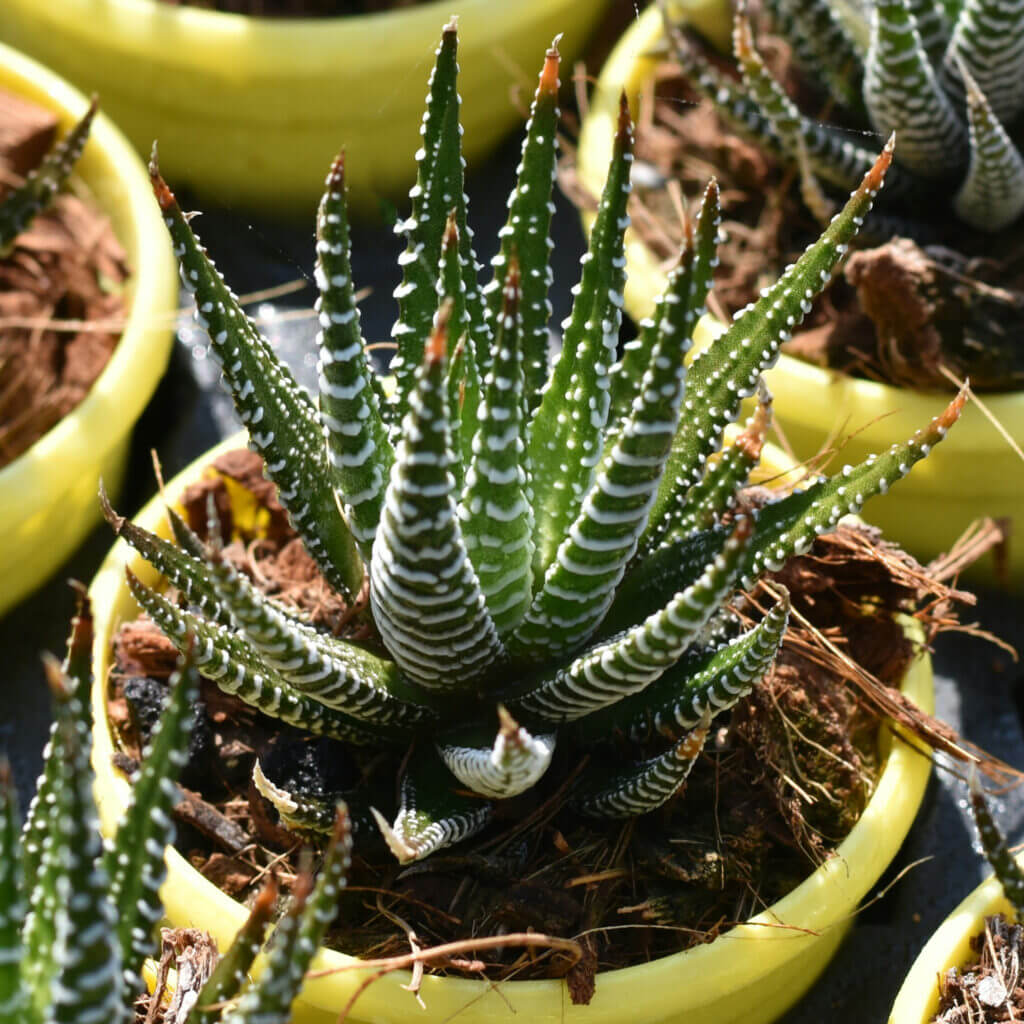
24) Zebra Plant (Zebra Haworthia)
The Zebra plant is a striking and undemanding plant with distinctive stripes on its pointy leaves. Like the other succulents mentioned, the Zebra plant is very sensitive to overwatering so make sure the soil is fully dry before watering. It will be happiest in bright, indirect light.
Unique & Unusual
If you’re looking for something a unique that will become a real talking point in your house, then this collection is for you. This group of dog safe houseplants includes striking statement pieces and high-maintenance carnivorous plants. They’re perfect for confident plant owners who enjoy a challenge and want something that truly stands out.
25) Lipstick Plant (Aeschynanthus)
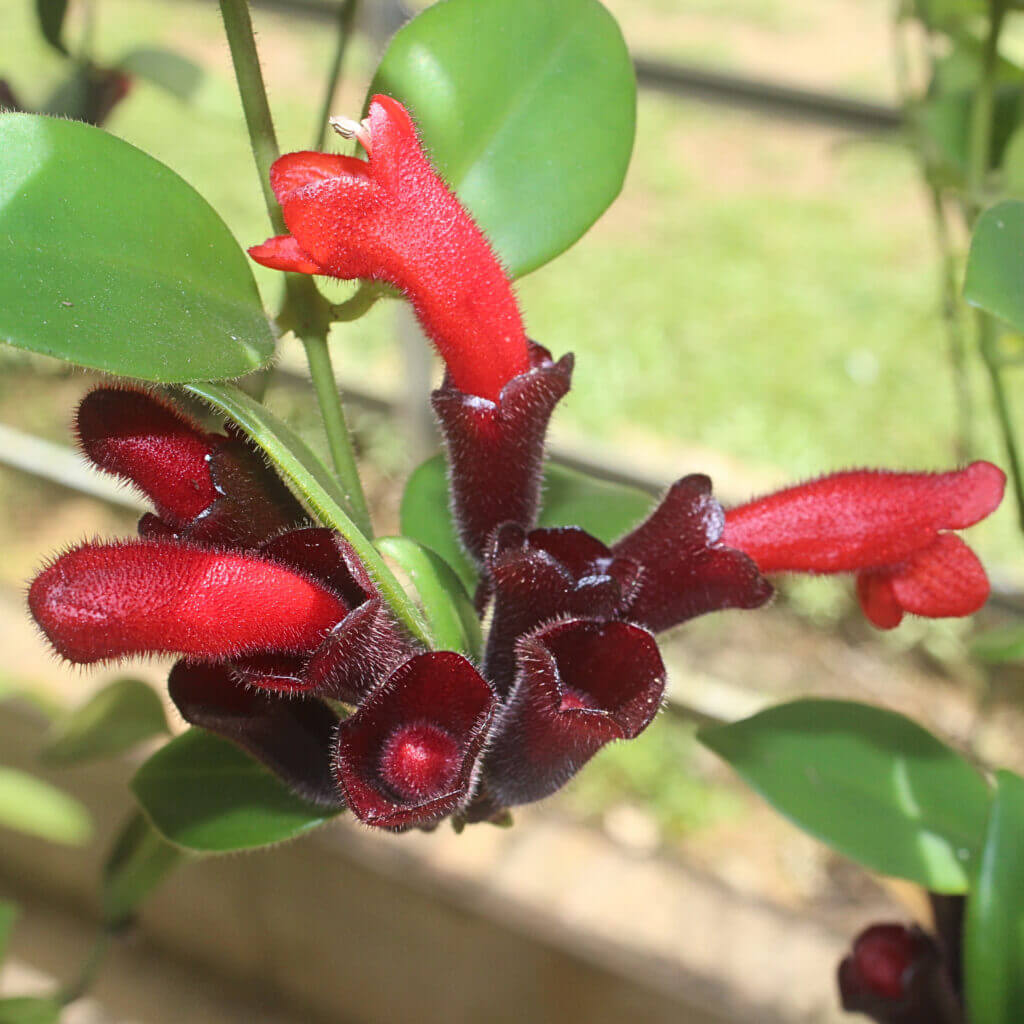
It’s easy to see how this plant got its name. The bright red flowers emerge like lipstick amid the glossy green leaves of this trailing tropical plant. It makes an unusual, statement piece to warm, humid rooms. To produce the best display of flowers you need to ensure excellent drainage and give it bright but indirect light.
26) Ornamental Pineapple (Ananas Comosus Corona)
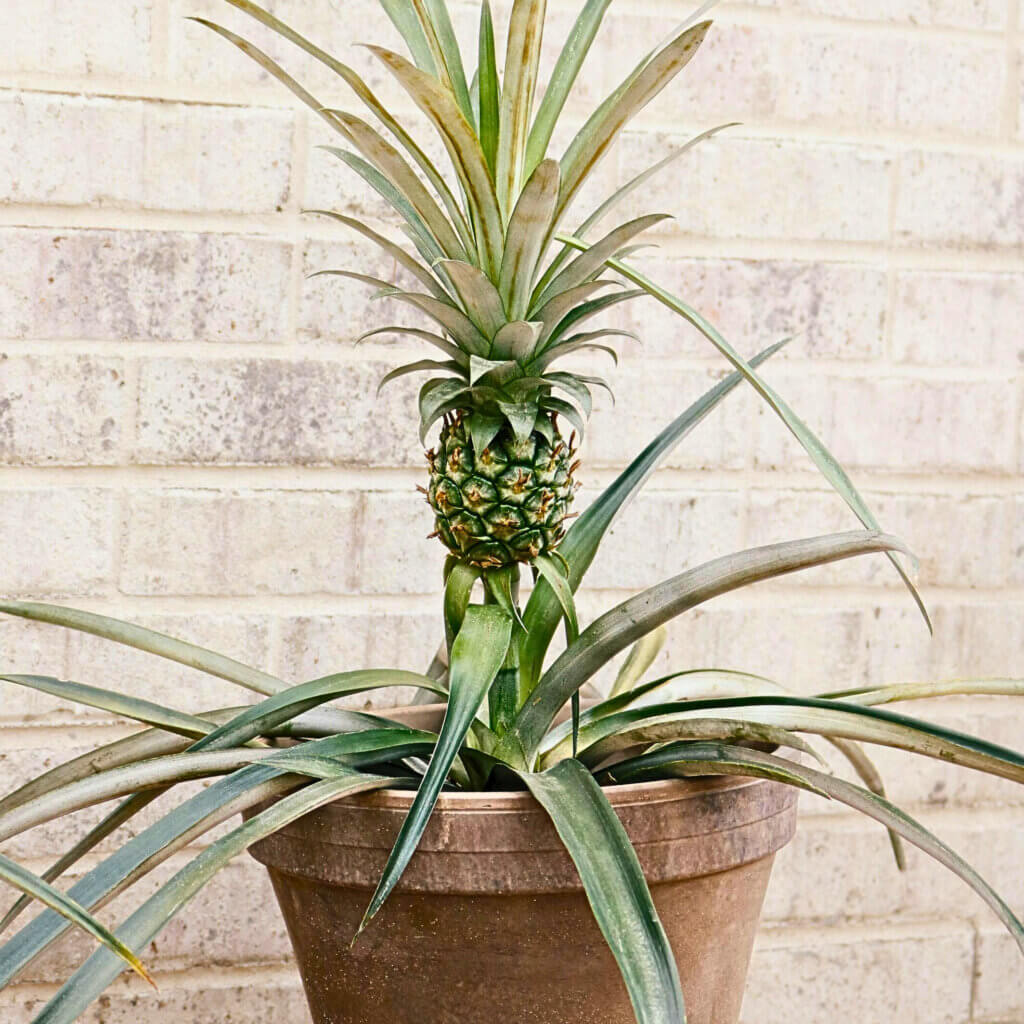
This interesting plant is a brilliant conversation starter. With its long, spiky, green leaves and a miniature fruit held high above it, this quirky plant is a great addition to your dog-safe collection.
This is a tropical plant which needs a good amount of sun to reach its full potential, so a sunny South facing window is ideal. Just remember that the pineapple is only decorative so don’t try eating it!
27) Earth Stars (Cryptanthus)
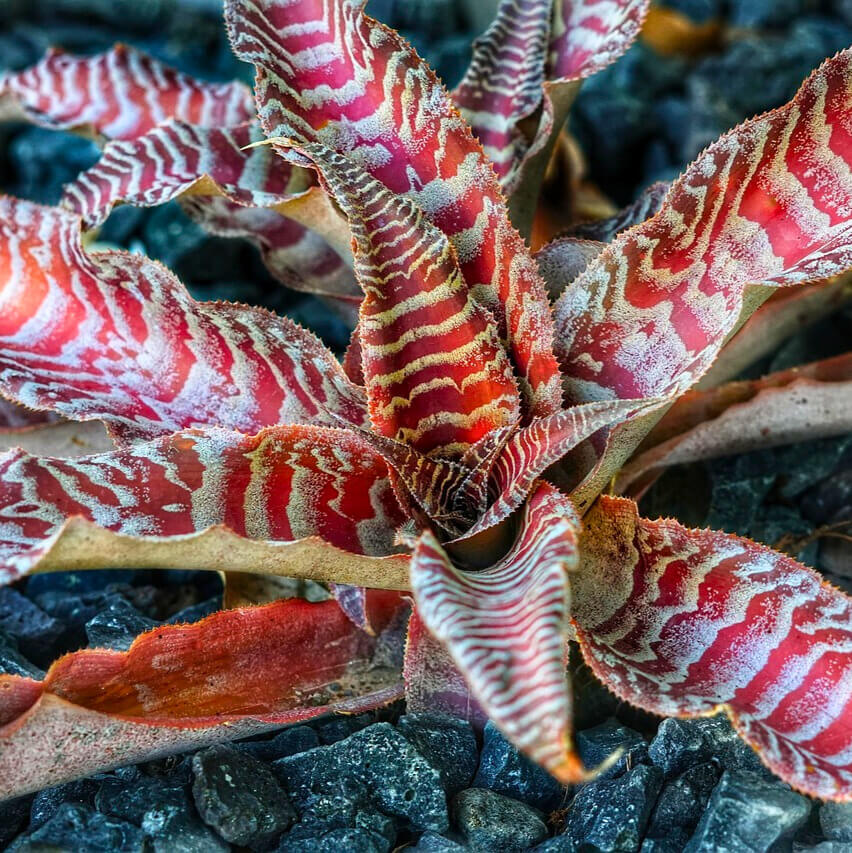
Earth Stars are unusual plants in the same family as the Pineapple. There are a huge number of varieties and they come in many shade of red, orange, green, pink, and purple. The one in the picture is sometimes called the Pheasant plant for its vivid markings, and as a group they are frequently called Starfish plants for their star like shape.
Earth Stars need high humidity and plenty of bright indirect light to thrive. They don’t cope well with low light so make sure to put them somewhere they will get plenty of morning and evening sun. This will keep their unique foliage bright and healthy.
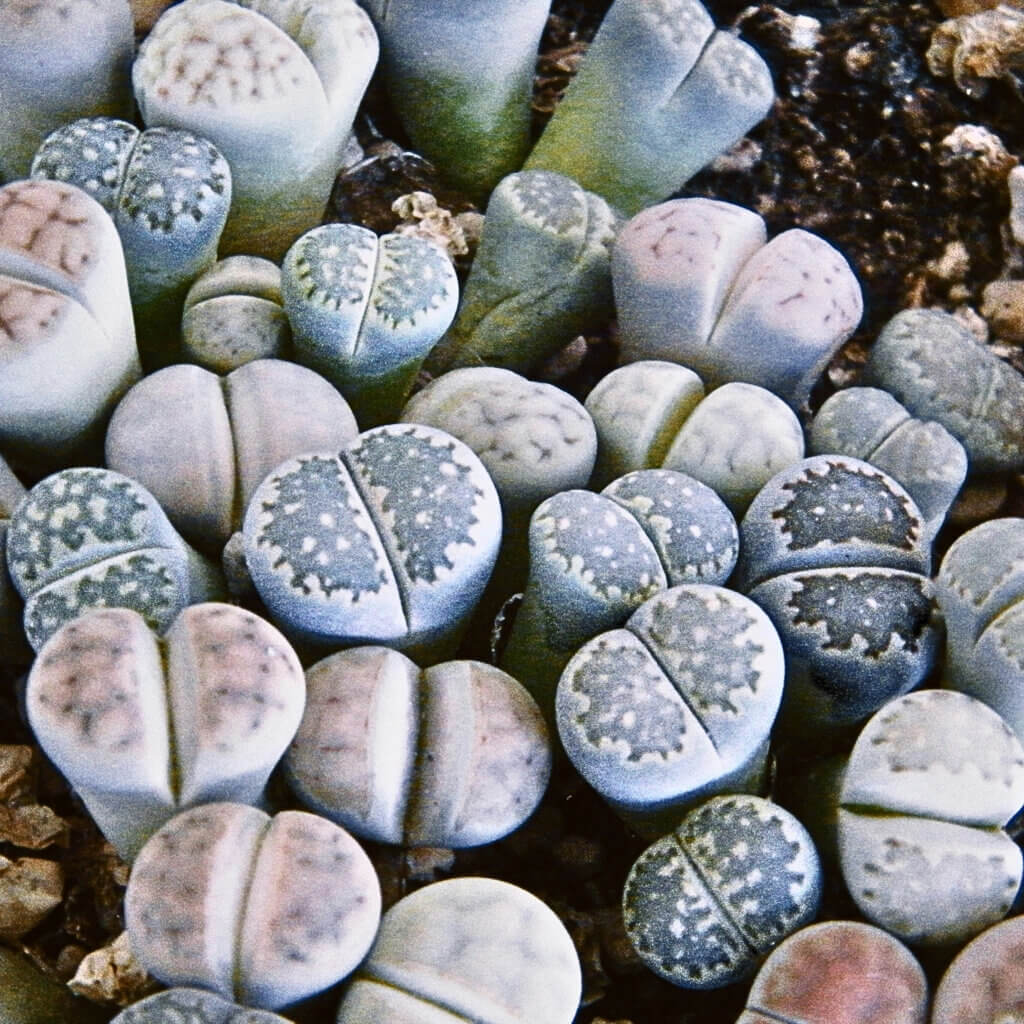
28) Living Stones (Lithops naureeniae)
Living stones are fascinating, tiny succulents which, as the name suggests, have evolved to look stones to avoid being eaten. They come from the driest regions of South Africa and need virtually no water. For a lot of the year it’s actually best not to water them at all. Stop all water in October and don’t water again until the following May, or until the old leaves have completely died back. You also need to avoid watering them in summer when they are dormant. They’re basically the perfect houseplant – high interest and low maintenance.
During its growth phase you will see new leaves growing from the slit at the top of the plant. Under ideal conditions you may also see small, white or yellow flowers. Put them in a sunny, dry spot in well draining compost and then just sit back and enjoy!
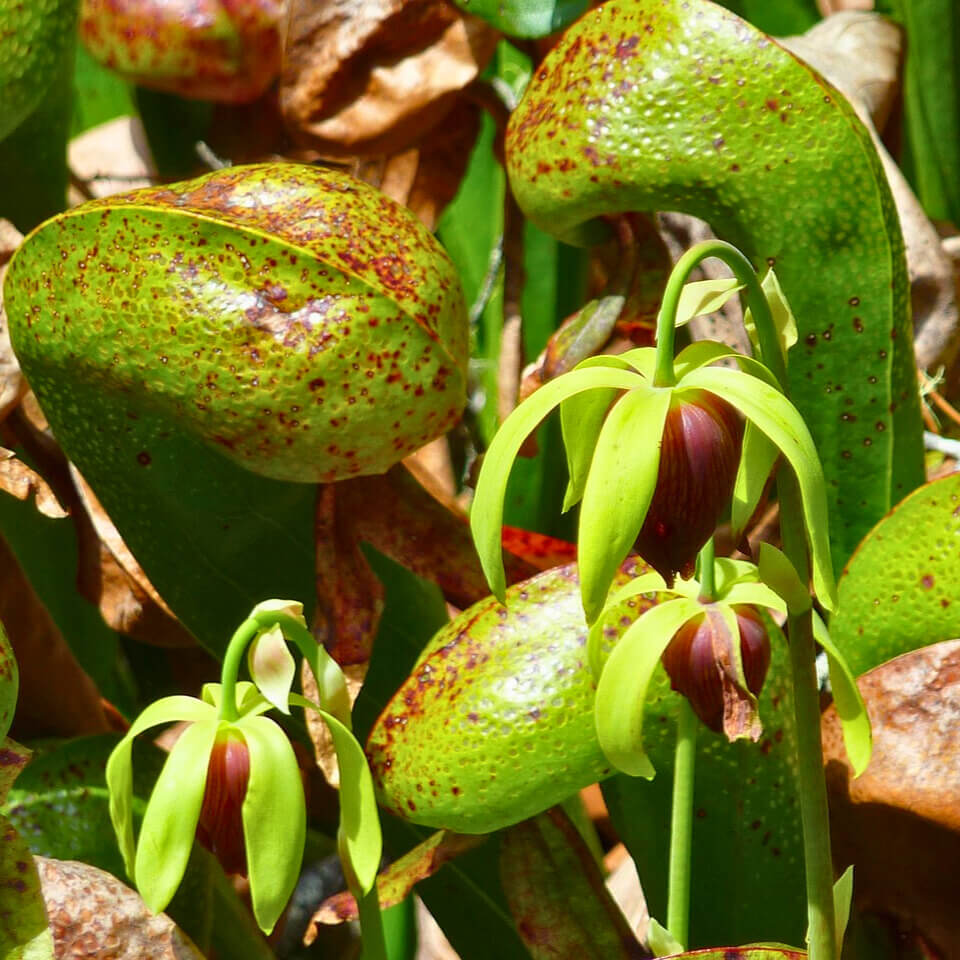
29) Californian Pitcher Plant (Darlingtonia californica)
This popular carnivorous plant is known as the Cobra plant because they resemble a snake about to strike. A popular variety of the Pitcher plant, it is a must have for anyone collecting unusual dog safe houseplants. It feeds by waiting for insects to fall into its tube shaped body, where it slowly digests them.
Unlike most other plants on this list, this is not a low maintenance option. Californian Pitcher plants are native to North America so prefer cooler temperatures. For best results, plant in moist, acidic soil and grow somwhere away from any heat sources in dappled light.
The hardest part of caring for this plant is getting the watering right. They need to be kept consistently moist but never allowed to become soggy. Tap water contains chemicals and minerals which can harm them so use only rain or distilled water. Most critically you must be carefully not to get any water in the pitcher when watering as this can damage their digestive enzymes.
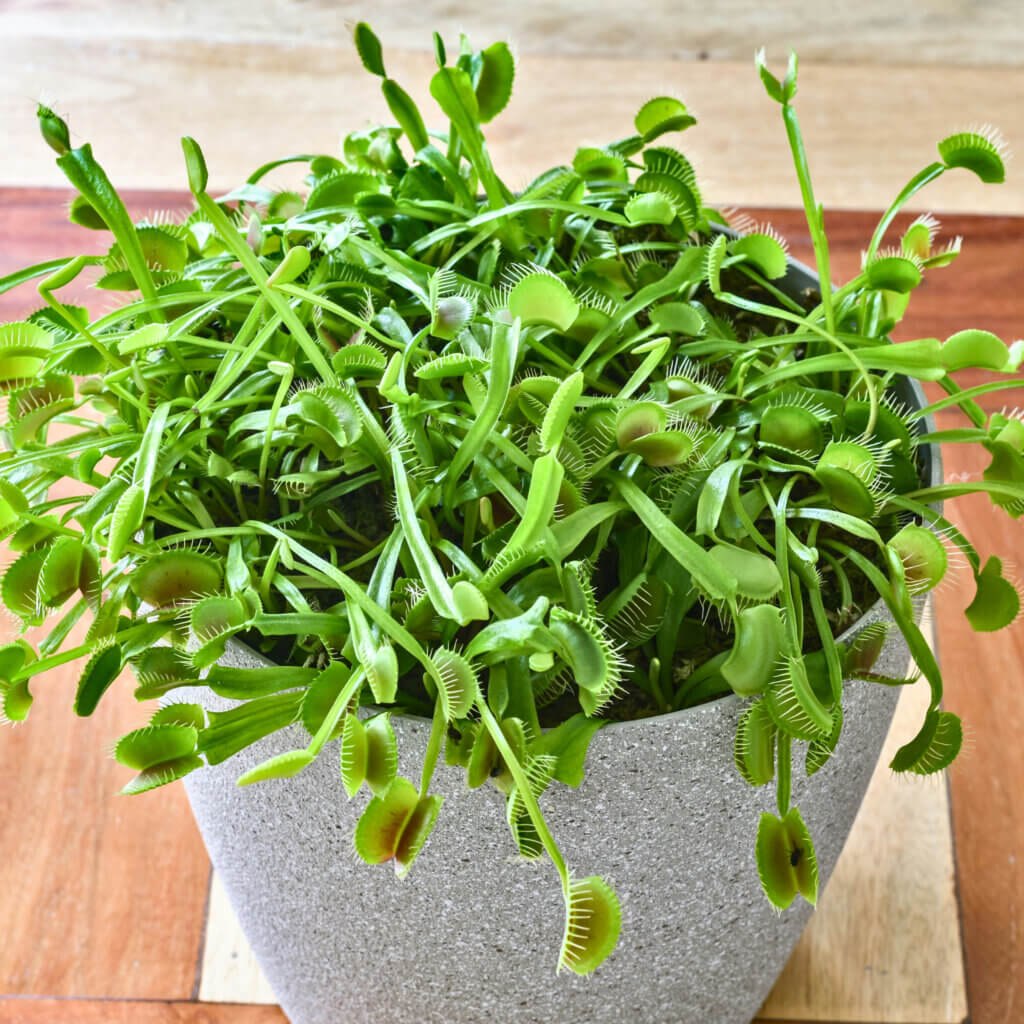
30) Venus Fly Trap (Dionaea muscipula)
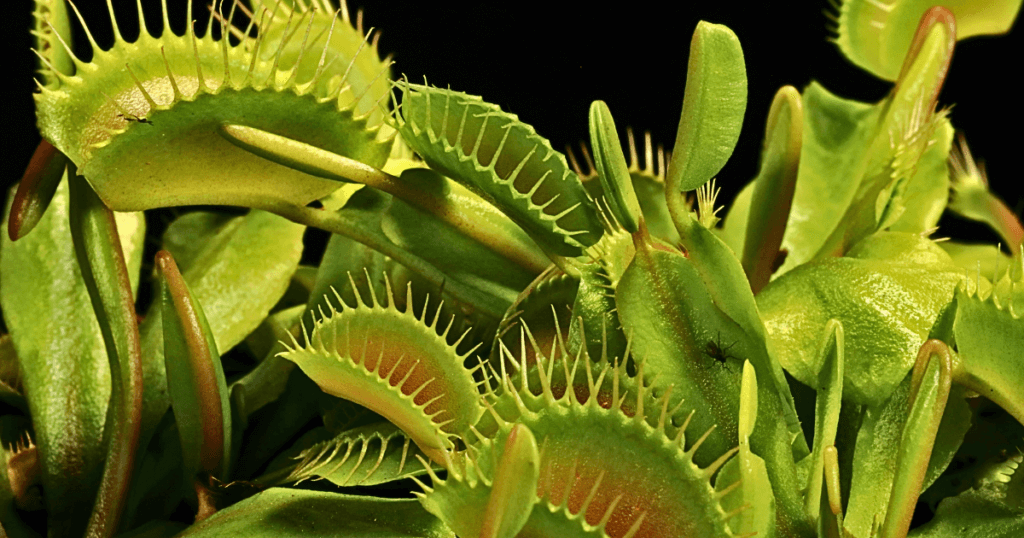
The Venus Fly Trap is instantly recognisable with its jaw like leaves which seem to be lined with sharp teeth. It’s not a houseplant for beginners but still makes a wonderful statement piece for any home.
Venus Fly Trap get their food by trapping small insects. Don’t be alarmed if yours doesn’t seem like much of a hunter though, they only need to catch a few insects a year to survive.
They need to grow in something that is acidic, nutrient poor, and holds water well. You can buy specialist compost for carnivorous plants, or reuse old ericaceous compost which has lost most of its nutrients. Make sure you only water it with rainwater and never tap water.
Final thoughts
I hope that this list gives you plenty of non-toxic, dog safe houseplants to choose from. It’s important to remember though that even non-toxic plants can cause mild irritation or stomach upsets if eaten in large quantities, so think about positioning as much as which plants you choose. Many of the plants here are either inherently unappetising for dogs because of their textures, or are compact enough to be placed out of reach if needed. Always monitor you dog closely for signs they have eaten something that disagrees with them, and call your vet as soon as possible if you have any concerns.
Looking for more pet safe plants?
Check out the complete guide to pet safe plants. Get advice on how to choose the right plants for your space and schedule, as well as creative ideas for how to style them.