
Finding houseplants that thrive in low light can be a challenge, especially when you are looking for varieties that do well in deep shade. Not all plants tolerate dim corners, and selecting ones that are also safe for pets adds another layer of difficulty. In this guide, you will discover my top 10 pet-safe houseplants for low light, along with an essential care guide for low light plants in general. You will also gain a deeper understanding of the different levels of shade and how they affect plant growth.
Low light plants often have unique care needs that must be understood in order to keep them healthy and thriving indoors. In this guide, you will learn how to provide the right conditions, watering routines and humidity levels, ensuring that your plants remain healthy and your home remains safe. Whether you are new to indoor gardening or looking to expand your collection, these pet-safe houseplants for low light will help you bring greenery into even the darkest corners of your home.
In this guide
Top 10 Pet-Safe Houseplants For Low Light
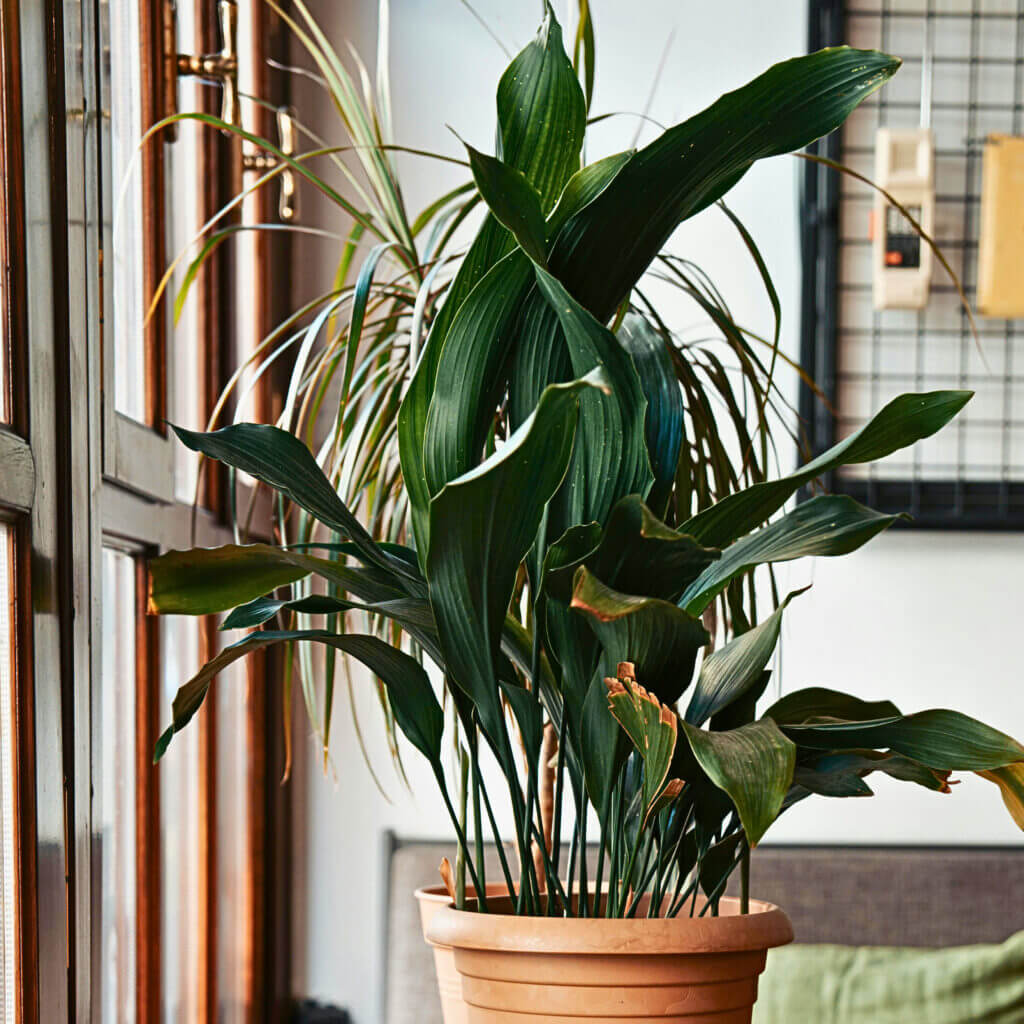
1) Cast Iron Plant (Aspidistra)
The cast iron plant earns its name through sheer toughness. Completely safe for cats and dogs, it grows happily in the darkest of rooms with minimal watering. Its broad, glossy leaves add real texture to spaces where most other plants simply refuse to thrive, even with decent care.
Quick Cast Iron Plant Care Facts
| ☀️ Light | Deep shade – light shade |
| 💧 Water | Keep soil moist but don’t overwater |
| ♨️ Humidity | Average household humidity |
| 🪴 Compost | Well-draining general potting compost |
| 🌺 Flowering | Rare indoor |
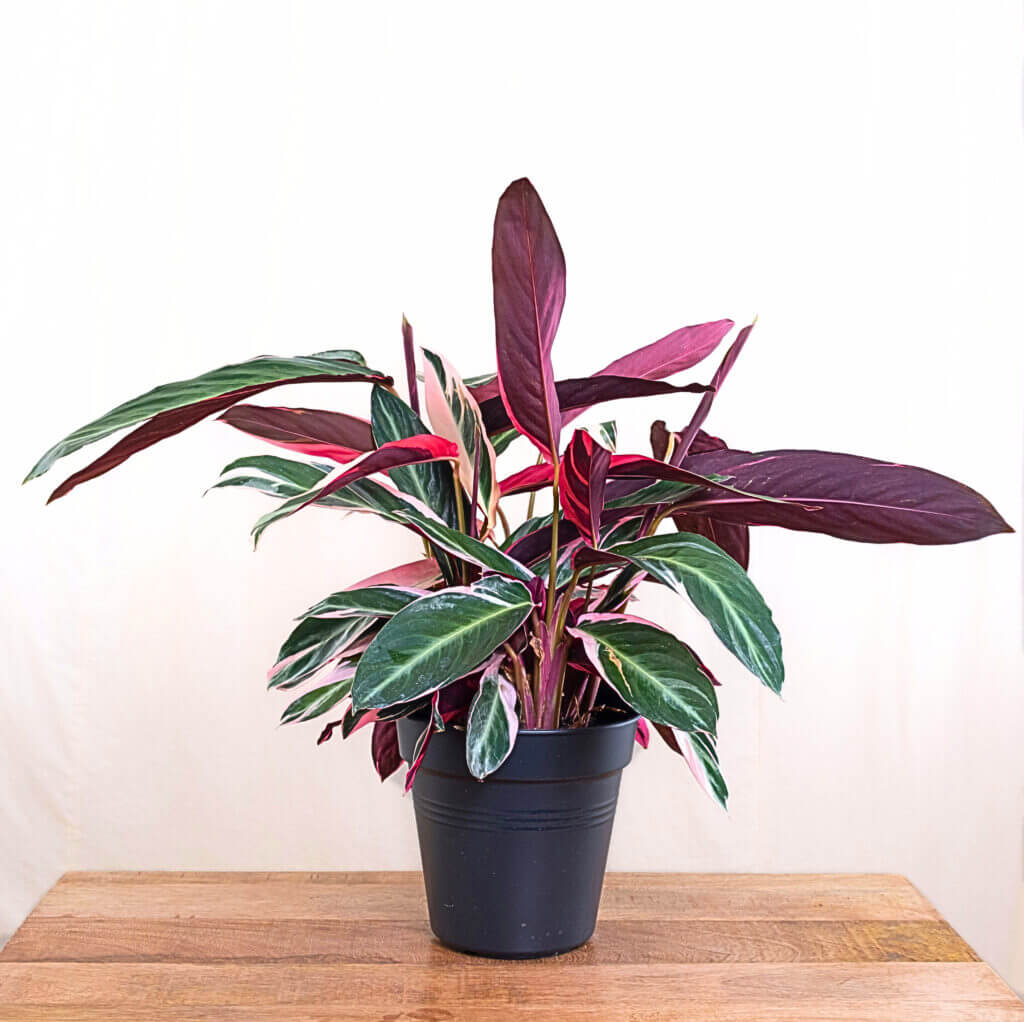
2) Stromanthe
Stromanthe is a striking pet safe houseplant with vivid pink, white and green patterned leaves. It prefers indirect light and consistent moisture, making shaded spots ideal. A bold, colourful choice that brings tropical warmth to any room without posing a risk to animals.
Quick Stromanthe Care Facts
| ☀️ Light | Light shade – bright, indirect light |
| 💧 Water | Keep soil moist but don’t overwater |
| ♨️ Humidity | High |
| 🪴 Compost | Well-draining general potting compost |
| 🌺 Flowering | Rare indoor |
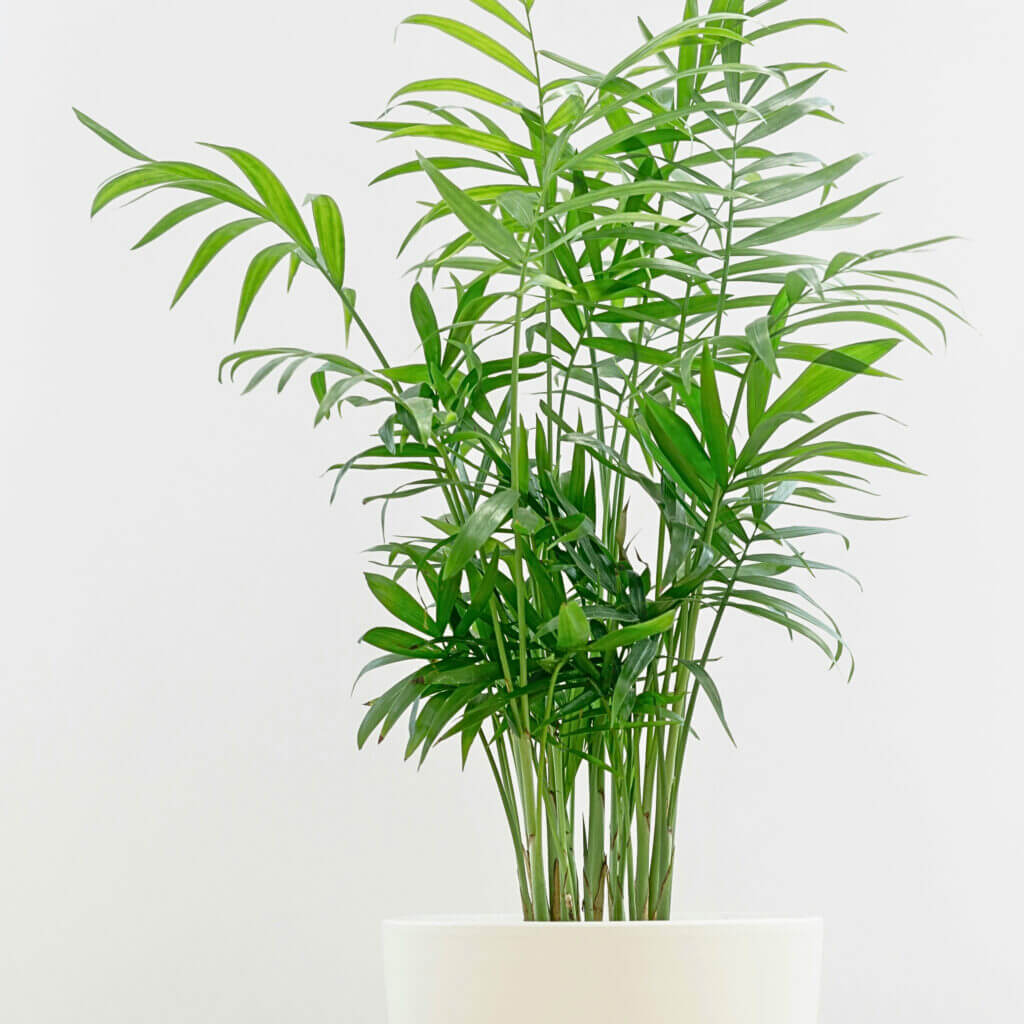
3) Parlour Palm (Chamaedorea elegans)
The parlour palm is one of the most popular pet safe houseplants for good reason. It tolerates low light beautifully and needs very little water. Its slender, arching fronds bring an effortless tropical elegance to shaded rooms, hallways, and darker corners.
Quick Parlour Palm Care Facts
| ☀️ Light | Light shade – bright, indirect light |
| 💧 Water | Keep soil moist but don’t overwater |
| ♨️ Humidity | Moderate – slightly high |
| 🪴 Compost | Well-draining general potting compost |
| 🌺 Flowering | Rare indoor |
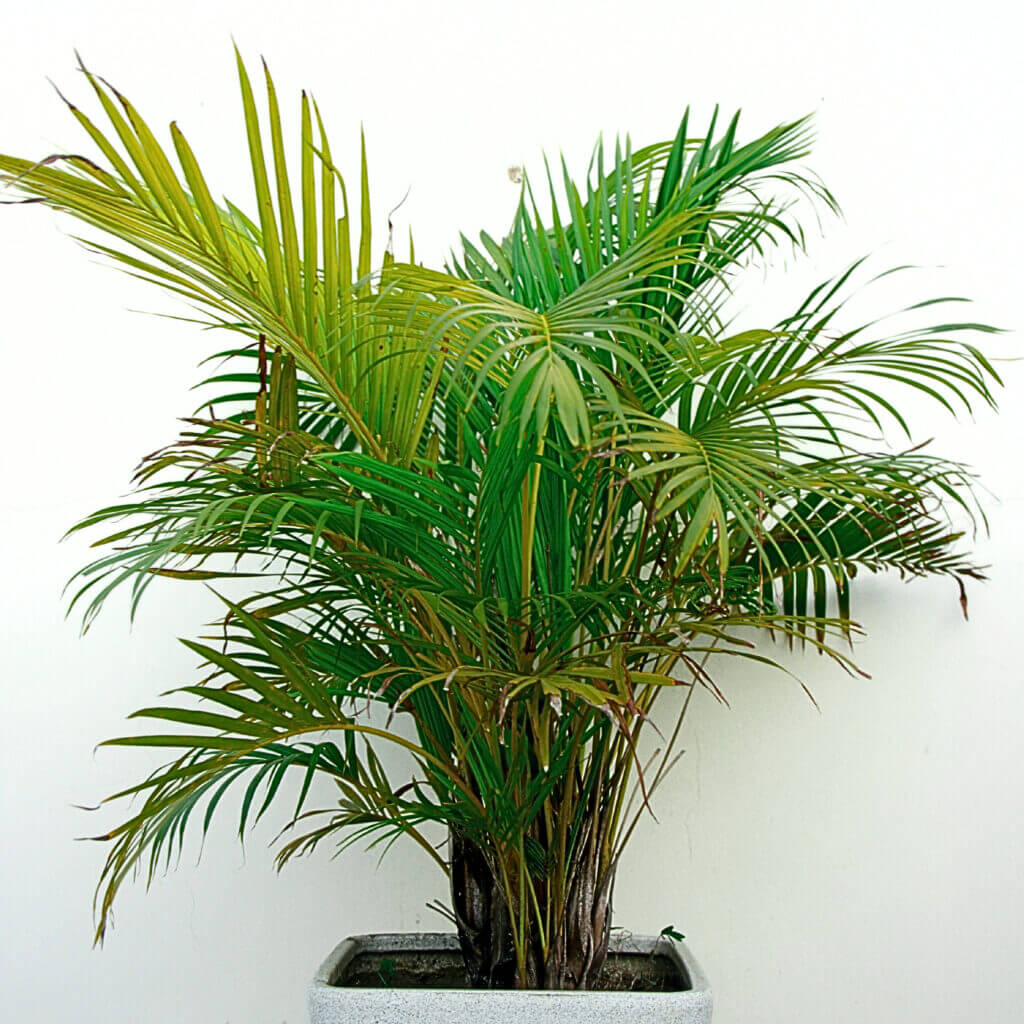
4) Kentia Palm (Howea Forsteriana)
Few large houseplants suit a dim room quite like the kentia palm. Fully non-toxic to cats and dogs, Howea forsteriana is slow growing but impressively architectural, with dark green fronds that drape beautifully. It needs little water and copes well with indoor conditions year round.
Quick Kentia Palm Care Facts
| ☀️ Light | Light shade – bright, indirect light |
| 💧 Water | Keep soil moist but don’t overwater |
| ♨️ Humidity | Moderate |
| 🪴 Compost | Well-draining general potting compost |
| 🌺 Flowering | Rare indoor |
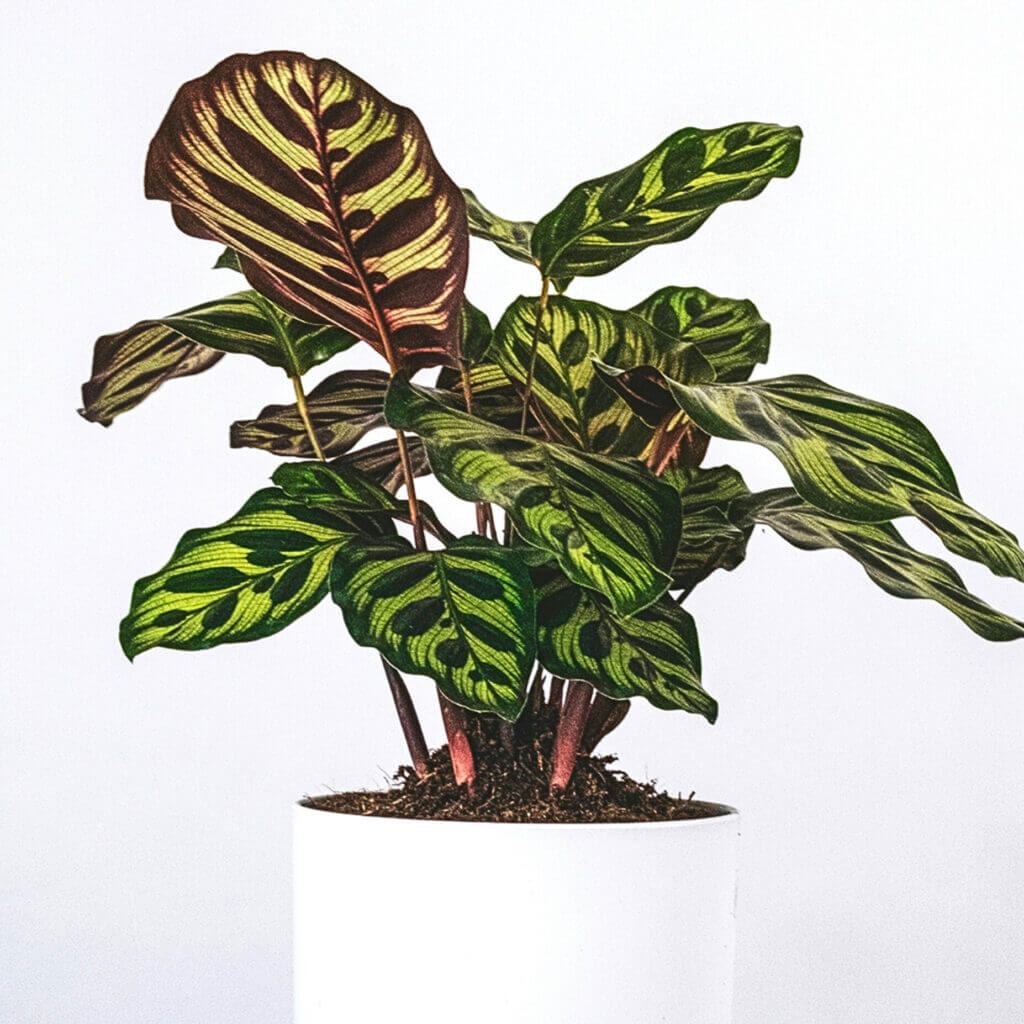
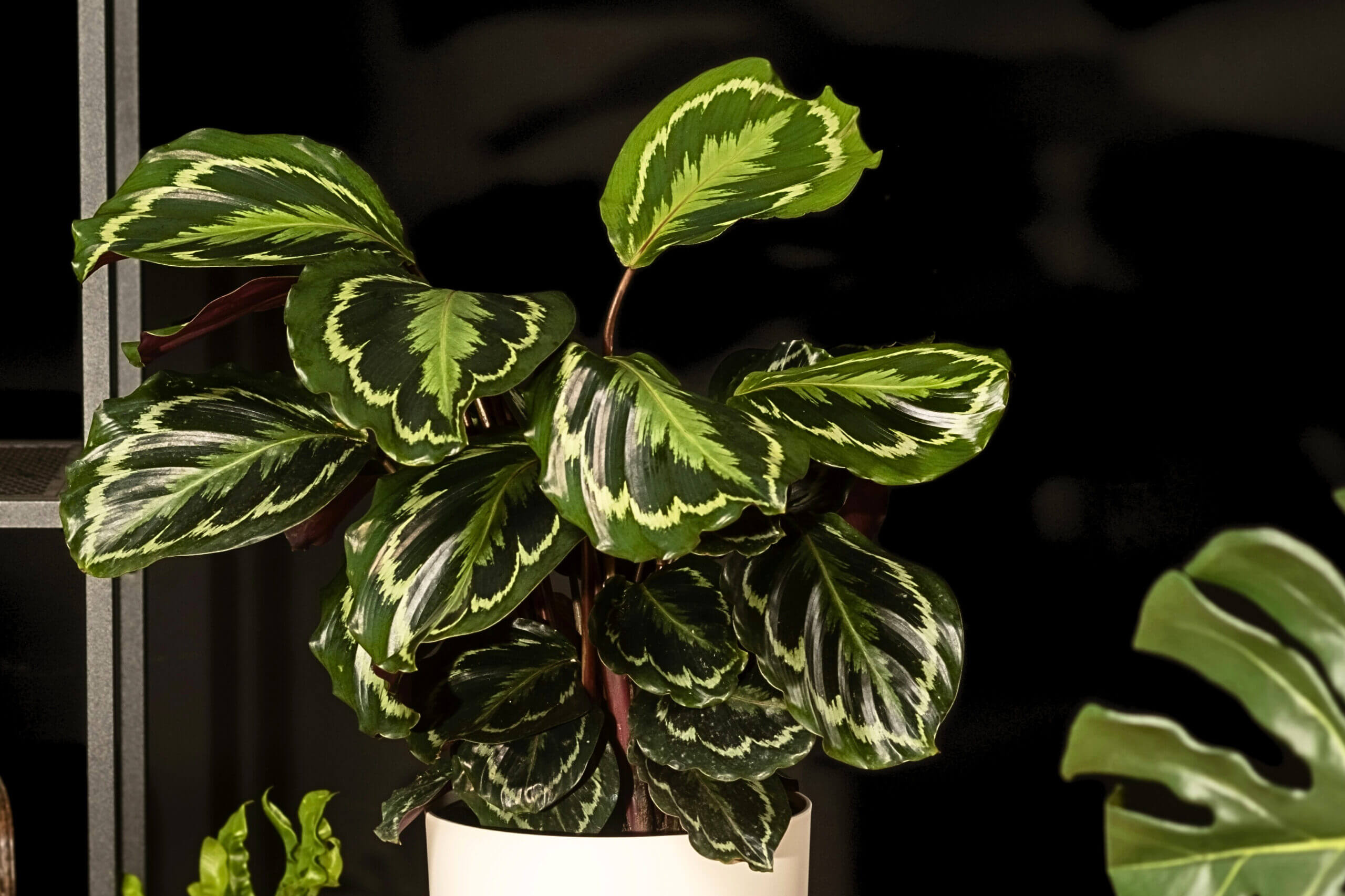
5) Peacock Plant (Calathea)
With some of the most ornate foliage in the houseplant world, calathea is also fully safe for pets. It prefers shaded spots away from direct sun and benefits from regular misting. Hard water can cause leaf tip browning, so filtered or collected rainwater will keep it looking its finest.
Quick Calathea Care Facts
| ☀️ Light | Light shade – bright, indirect light |
| 💧 Water | Evenly moist |
| ♨️ Humidity | Medium – high. |
| 🪴 Compost | Well-draining general potting compost and perlite |
| 🌺 Flowering | Rare indoors, except C. Crocata |
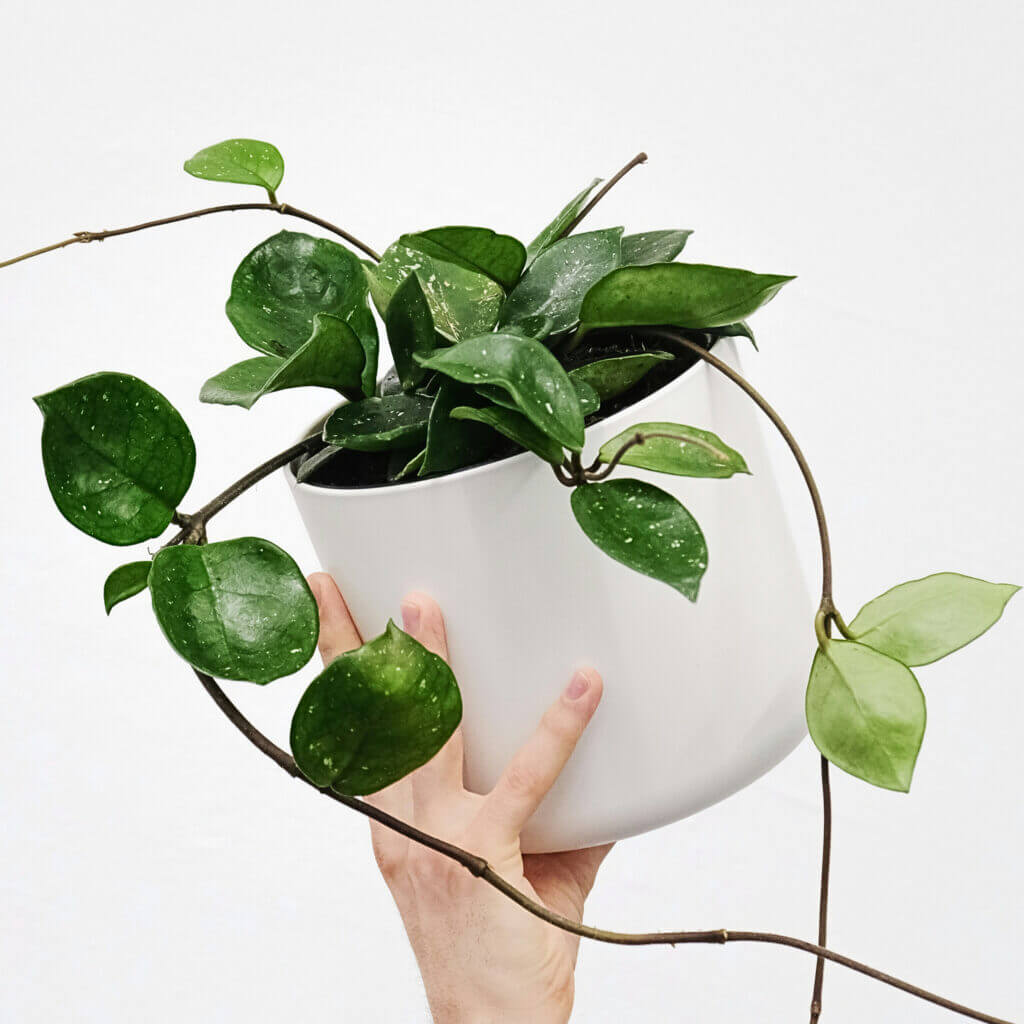
6) Wax Plant (Hoya)
Hoya, or wax plant, is a pet safe trailing or climbing houseplant with thick, waxy leaves and occasional clusters of sweetly scented star shaped flowers. It tolerates low light and infrequent watering well, making it a genuinely forgiving and rewarding choice for homes with cats or dogs.
Quick Hoya Care Facts
| ☀️ Light | Light shade – bright, indirect light |
| 💧 Water | Sparingly. Allow soil to dry out between waterings. |
| ♨️ Humidity | Moderate – high |
| 🪴 Compost | Well-draining general potting compost |
| 🌺 Flowering | Late spring – summer |
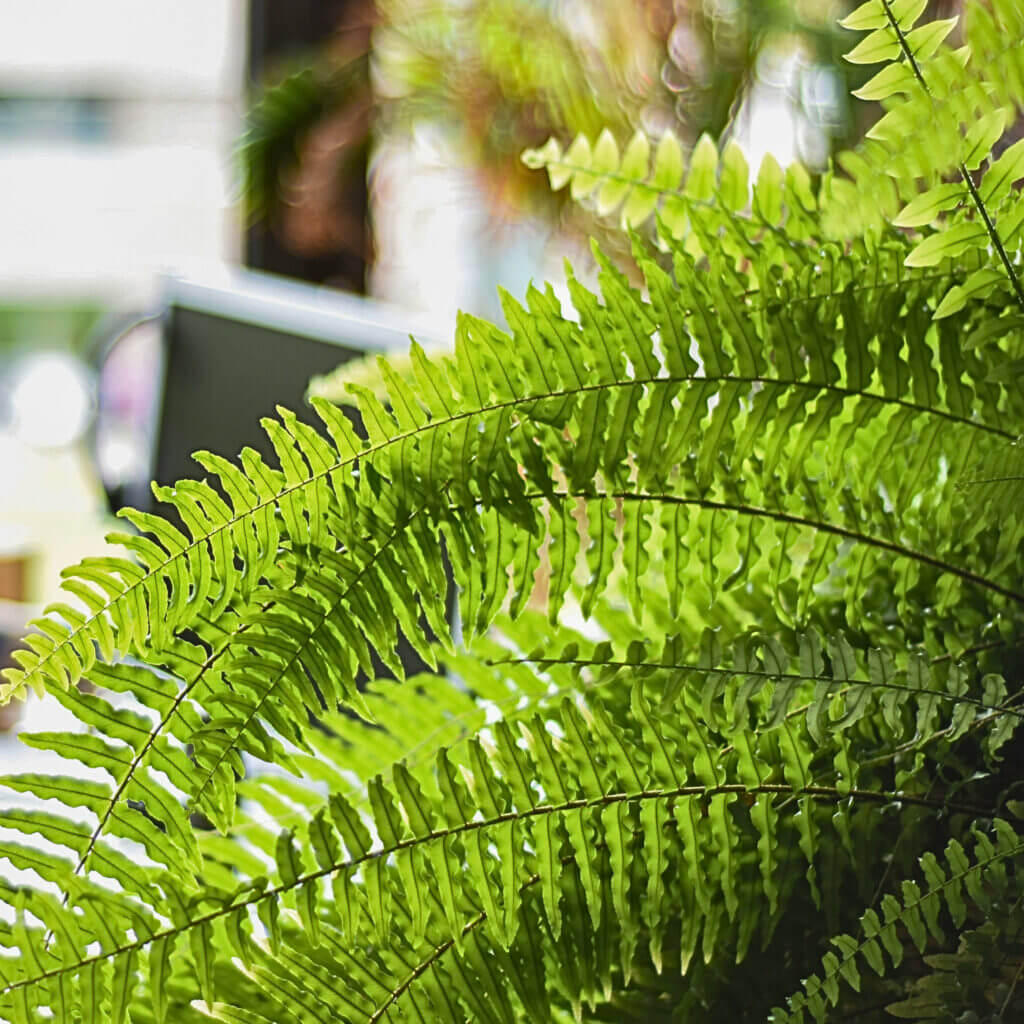
7) Boston Fern (Nephrolepis exalta bostoniensis)
The Boston fern is one of the finest pet safe choices for a shaded room. Its dense, cascading fronds naturally purify indoor air while posing no risk to animals. It does demand regular watering and humidity, but rewards that effort with year-round lush growth.
Quick Boston Fern Care Facts
| ☀️ Light | Light shade – bright, indirect light |
| 💧 Water | Keep soil moist but don’t overwater |
| ♨️ Humidity | High |
| 🪴 Compost | Well-draining general potting compost |
| 🌺 Flowering | Never |
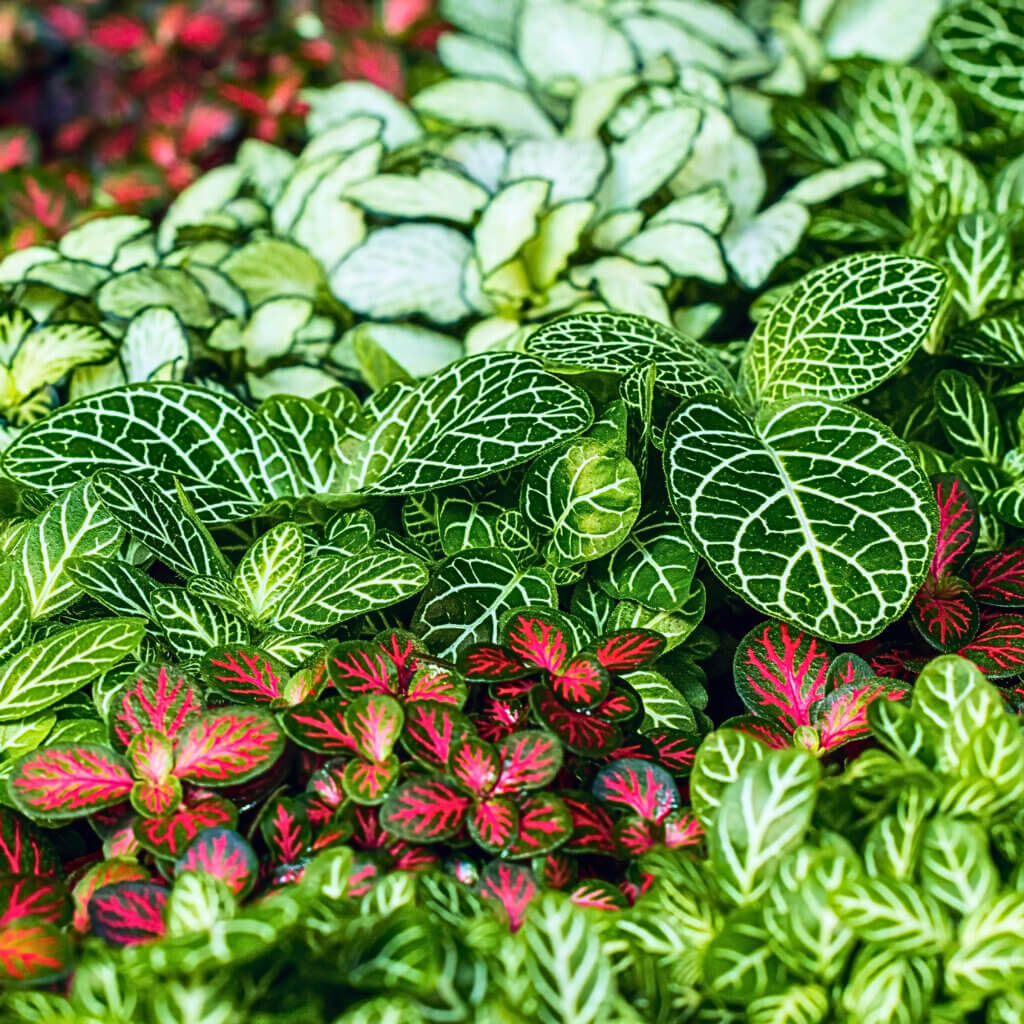
8) Nerve Plant (Fittonia)
Fittonia originates from the shaded floor of South American rainforests, making it one of the most naturally suited houseplants for dim indoor conditions. Fully non-toxic to pets, its vivid, intricately veined leaves bring striking colour to darker corners of the home.
Quick Fittonia Care Facts
| ☀️ Light | Light shade – bright, indirect light |
| 💧 Water | Keep soil moist but don’t overwater |
| ♨️ Humidity | High |
| 🪴 Compost | Well-draining general potting compost |
| 🌺 Flowering | Rare indoors |
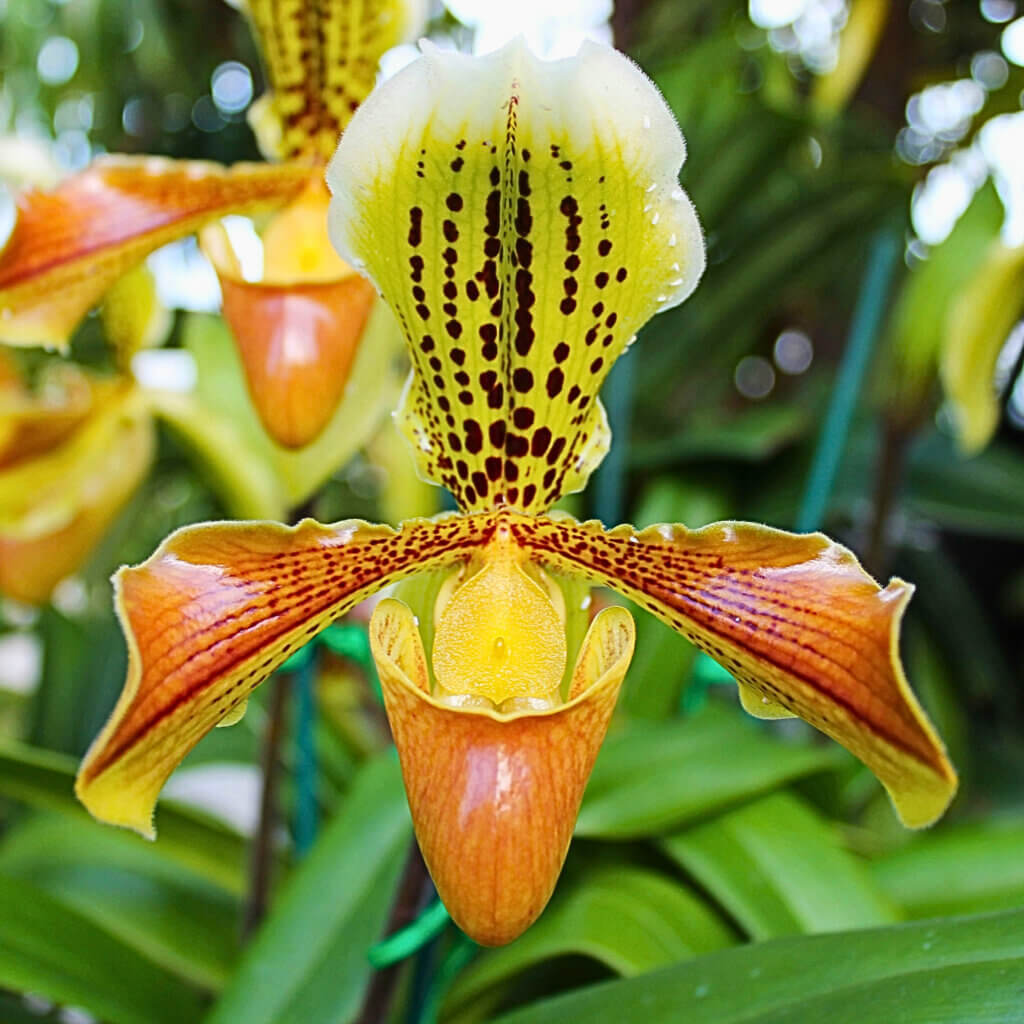
9) Slipper Orchid (Paphiopedilum)
The slipper orchid is one of the few orchids that genuinely thrives in low light, making it a rare and rewarding find. Fully non-toxic to cats and dogs, its distinctive pouch-shaped blooms in warm orange and yellow last up to twelve weeks, bringing elegance to shaded rooms.
Quick Paphiopedilum Care Facts
| ☀️ Light | Light shade – bright, indirect light |
| 💧 Water | Keep soil moist but don’t overwater |
| ♨️ Humidity | Moderate – high |
| 🪴 Compost | Orchid mix: bark, perlite, sphagnum moss |
| 🌺 Flowering | Spring – early summer |
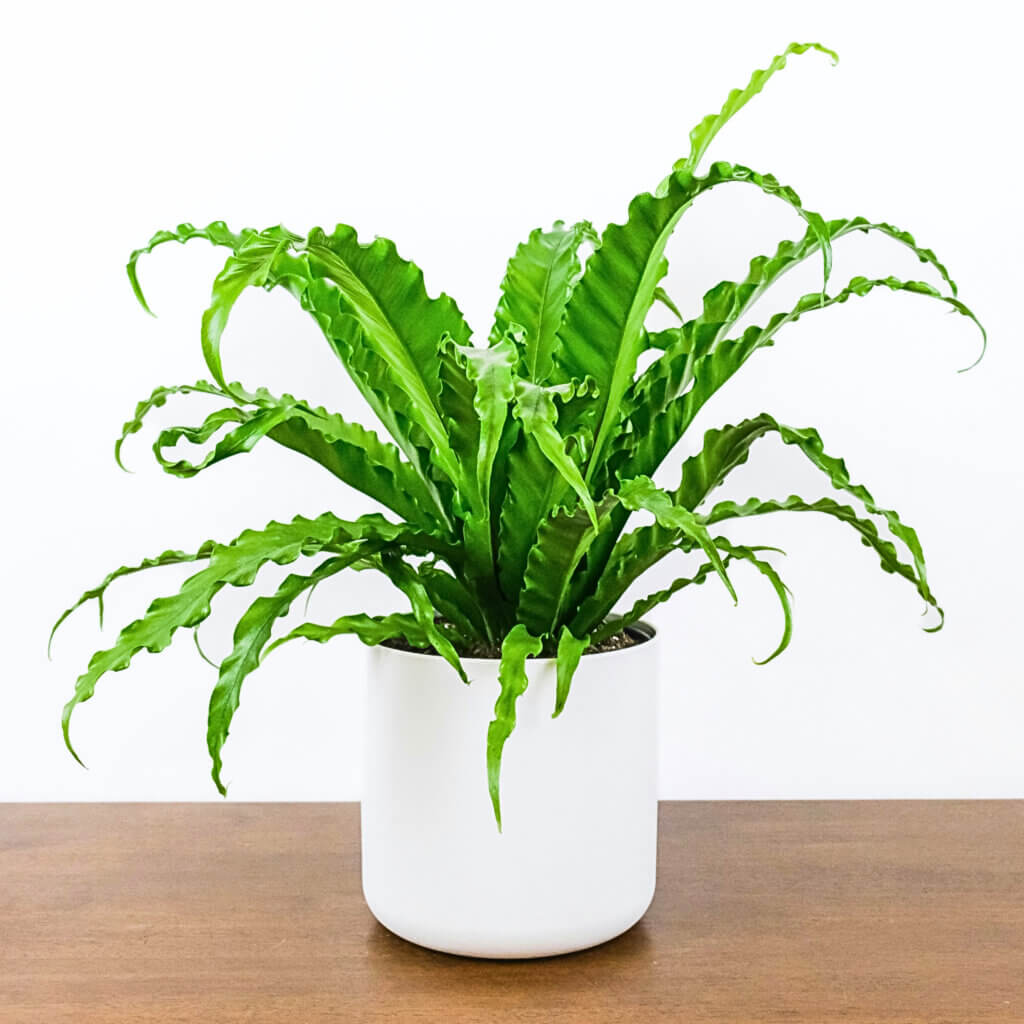
10) Bird’s Nest Fern (Asplenium)
Unlike feathery ferns, the bird’s nest fern produces broad, strappy fronds that arch outward from a central rosette. Fully non-toxic to cats and dogs, Asplenium nidus is a natural low light plant that appreciates humidity and consistent moisture, making a steamy bathroom an ideal spot.
Quick Asplenium Care Facts
| ☀️ Light | Light shade – bright, indirect light |
| 💧 Water | Keep soil moist but don’t overwater |
| ♨️ Humidity | High |
| 🪴 Compost | Well-draining general potting compost |
| 🌺 Flowering | Never |
Understanding Different Kinds of Shade
Not all low light is the same, and understanding the difference can significantly improve your results. A dim hallway and a north facing sitting room are both considered low light, but they are quite different environments. Knowing which type of shade you are working with helps you match the right plant to the right spot and avoid the guesswork.
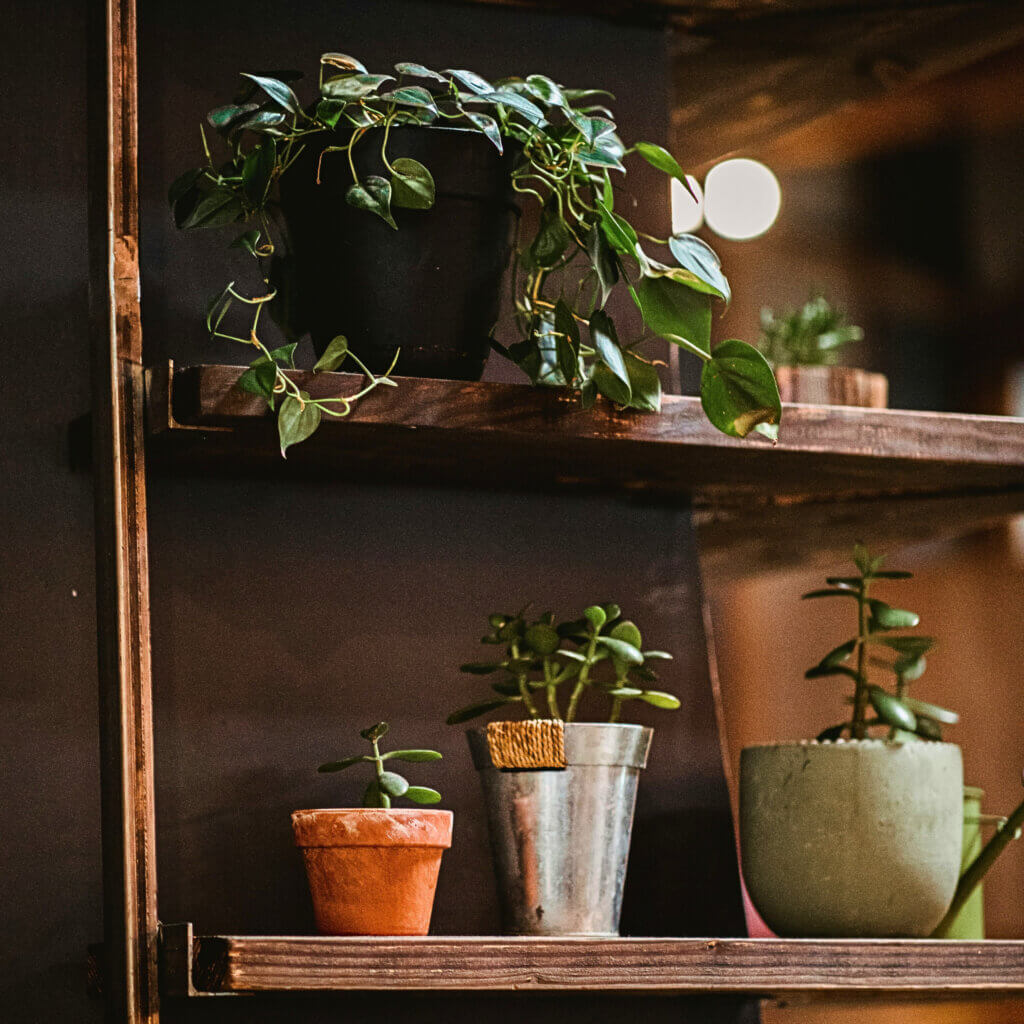
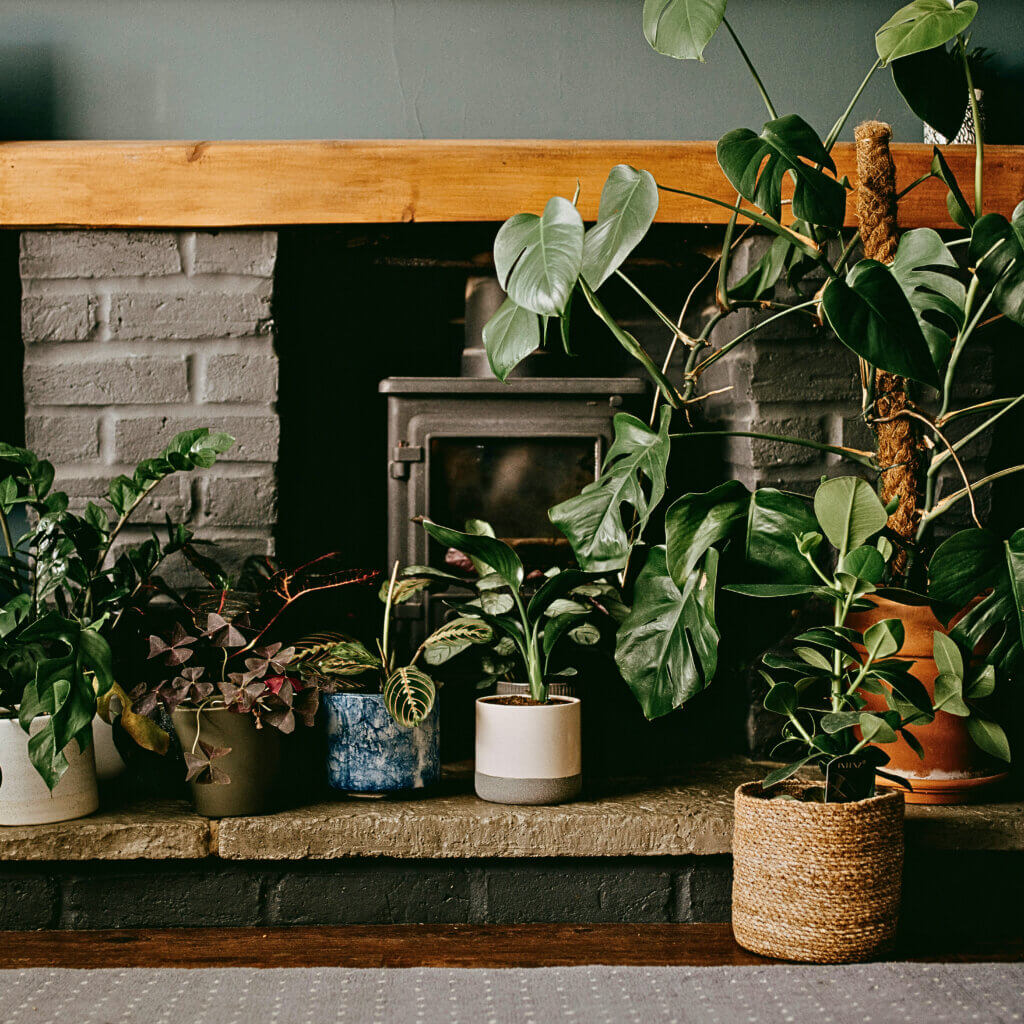
Deep Shade
Deep shade means little to no natural light, such as a windowless room or a dark hallway lit only artificially. Very few houseplants genuinely thrive here, but cast iron plant and fittonia come close. Growth will be slow, so manage expectations and avoid overwatering, as roots sitting in damp soil with no light is a reliable way to lose a plant.
Light Shade
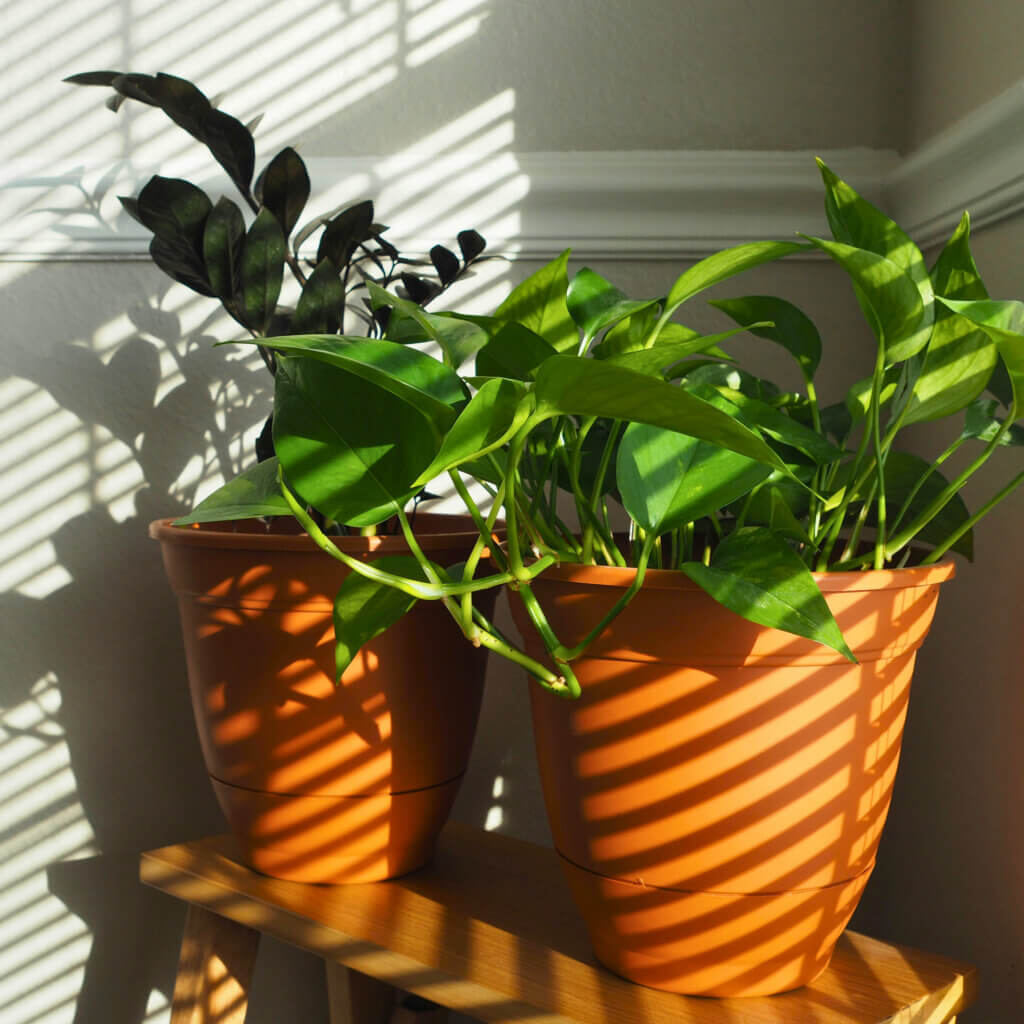
Light shade describes a room with windows but no direct sun, such as a north facing room or one where light is partially blocked by buildings or trees. This is the sweet spot for most plants on this list. Calathea, Stromanthe, and Bird’s Nest Fern all perform particularly well in these conditions and will grow steadily without complaint.
Bright, Indirect Light
Bright indirect light means close to a window but shielded from direct sun, either by net curtains, a sheer blind, or simply facing away from the sun’s path. This is not truly low light, but it suits several plants here, including hoya and parlour palm, and tends to produce the best growth and, where relevant, the most reliable flowering.
Is your plant getting the right amount of light?
Even the most forgiving low light plants will tell you when something is wrong. Light is one of the most common causes of poor plant health, but the signs of too little and too much can look surprisingly similar. This guide breaks down what to look for across each part of the plant so you can diagnose the problem accurately and move your plant before any lasting damage is done.
| Too little light | Too much light | |
|---|---|---|
| Leaves | Small, pale, or yellow; variegated types revert to plain green | Scorched, bleached, or brown patches; edges and tips crispy |
| Flowers | Few or no blooms; buds may drop before opening | Faded, washed out colour; blooms shrivel or drop quickly |
| Stems | Long, weak, and leggy as the plant stretches toward light | Firm but may show bleaching or discolouration near the light source |
| Growth rate | Slow or stalled even in spring and summer | Rapid but weak; may bolt and become uneven |
| Compost | Stays wet for long periods as the plant uses very little water | Dries out unusually fast, sometimes within a day or two of watering |
| Roots | Slow to develop; may sit in damp soil and begin to rot | May dry out and shrink back from the edges of the pot |
Care and Maintenance for Low Light Houseplants
Caring for low light houseplants isn’t difficult, but it does require a slight shift in thinking. Most care advice you will find online is written with brighter, faster growing plants in mind. In lower light conditions, plants do everything more slowly, including drinking, feeding, and growing. Adjusting your routine to match that slower pace is the single most effective thing you can do to keep these plants healthy.
Watering
Low light significantly slows the rate at which plants absorb water, so the most common mistake is watering on a fixed schedule rather than checking the compost first. For most plants on this list, allow the top inch or two of compost to dry out before watering again. In winter, when growth slows further, you may only need to water every two to three weeks. Always use room temperature water and ensure pots have drainage holes to prevent water-logging.
Feeding
Because low light plants grow slowly, they need far less feeding than the packaging on most liquid fertilisers suggests. Overfeeding is a genuine risk, as unused nutrients accumulate in the compost and can scorch roots. A half strength balanced liquid feed once a month from April to September is sufficient for most plants on this list. Do not feed at all in autumn and winter when growth has effectively stopped and the plant has no use for the extra nutrients.
Seasonal Care
As daylight hours shorten through autumn and into winter, even plants in low light positions will receive noticeably less. Growth will slow or stop entirely, and plants will need less water and no feeding until spring. Avoid moving plants to compensate for lower light in winter, as the temperature drop near windows can cause more harm than the reduced light. Resume feeding and increase watering gradually as daylight returns in March.
Compost and repotting
Most low light houseplants are slow growing and do not need repotting frequently. A good rule of thumb is to repot only when roots begin to appear through the drainage holes or the plant is visibly struggling despite good care. Use a well draining, peat free compost and move up only one pot size at a time. Spring is the best time to repot, giving the plant the whole growing season to settle in and establish its roots.
Final thoughts
I hope this guide gives you plenty of ideas for pet-safe houseplants that thrive in low light. It is important to remember that even plants considered non-toxic can cause mild irritation or digestive upset if chewed or eaten in large quantities, so think carefully about both which plants you choose and where you place them. If your unsure about a plants safety status you can check it on the ASPCA website. Always monitor your pets for any signs of discomfort and contact your vet promptly if you notice anything unusual.
Looking for more pet safe plants?
Check out the complete guide to pet safe plants. Get advice on how to choose the right plants for your space and schedule, as well as creative ideas for how to style them.